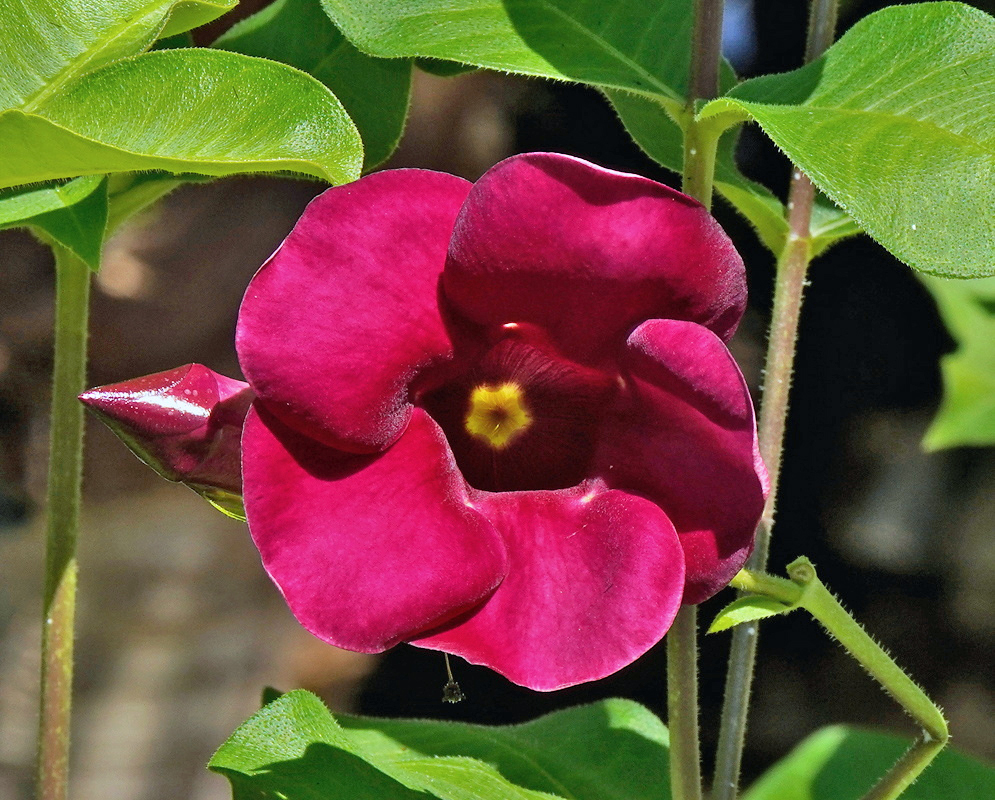

Allamanda blanchetii (Purple Allamanda)
Native to northeastern Brazil’s Caatinga, this evergreen climbing shrub, commonly called purple allamanda, has bristly stems and hairy leaves arranged in whorls. The terminal flower clusters produce purple-pink to violet trumpets, each with five spreading lobes and a yellowish tube. Inside the flower, the anthers form a cone over the pollen-presenting tip of the style. Nectar accumulates while the flower is still in bud. Flowers last about two to three days, and the species requires pollen from a genetically different plant to set fruit. Prickly capsules split open to release wind-dispersed, winged seeds.
It is grown ornamentally in tropical gardens, including Singapore, Florida, and coastal Colombia. In northeastern Brazilian traditional medicine, its latex has been used as a laxative and a remedy for intestinal worms. This use involves a poisonous substance: ingestion can cause vomiting and diarrhea, and contact with the sap may cause dermatitis. Photographed in Florida and Barranquilla, Colombia.