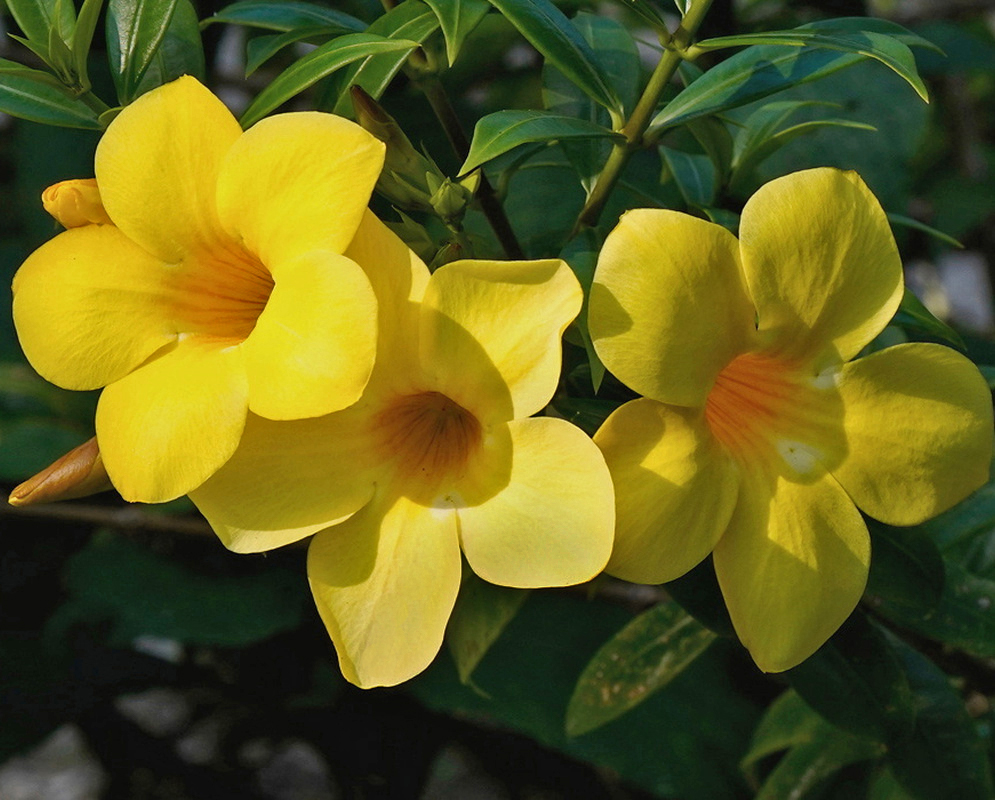

Allamanda cathartica (Yellow Allamanda)
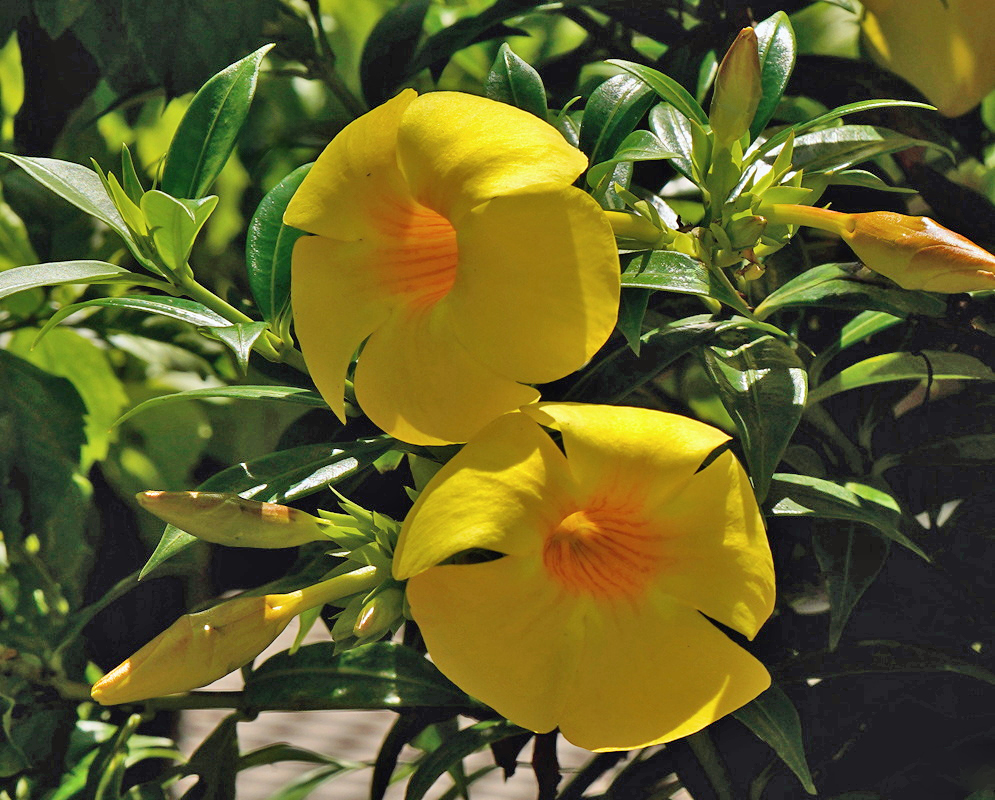
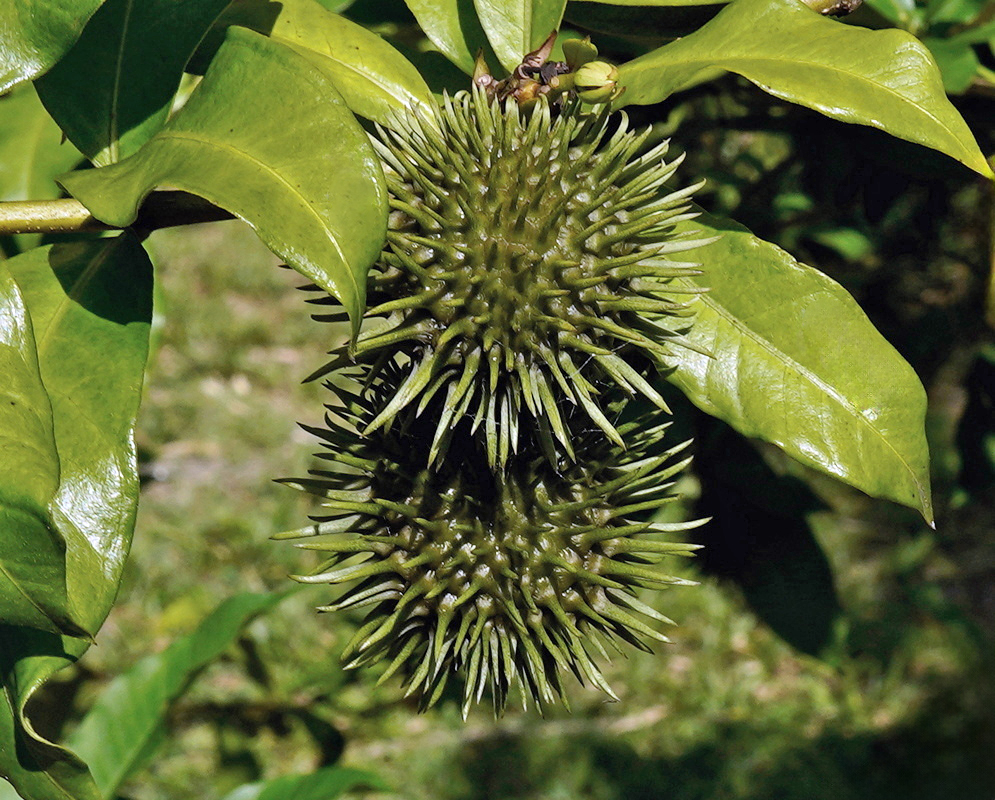
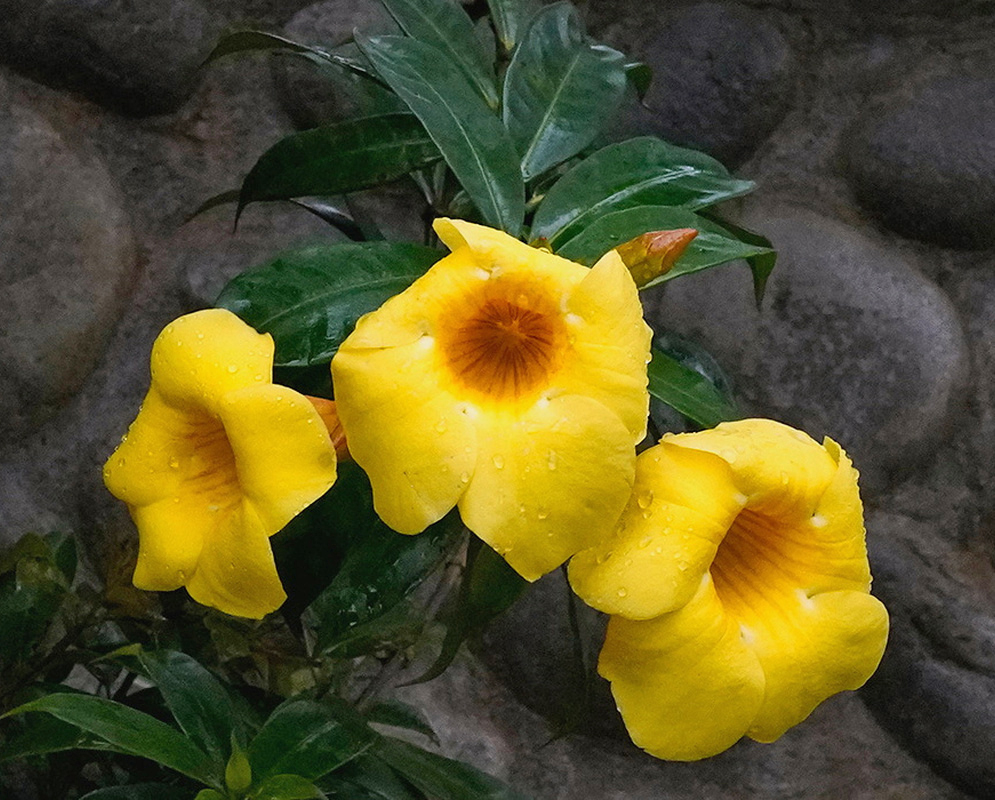
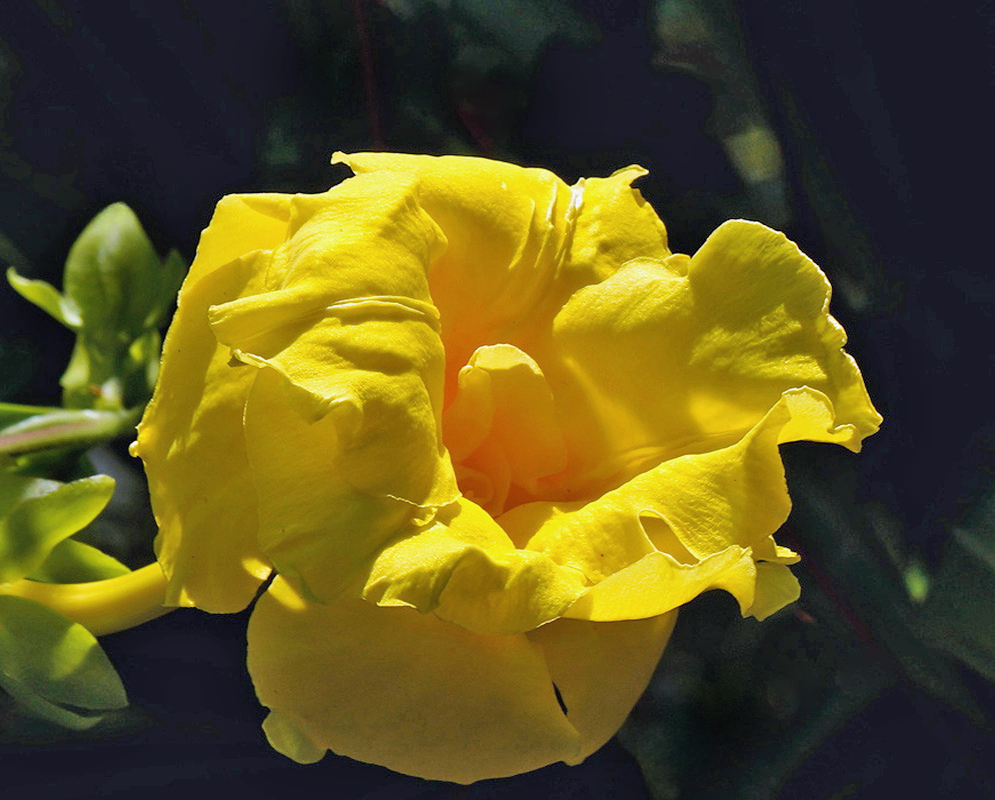
Native from northern South America to northern Bolivia, this evergreen climbing shrub, commonly called yellow allamanda, scrambles over supporting vegetation. Its clusters of golden-yellow flowers have a narrow basal tube that expands into a trumpet with five rounded lobes, often marked by reddish lines in the throat. Prickly capsules release winged seeds. It is widely grown ornamentally in the tropics and has naturalized in Florida, China, and northern Australia. In northern Queensland, it invades roadside vegetation and rainforest margins; discarded stem fragments can establish new plants.
In Southeast Asian traditional medicine, the leaves have been used as a purgative and emetic. In Suriname, roots have been used for jaundice and complications associated with malaria. A study of leaf extract applied to wounds in rats found faster wound closure and increased collagen formation, an animal result rather than a demonstrated benefit in people. Swallowing plant material can cause vomiting and diarrhea, and the milky sap can irritate skin and eyes. Photographed in Valle del Cauca, Colombia.