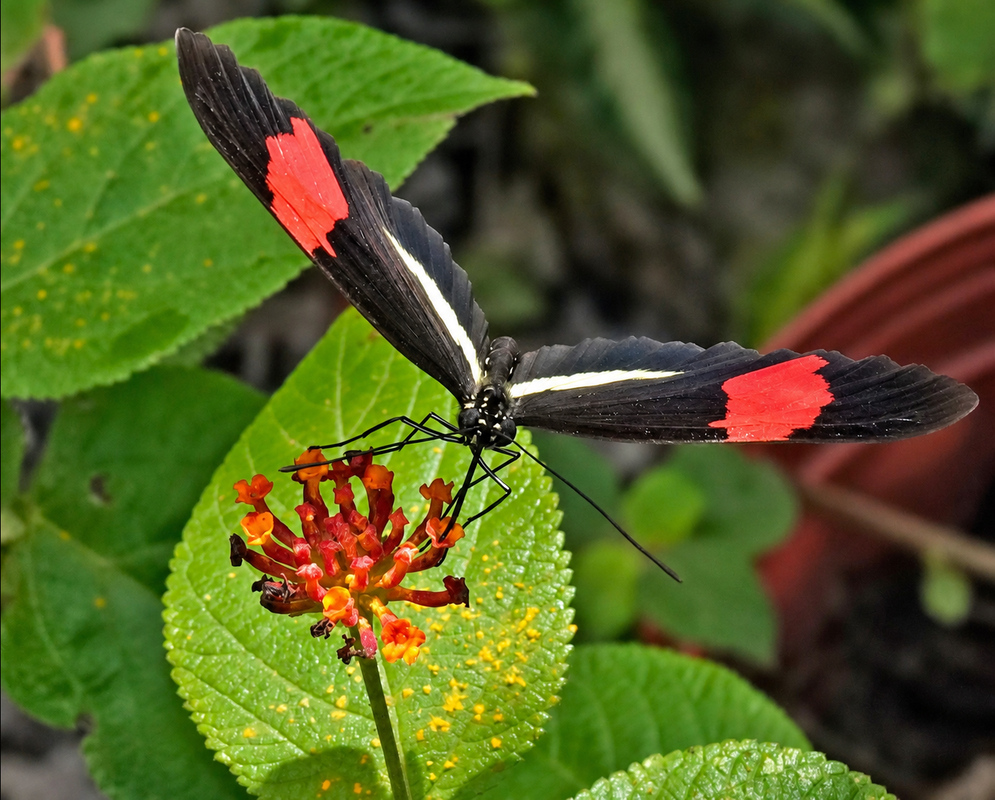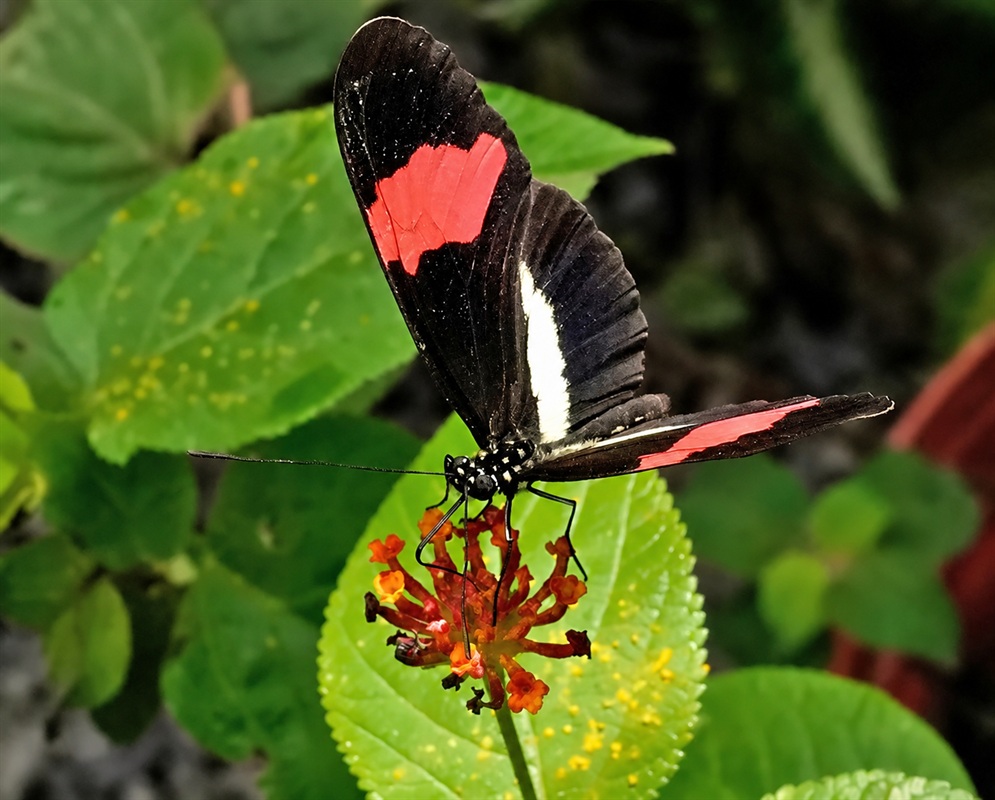


Heliconius erato (Red Postman)
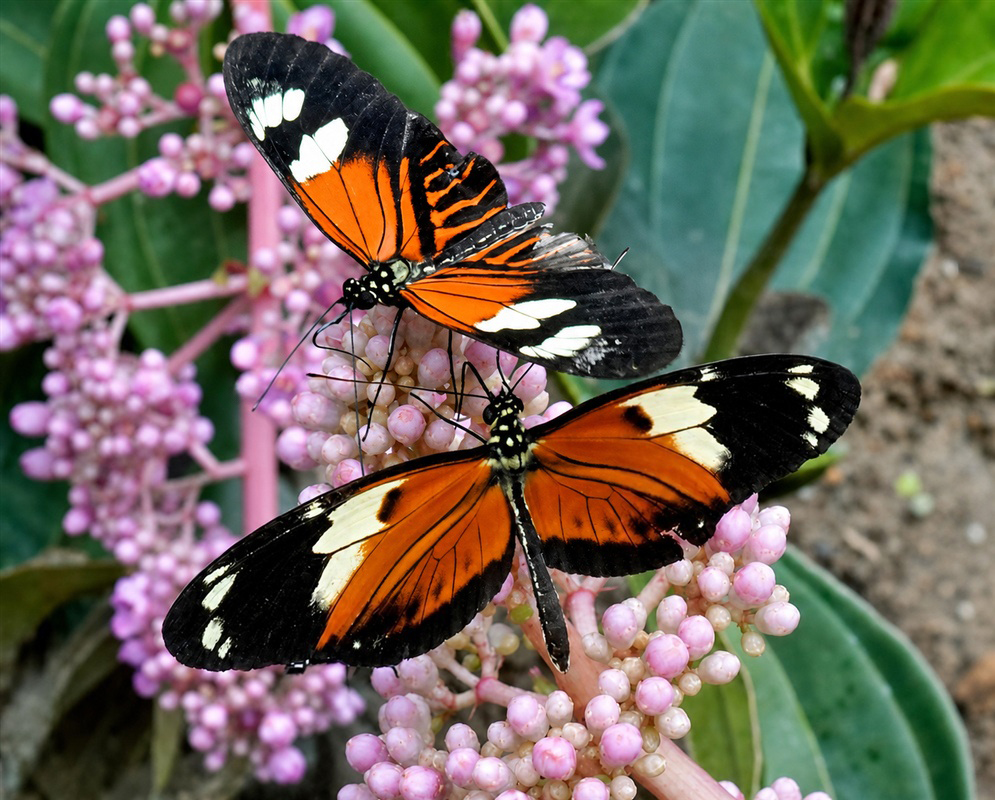
Heliconius erato (red postman) is widespread from Mexico through Central America and much of tropical South America. Local populations differ dramatically in wing pattern, producing red-banded, blue-black, white-banded, and other geographic forms. In each region, the pattern often closely matches the unrelated Heliconius melpomene. Both butterflies are chemically defended, so their shared warning design reinforces predator avoidance through Müllerian mimicry.
Females place eggs on passionflower vines selected as larval hosts. The caterpillars obtain defensive compounds from the plants, while adults supplement flower nectar by collecting and digesting pollen on the proboscis. This protein source supports extended adult survival and continued egg production. Individuals learn repeatable feeding routes, recognize familiar sites, and gather at communal night roosts that may be reused for long periods. Photographed in Colombia.