

Heliconius doris (Doris Longwing)
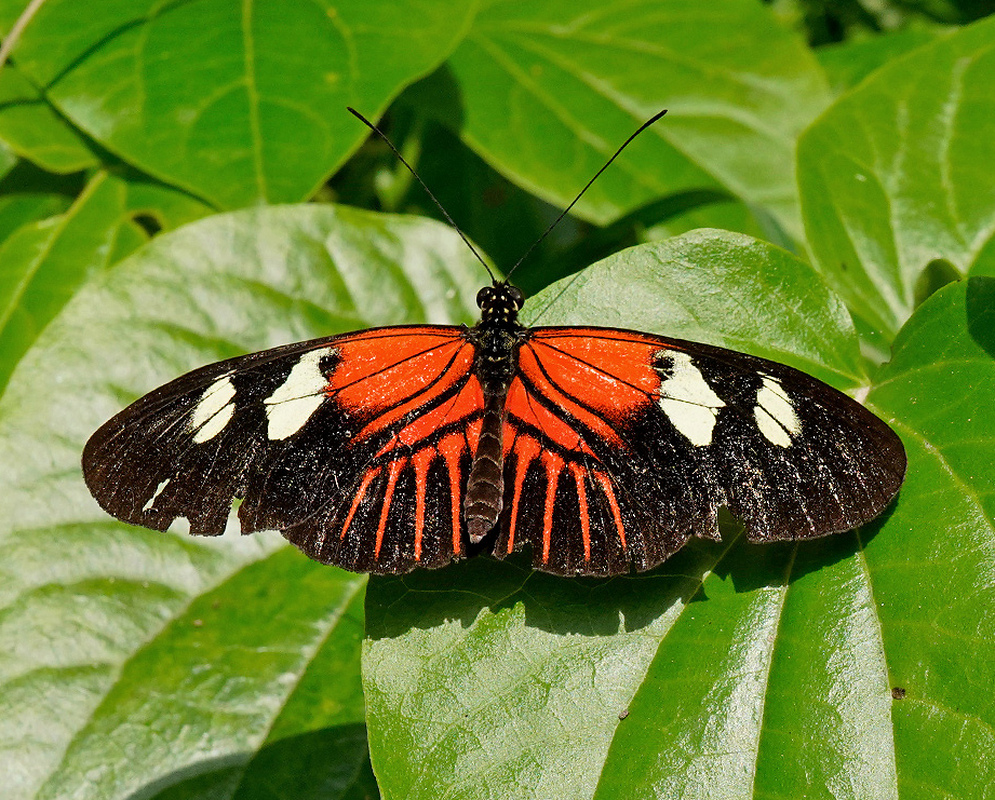
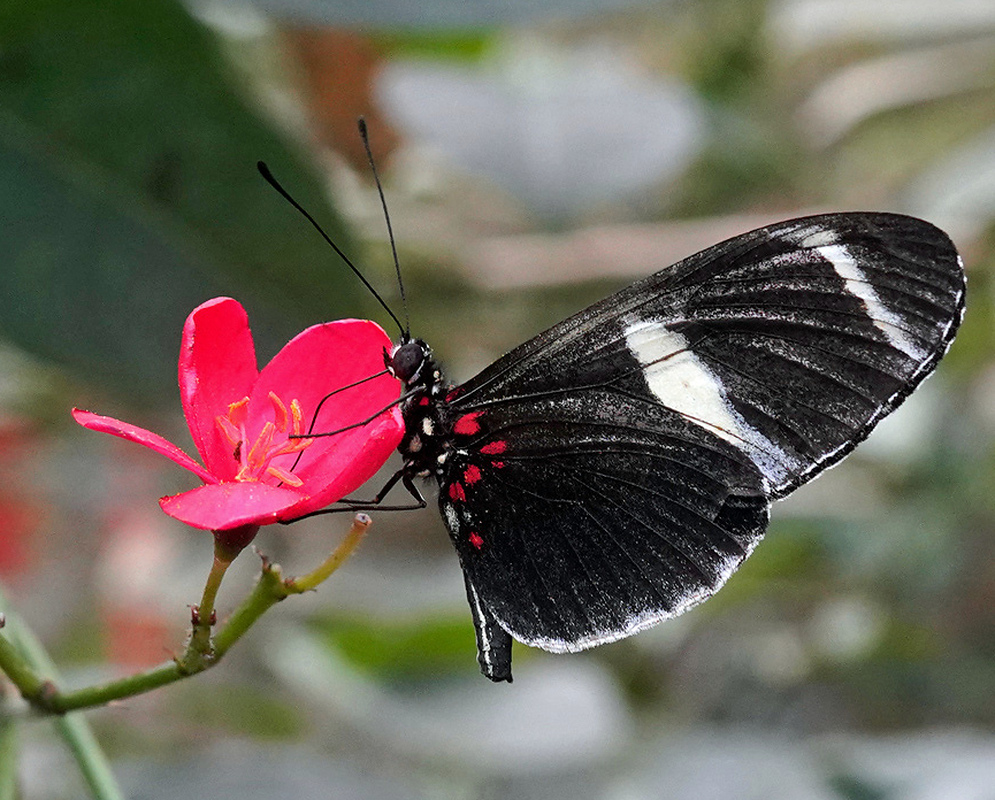
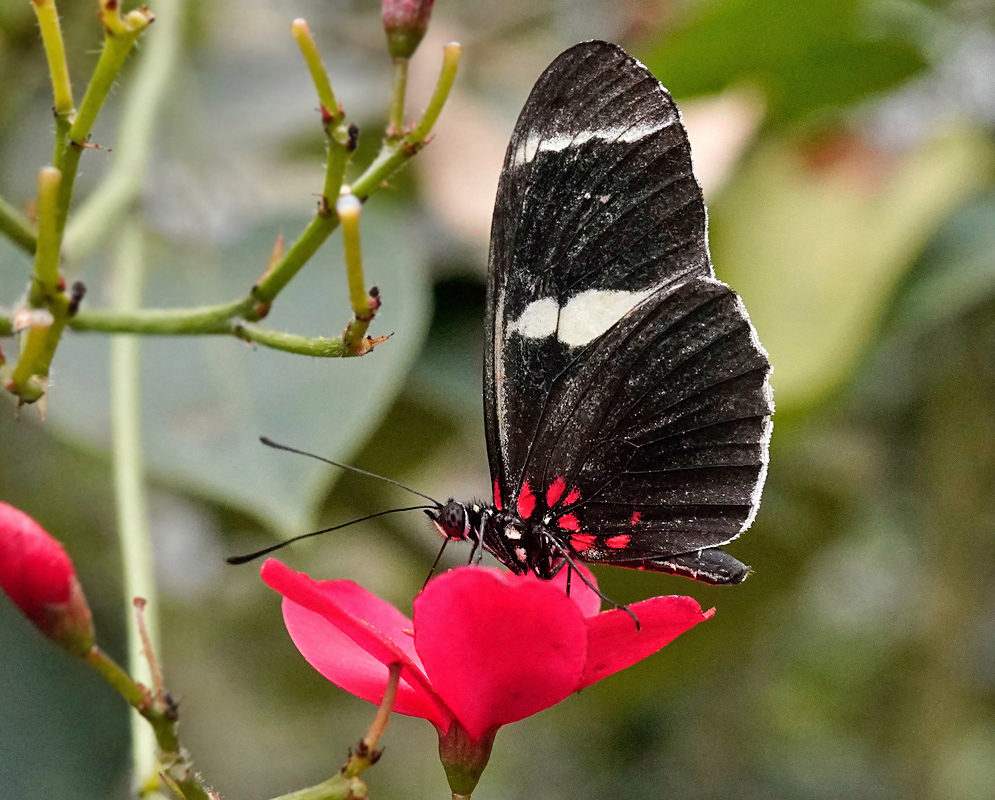
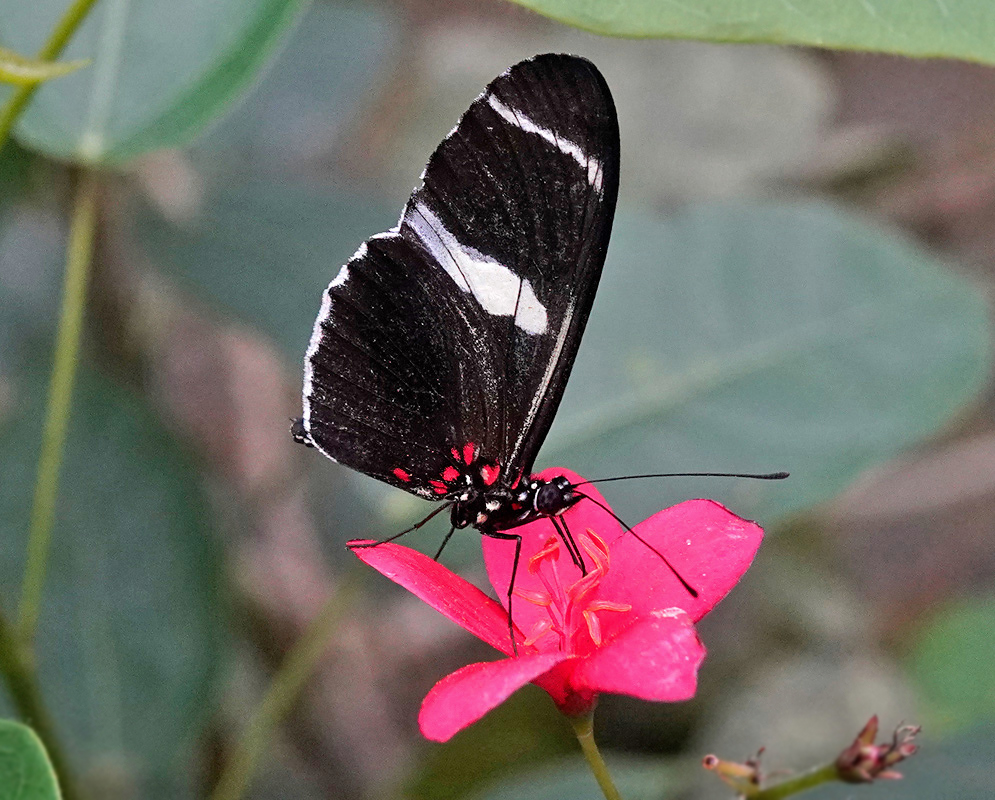
Heliconius doris (Doris longwing) ranges from Mexico through Central America and across northern and western South America. Unlike many geographically divided mimicry patterns, red and blue hindwing forms can occur together in the same populations. Both forms have long black forewings crossed by pale bands, while the radiating hindwing markings provide the principal color difference.
Adults use flower nectar and also collect pollen, which they digest externally on the proboscis to obtain amino acids. This unusual feeding strategy contributes to the long adult life typical of Heliconius. Females lay eggs on passionflower vines, and the larvae feed on the foliage while accumulating defensive compounds. Adults advertise chemical protection with conspicuous wing patterns and often return to habitual communal night roosts. Photographed in Colombia.