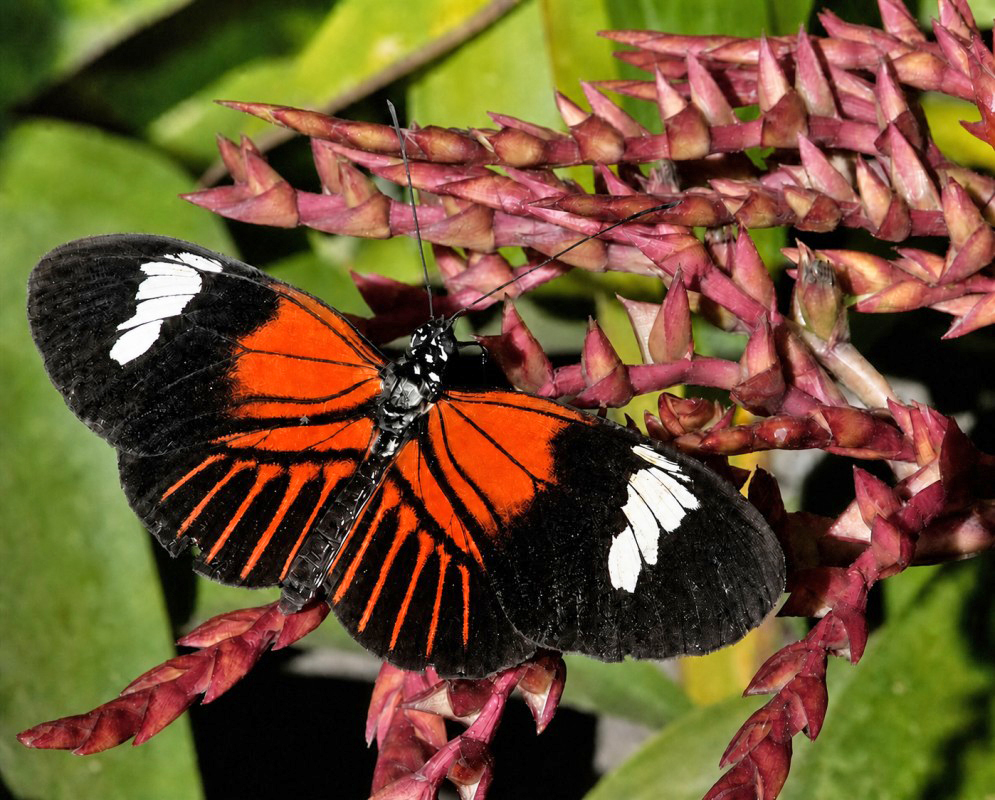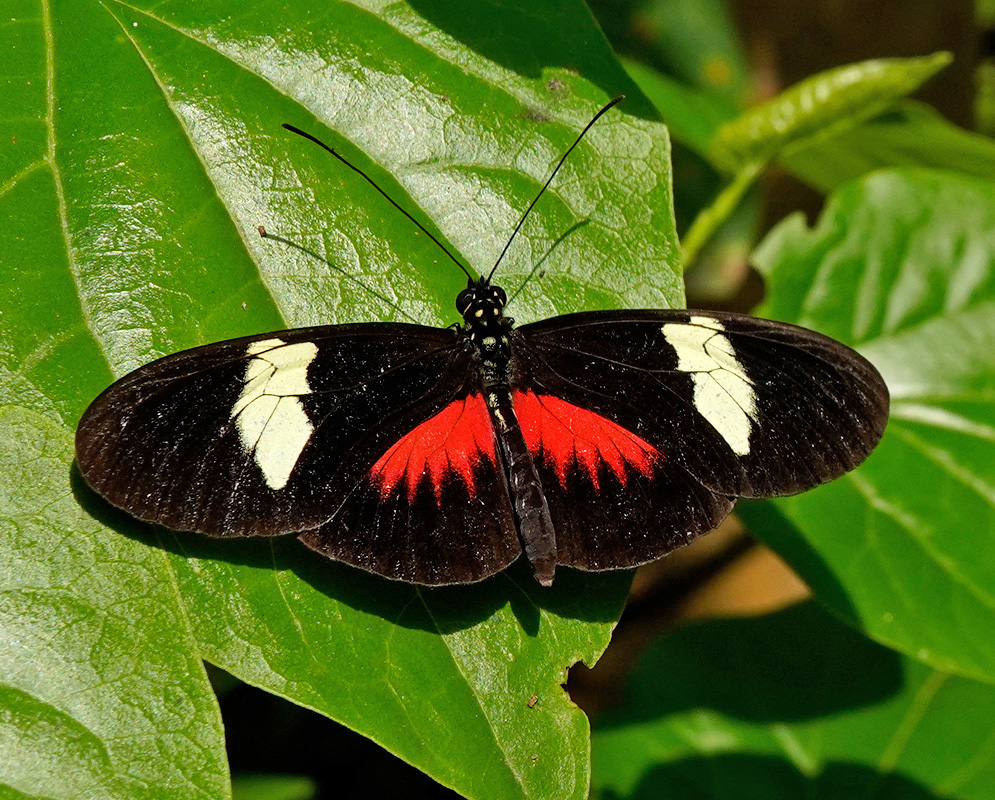


Heliconius melpomene (Postman Butterfly)
Heliconius melpomene (postman butterfly) occurs widely from Central America through tropical South America, especially along forest edges, streams, riverbanks, and other open humid habitats. It has many geographic forms. Their red, yellow, or white warning patterns frequently match the local form of Heliconius erato, an independently evolved Müllerian mimic that shares chemical defenses and teaches predators the same visual warning.
Females lay eggs on passionflower vines. Host choice can be narrow in some regions and broader in others, reflecting local specialization rather than a single plant association across the species’ full range. Adults take nectar and actively collect pollen, releasing nutrients from it on the proboscis. They follow learned foraging circuits and repeatedly return to communal evening roosts. Photographed in Colombia.