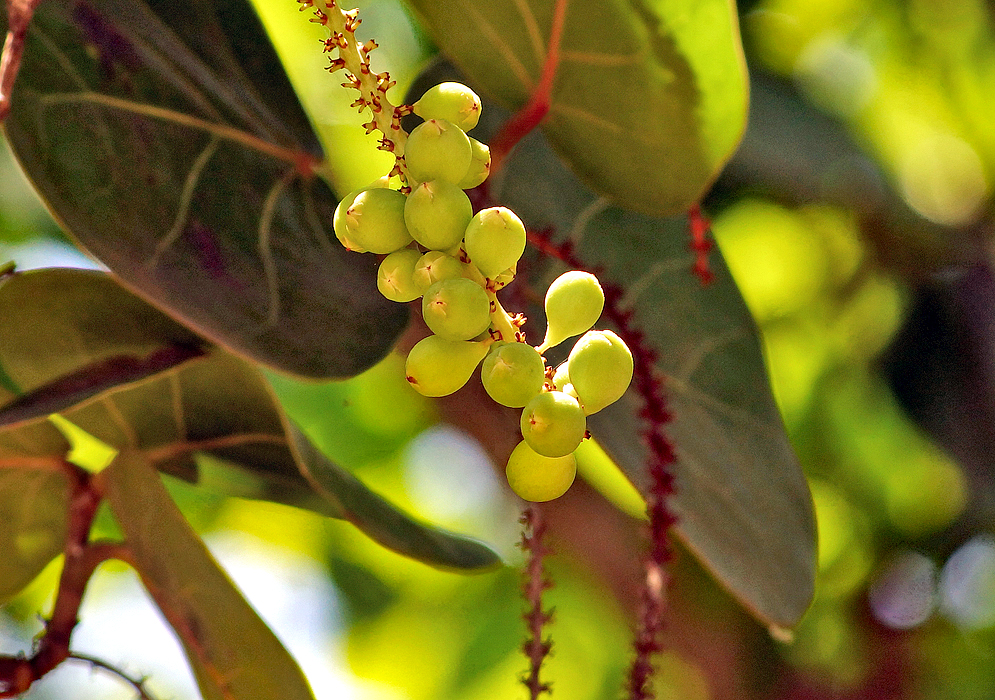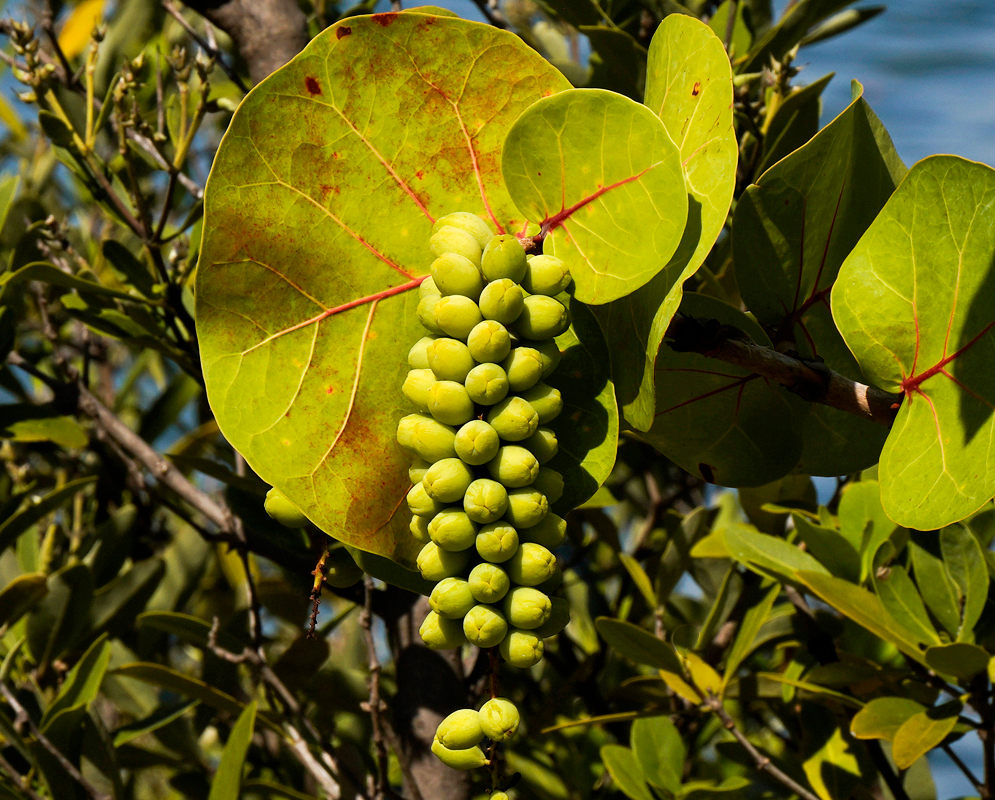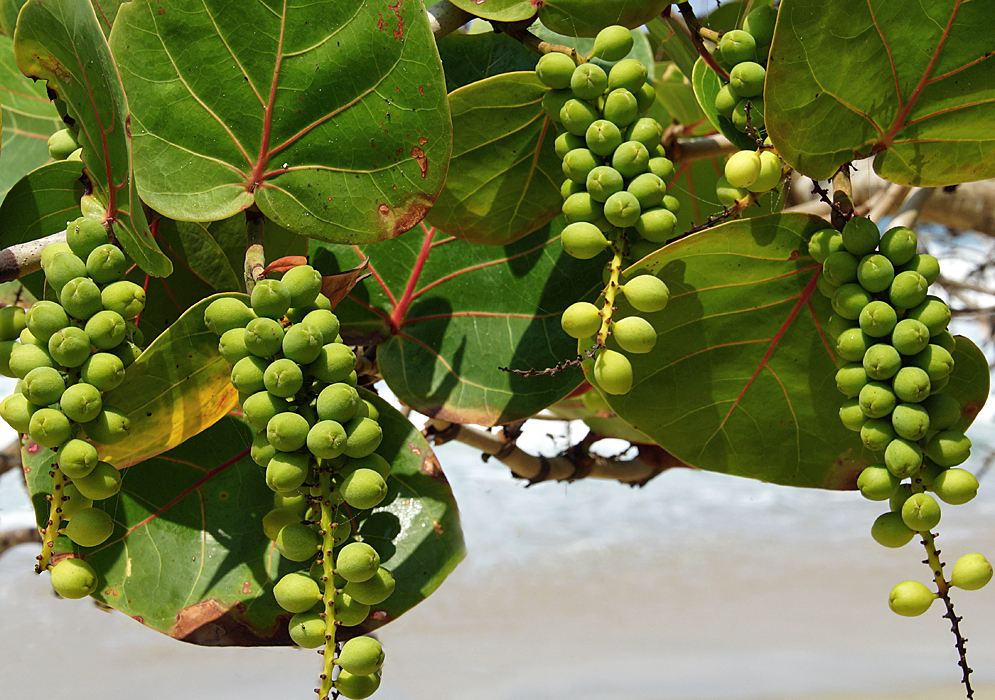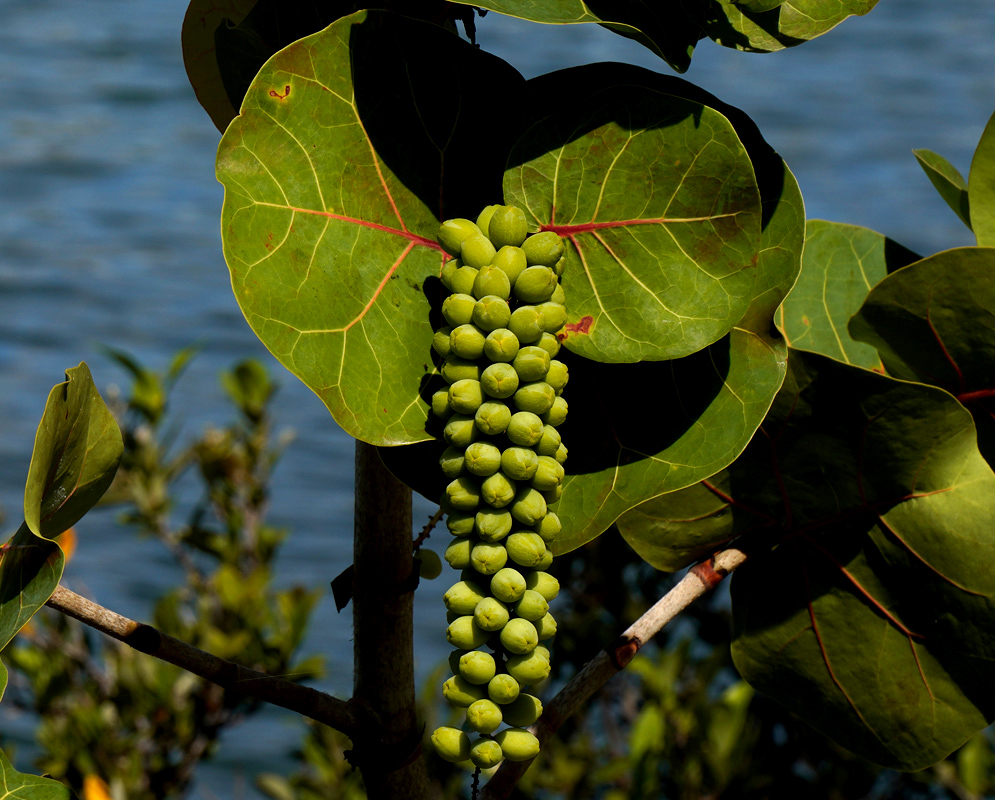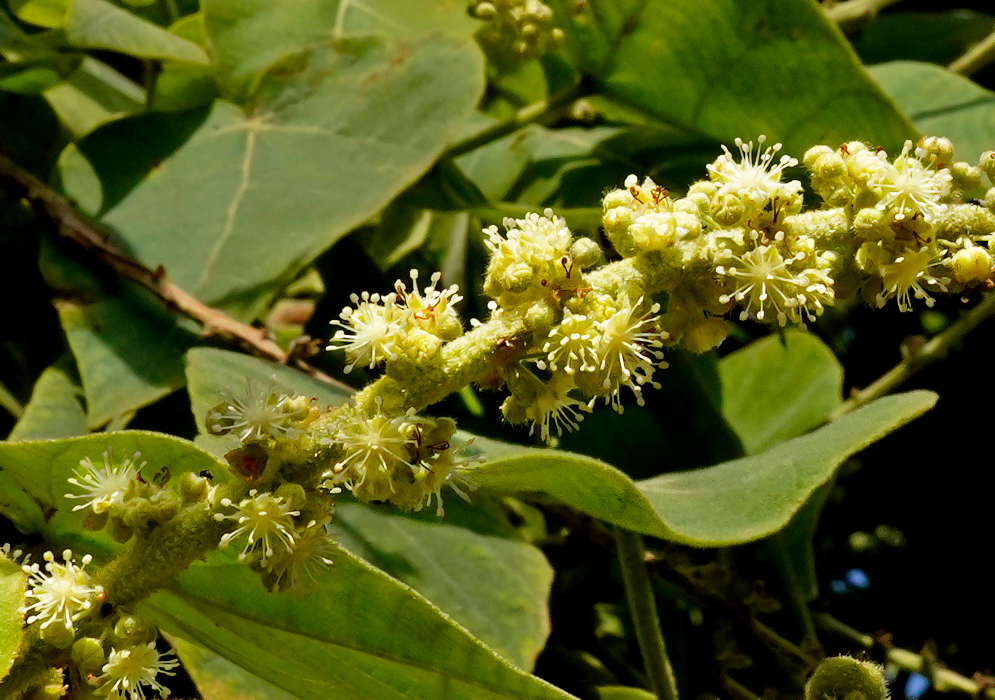


Coccoloba uvifera (Seagrape)
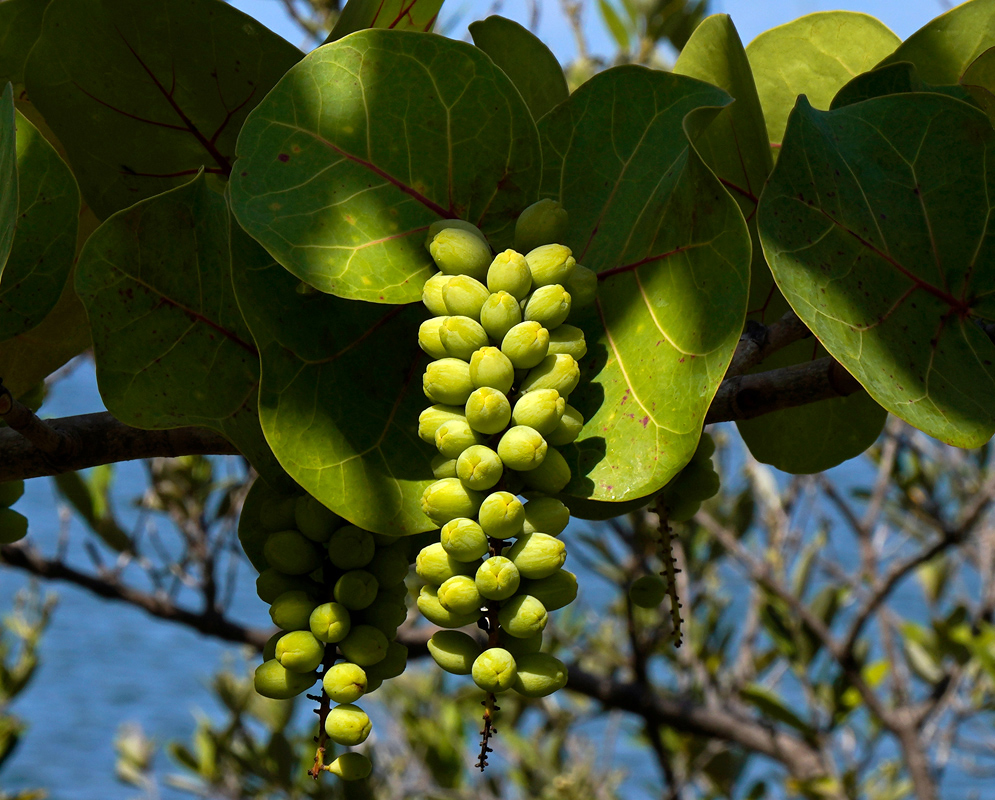
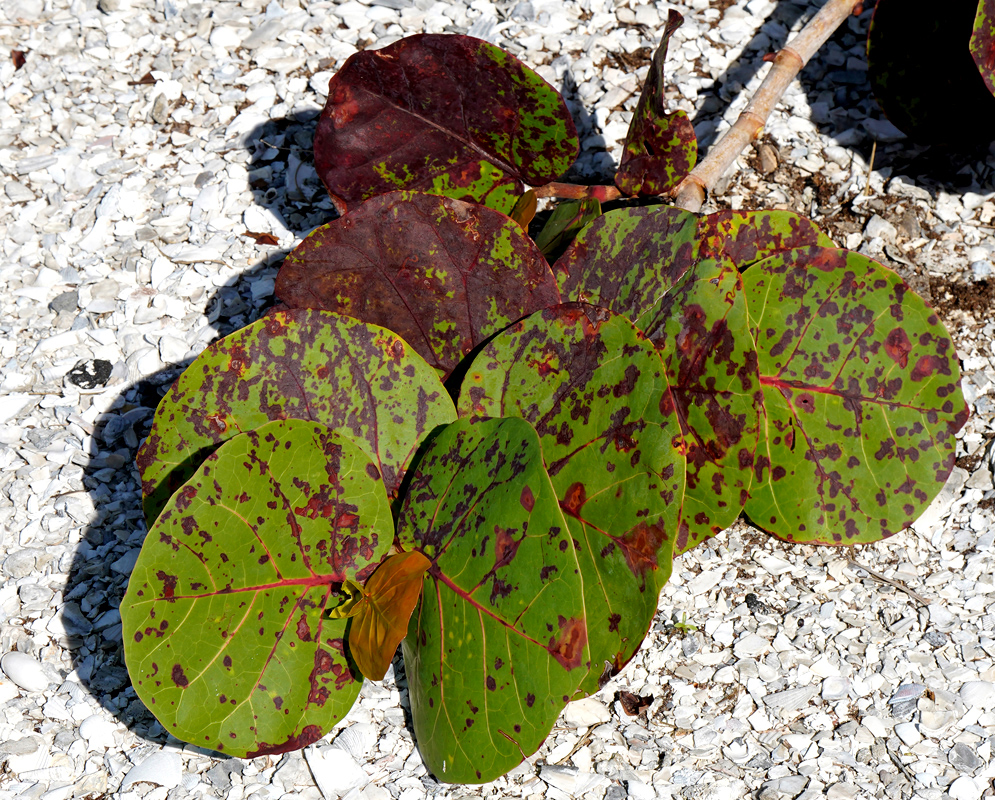
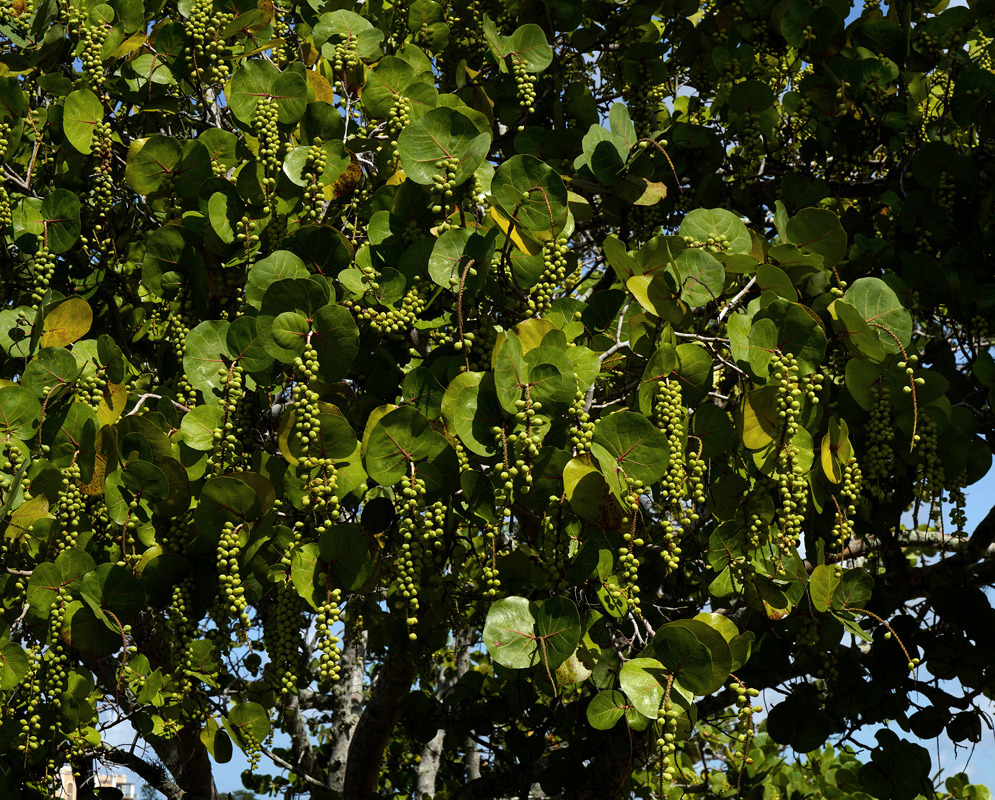
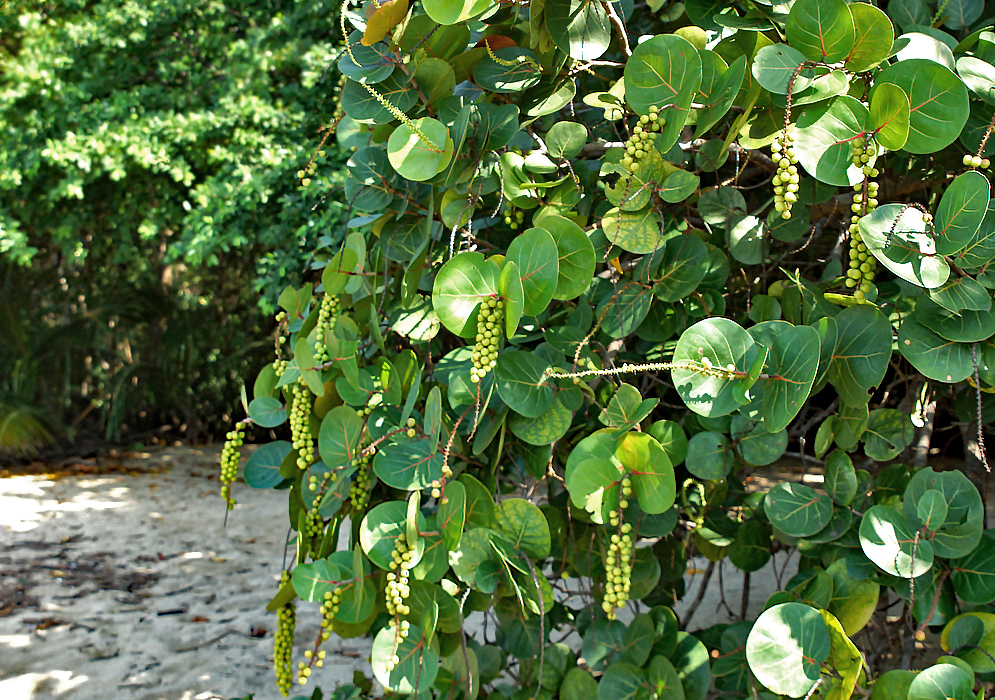
Native from Florida through Central America to Peru and across the Caribbean to northern South America, this plant is an evergreen shrub or tree of sandy coastal thickets. Exposed coastal plants often spread as large shrubs, while sheltered plants can develop into trees. Its nearly round, leathery leaves have conspicuous red veins; young leaves are bronze, and older leaves may redden before falling. The smooth bark peels in thin, mottled plates. Small, creamy-white flowers grow along slender clusters, with male and female flowers on separate plants. Female plants produce drooping, grape-like clusters that ripen from green to purplish red. Their edible flesh develops from persistent flower parts surrounding a single-seeded fruit. The tart fruits are used in jellies and preserves, and the hard wood has been used for cabinet work. The species tolerates salt spray and drought. Photographed in the departments of Atlántico and Magdalena, Colombia.