

Coccoloba uvifera (Seagrape)
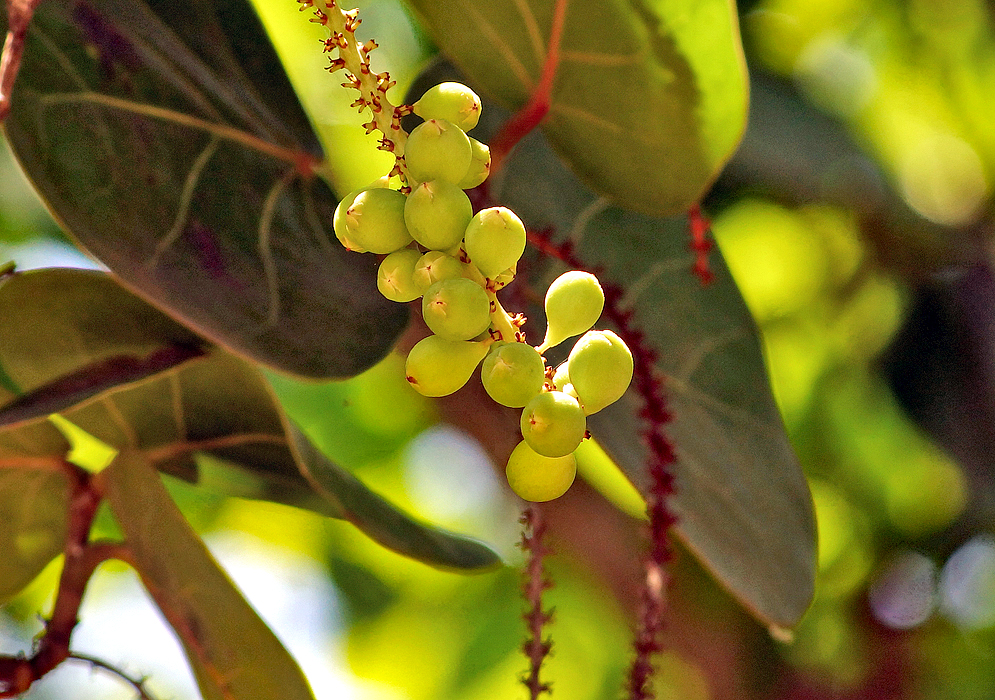
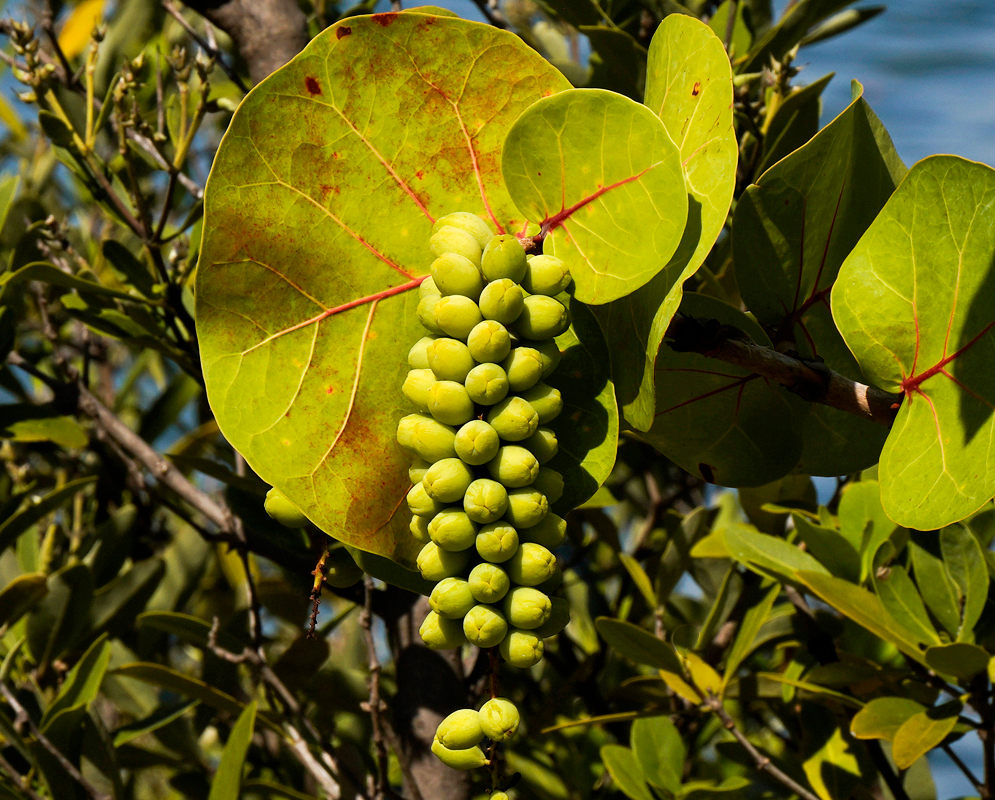
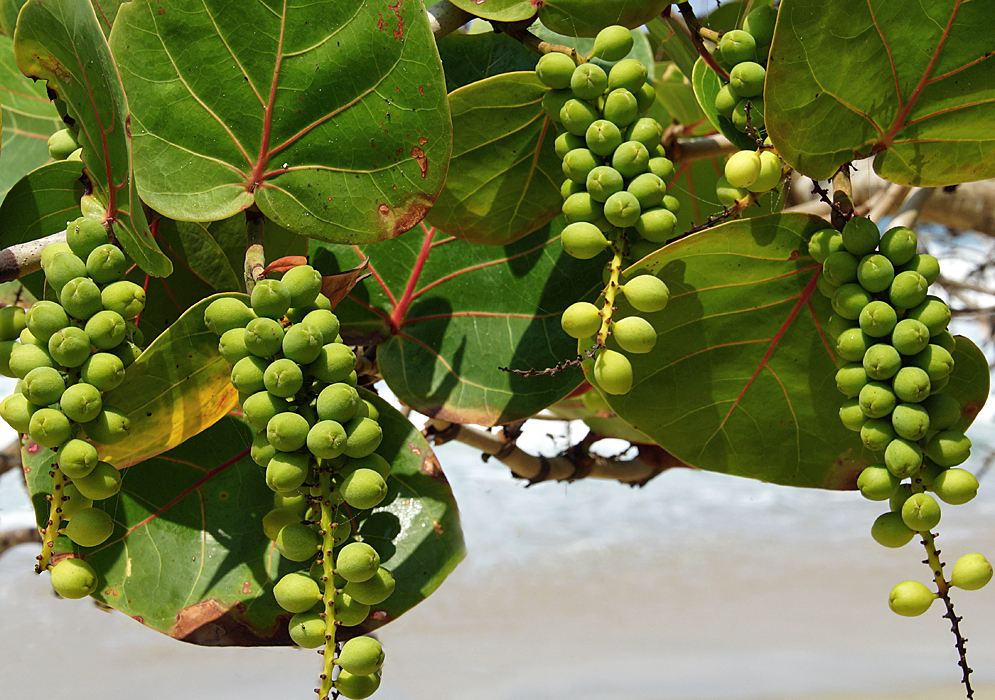
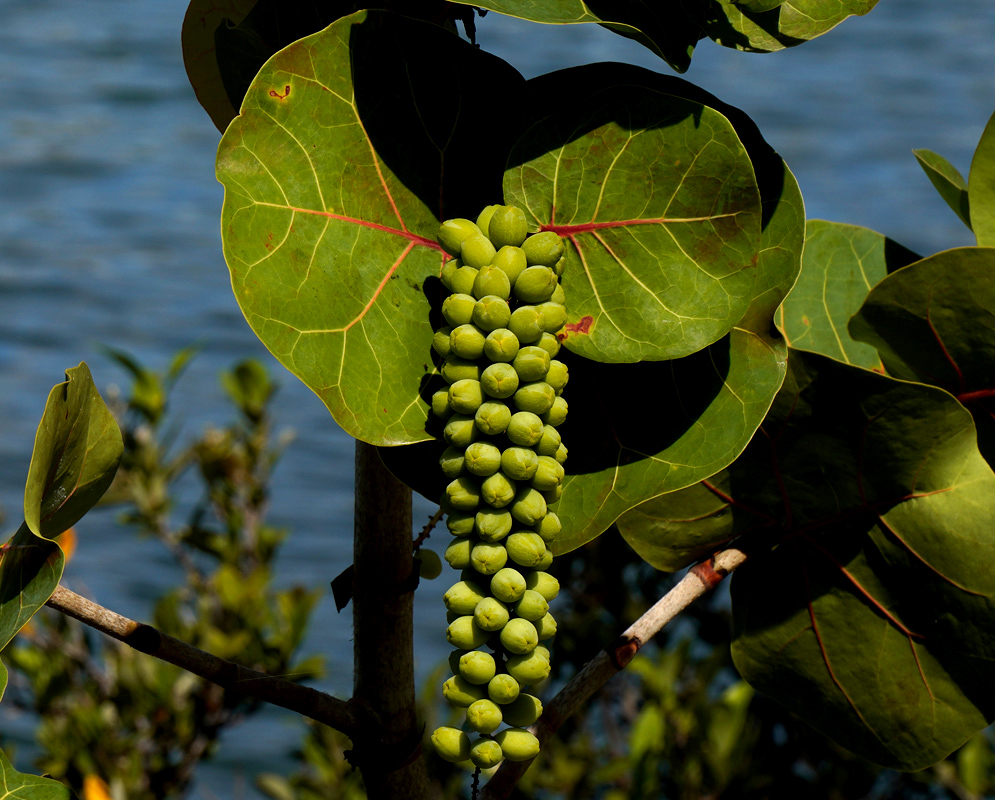
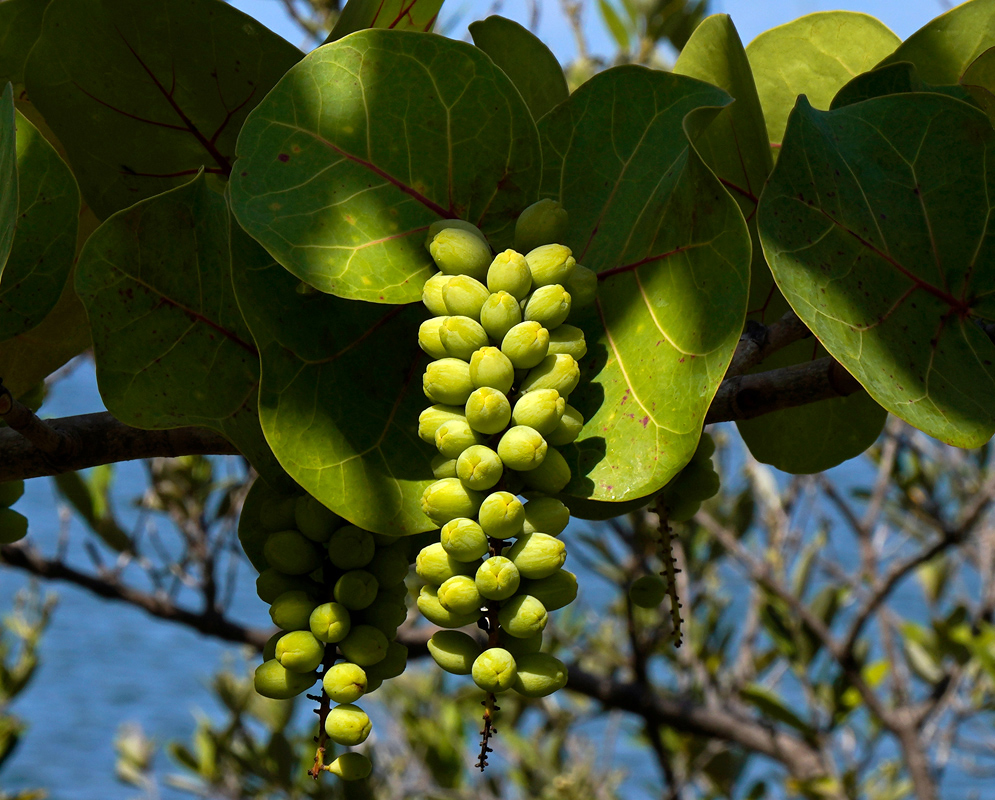
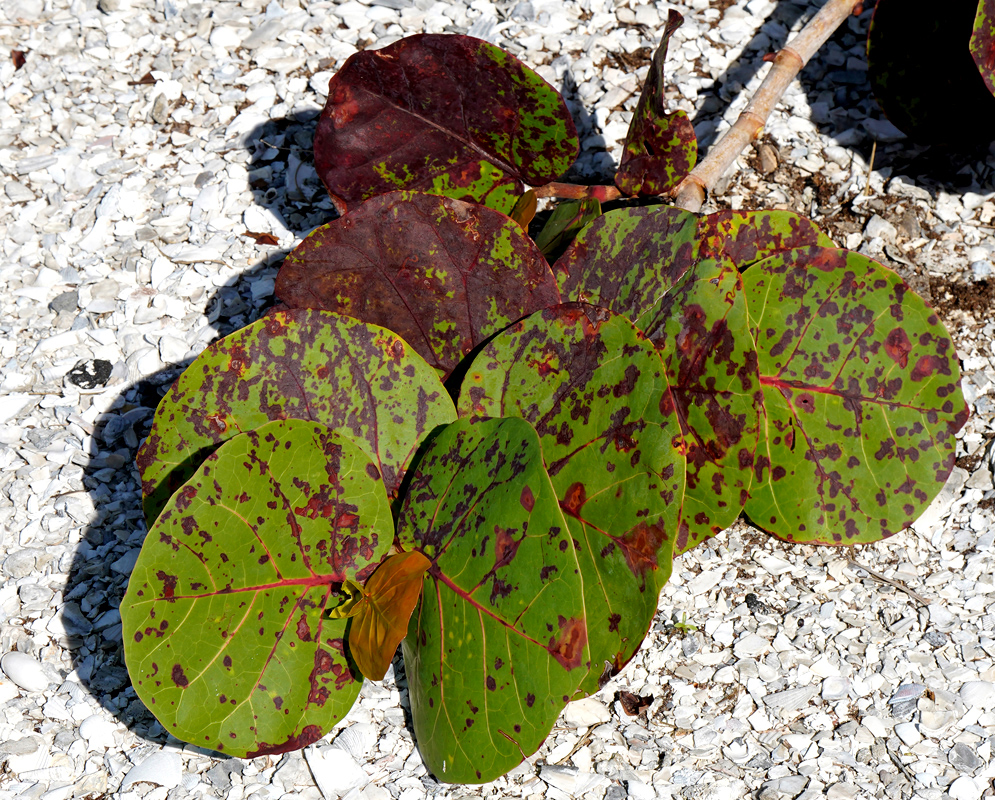
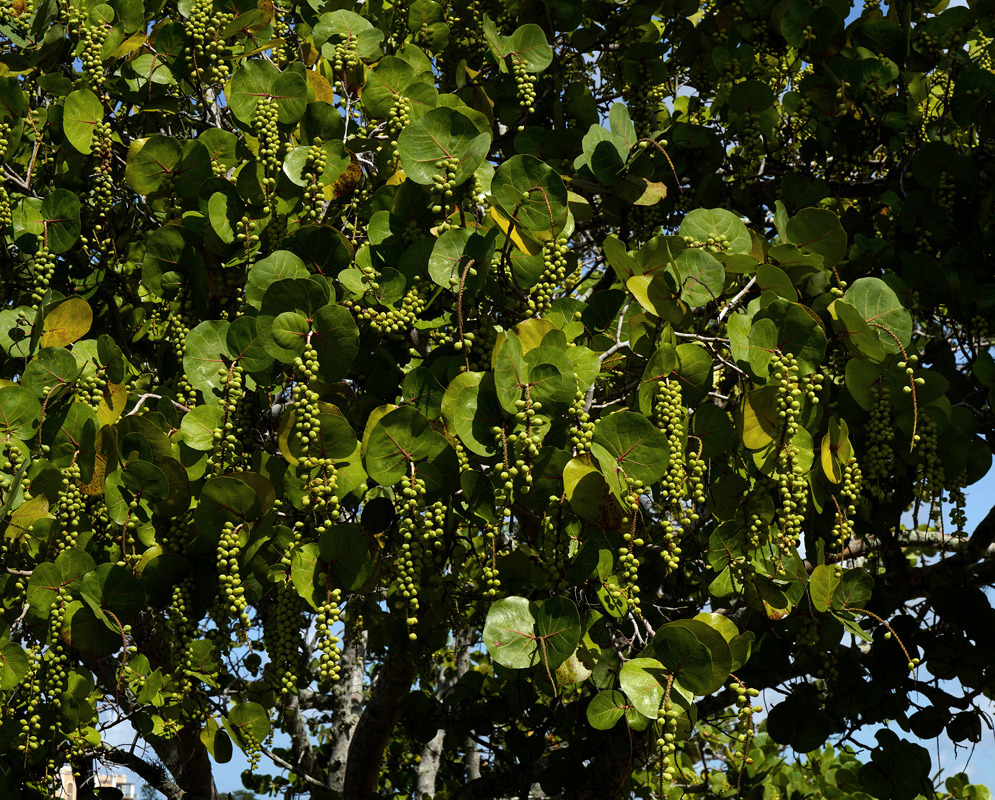
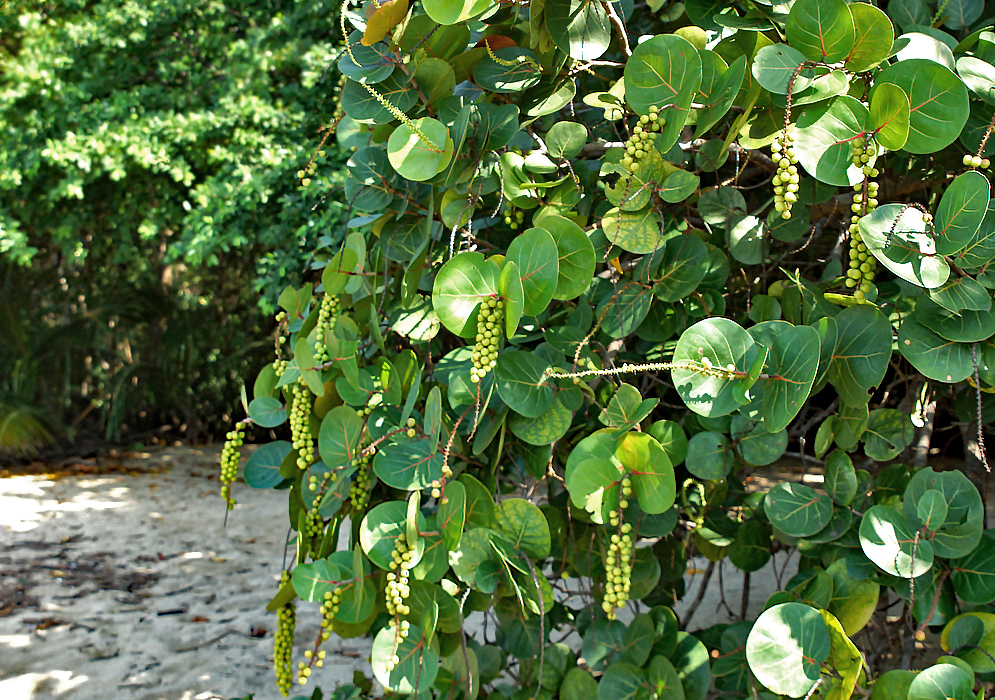
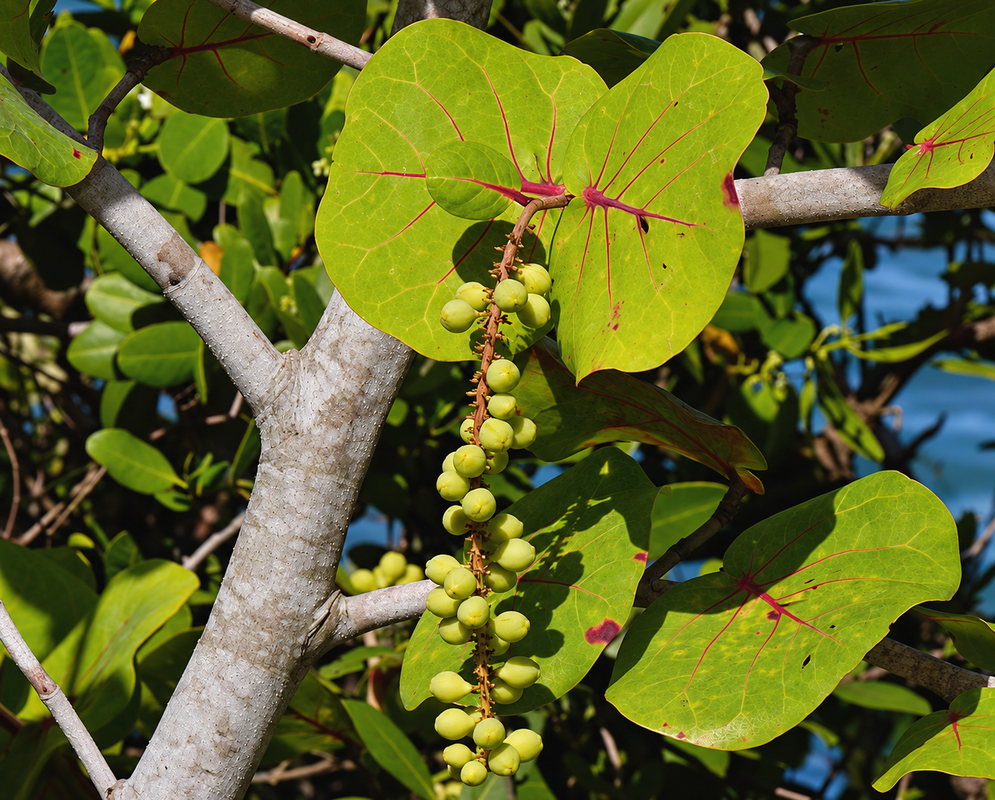
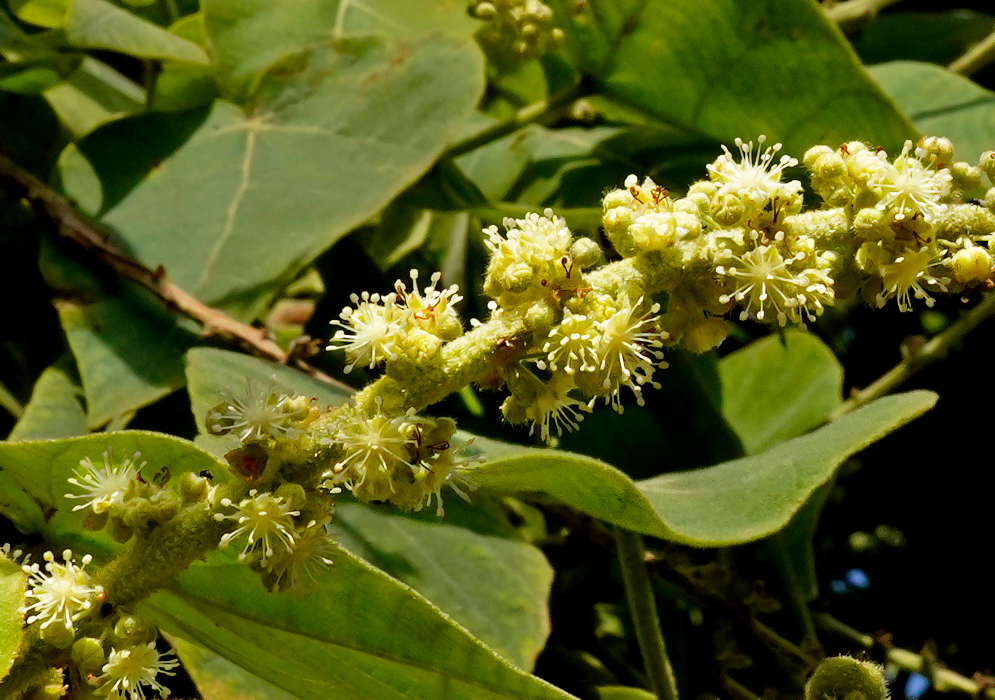
Native from Florida through Central America to Peru and across the Caribbean to northern South America, seagrape is an evergreen tree of sandy coastal thickets. Its spreading branches carry leathery, rounded leaves with conspicuous reddish veins. Small, creamy-white flowers grow in slender clusters, with male and female flowers on separate plants. Female trees produce hanging, grape-like clusters with edible flesh that develops from persistent flower parts surrounding a single-seeded fruit. Salt-spray tolerance makes it useful in coastal shelter and dune restoration.
The fruits have a tart to sweetish flavor and are eaten fresh or made into jellies, preserves and fermented drinks. Its hard wood has been used for cabinet work, and tannins from the bark for tanning. Bark preparations also have a traditional medicinal use for diarrhea in the Caribbean; this is an ethnomedical application whose clinical effectiveness has not been established. Photographed in the departments of Atlántico and Magdalena, Colombia.