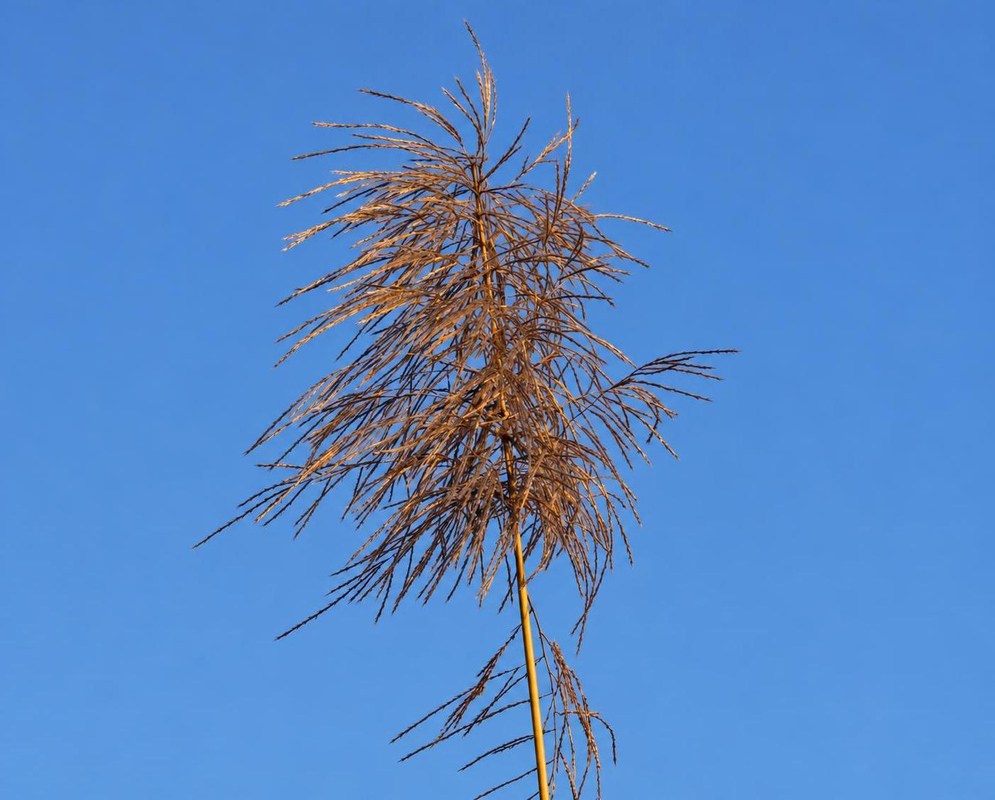

Saccharum officinarum (Sugarcane)
Native to New Guinea, sugarcane is a robust perennial grass domesticated from the wild species Saccharum robustum. Its jointed stalks store sucrose-rich juice, originally obtained by chewing the softer internal tissues. Most modern commercial canes are complex hybrids incorporating Saccharum officinarum and wild Saccharum spontaneum ancestry. Commercial sugarcane production is concentrated in tropical and subtropical regions, with Brazil, India, China, Pakistan and Thailand among the major producers. The crop supplies sugar, molasses and ethanol; the fibrous residue, called bagasse, fuels mills and is used for paper and fiberboard.
In Colombia, concentrating the juice produces panela, the unrefined sugar used in agua de panela, often served with lemon, hot or cold. Sugarcane byproducts also supply livestock feed. In traditional northern Peruvian medicine, cane stems are included in mixed herbal preparations for kidney and prostate inflammatory complaints. This use has not been established as a clinical treatment. Photographed in the Valley of Risaralda, Colombia.