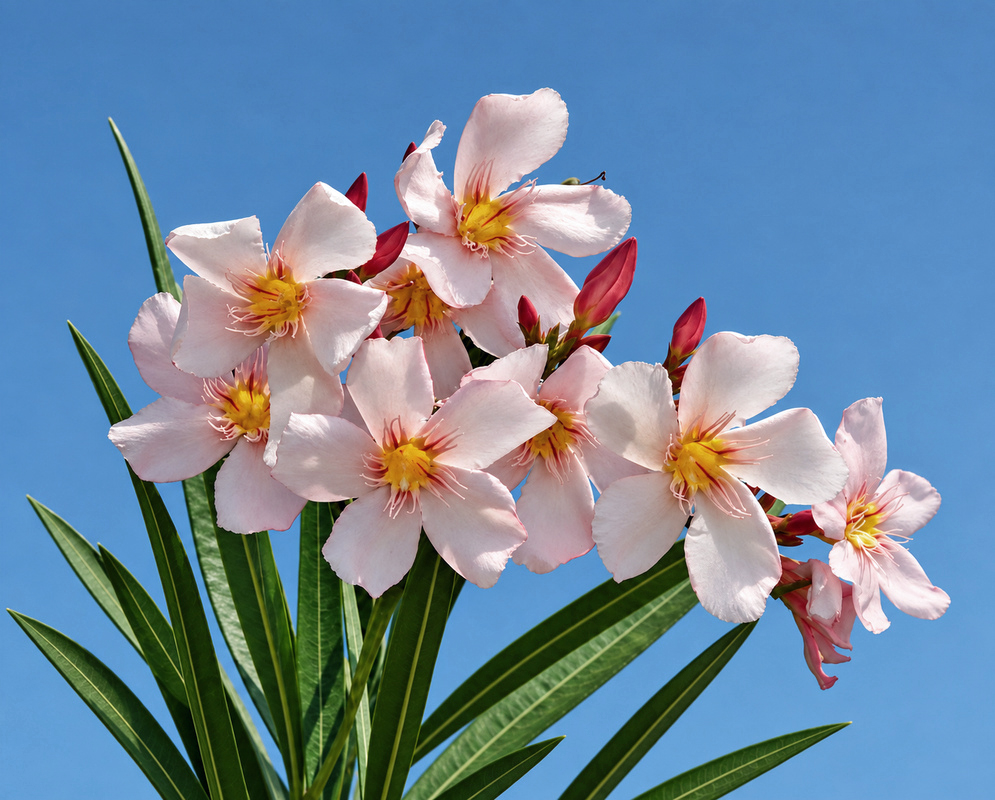
Nerium oleander
Native from the Mediterranean region to Myanmar, this evergreen shrub or small tree grows naturally along seasonally dry, rocky watercourses. Its tubular, five-lobed flowers are pink or red in the wild; cultivated forms include white, cream, yellow and purple flowers, as well as double blooms. Some are fragrant. The paired, slender fruits split open to release seeds with a plume of hairs that aids wind dispersal.
The plant has been cultivated since ancient times and appears in Roman wall paintings at Pompeii. All parts contain highly toxic cardiac glycosides and remain poisonous even when dried. It tolerates drought and salt spray, making it useful for coastal hedges and screens. Burning its branches produces harmful smoke. Photographed in Colombia and Florida.