

Mitu tomentosum (Crestless Curassow)
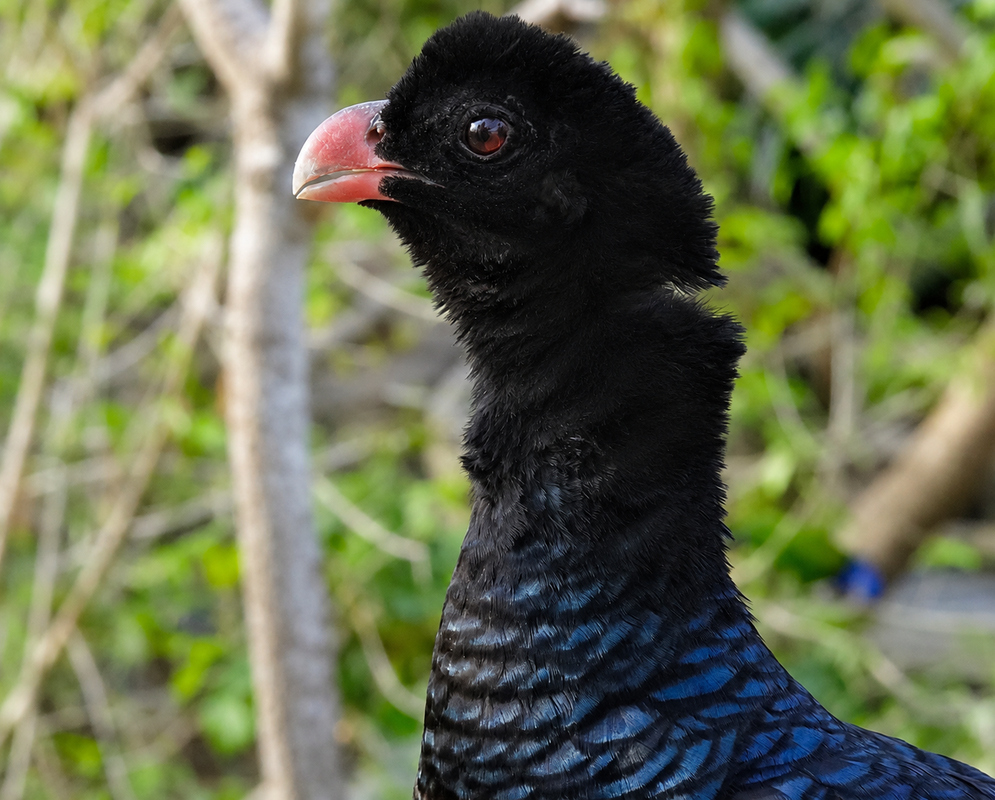
Mitu tomentosum, the Crestless Curassow, is a large, turkey-sized terrestrial bird of eastern Colombia, southern Venezuela, Guyana and northwestern Brazil. It lives in lowland tropical forest, including humid forest on unflooded ground and gallery forests following rivers through the savannas. In Colombia it is associated with the eastern part of the country, especially wooded areas along rivers, creeks and smaller watercourses. Its predominantly dark plumage has a blue gloss, while chestnut feathers occur toward the belly and tail tip. The red bill lacks the prominent casque found in some other curassows, and the head lacks a developed crest.
Its breeding biology remains poorly documented. In the early months of 2016, a camera trap in the Bita River landscape recorded a female accompanied by two chicks. The observation came from El Bolsillo, a property in Puerto Carreño, Vichada, monitored by the Proyecto Vida Silvestre team. Researchers documented the family group while using automatic cameras to monitor wildlife in the Llanos Orientales. The species is also taken for food. Research coordinated by Colombia’s Sinchi Institute and local communities included it among the animals used for subsistence in the Estrella Fluvial de Inírida wetland region. That monitoring combined community harvest records with efforts to estimate the abundance of hunted wildlife using camera traps and transect counts. Photographed in Colombia.