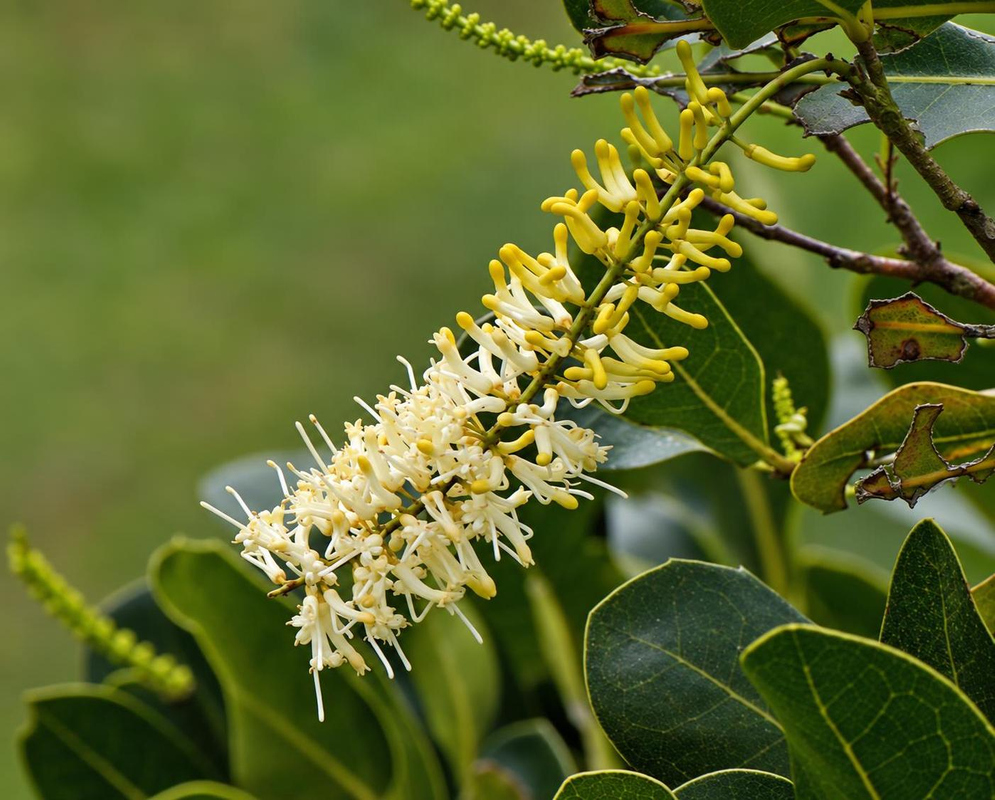

Melicoccus bijugatus
Native to Colombia and Venezuela, this tropical fruit tree can reach about 85 feet tall and is widely cultivated in the Caribbean. Its compound leaves usually have four leaflets. Small white flowers are generally male or female on separate trees. The clustered fruits keep their green color even when ripe. Their thin, brittle shells crack open to reveal succulent, sweet pulp that clings to one large seed, or occasionally two. The pulp is eaten fresh and can be made into jams and jelly. Fruit is harvested and sold commercially, although formal orchards are uncommon. Honey bees and other flying insects pollinate the flowers. Both male and female trees are generally needed for reliable fruit production. Established trees tolerate prolonged drought but are intolerant of flooding. Photographed in the department of Atlantico, Colombia.