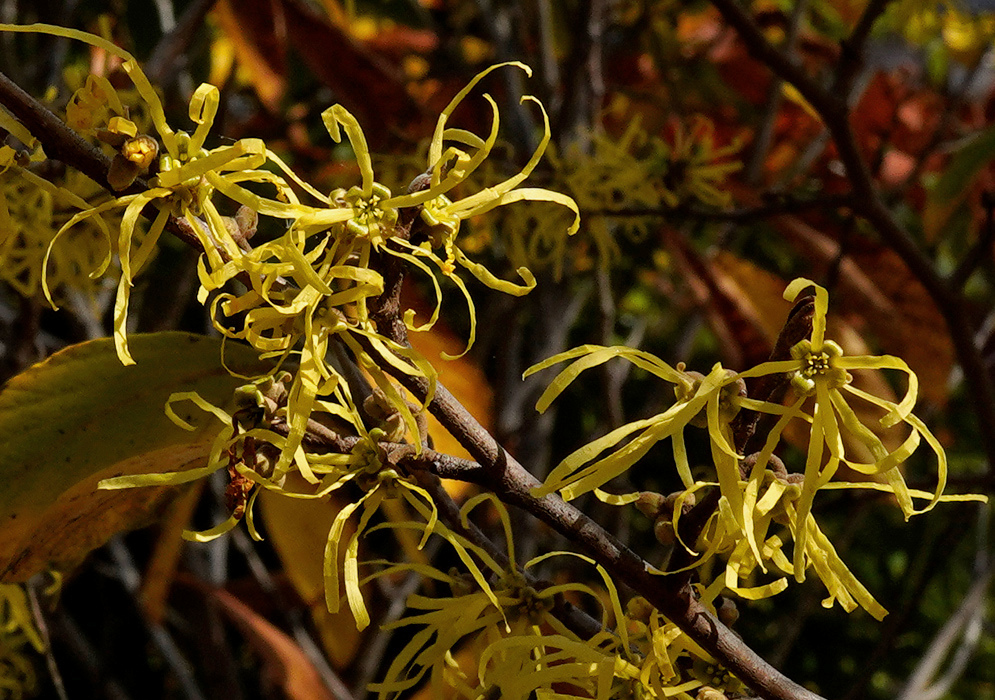


Hamamelis virginiana (Common Witch Hazel)
Native to eastern North America, common witch hazel is a deciduous shrub that blooms in autumn and early winter as its leaves turn and fall. Its clustered, fragrant flowers have narrow yellow petals resembling curled ribbons. The petals extend on warm days and roll inward near freezing temperatures. Woody capsules take about a year to mature, allowing ripe fruit to appear beside the next season’s flowers. When the capsules split, they eject their seeds away from the parent plant.
Bark and leaf preparations have a long history in witch-hazel medicines and skin-care products. Traditional uses include soothing minor skin inflammation and dryness, relieving itching and burning associated with hemorrhoids, and treating minor inflammation of the mouth. Different products use extracts of the bark or leaves or a distillate from leafy twigs, so their composition is not identical. Photographed in Ecuador.