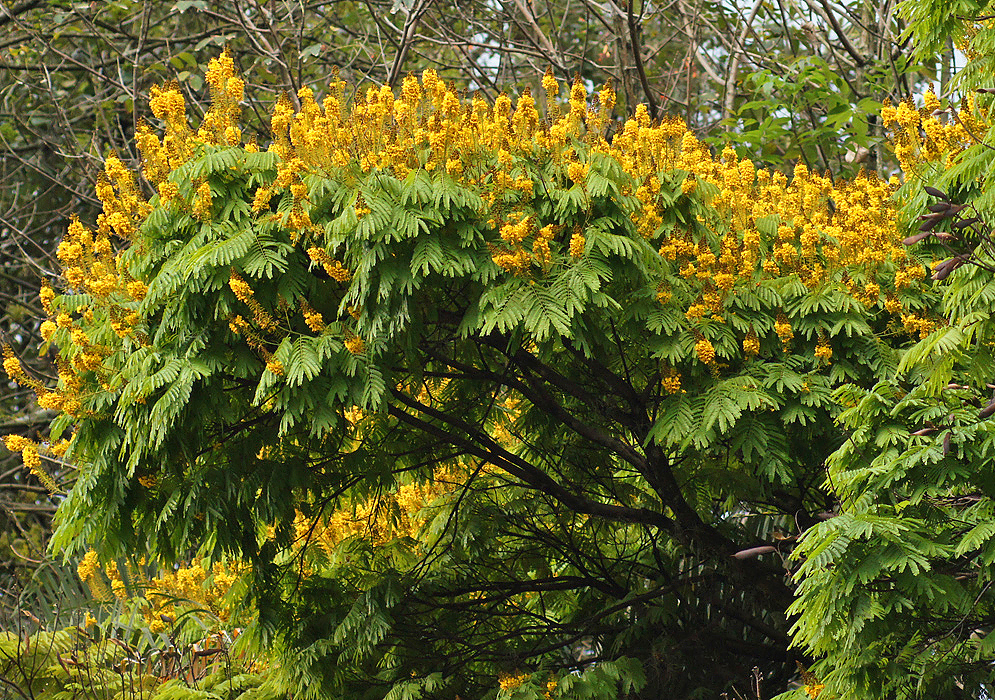


Cenostigma pluviosum
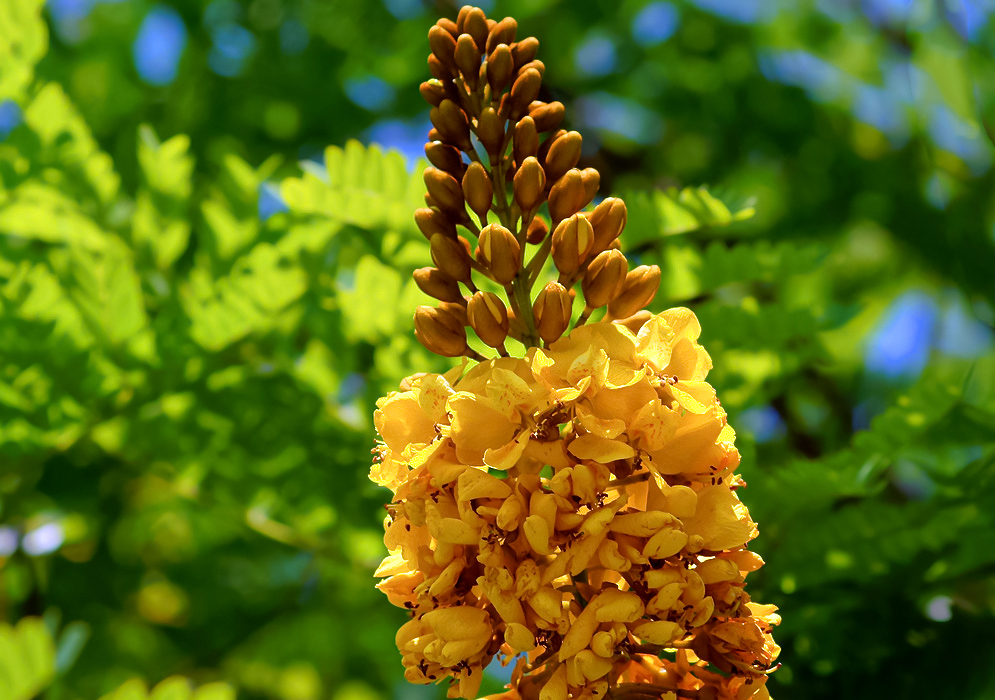
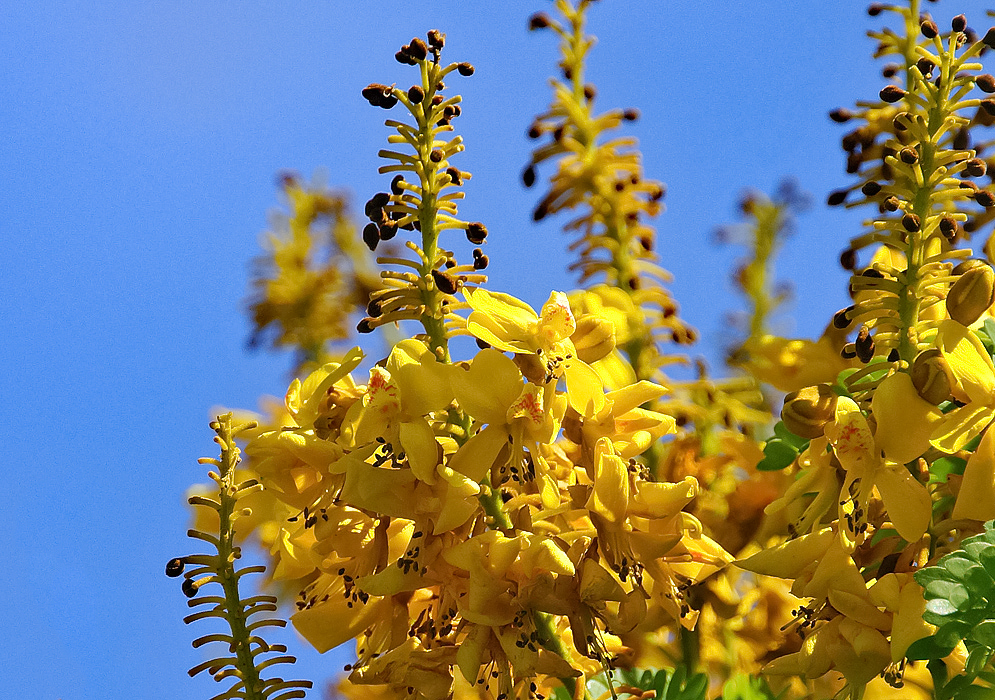
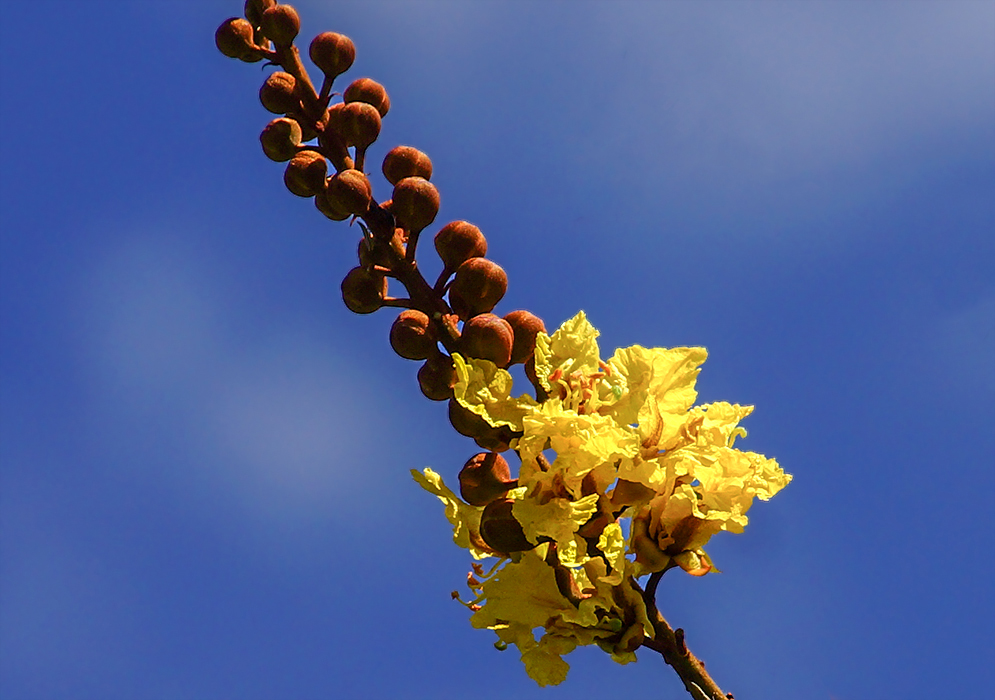
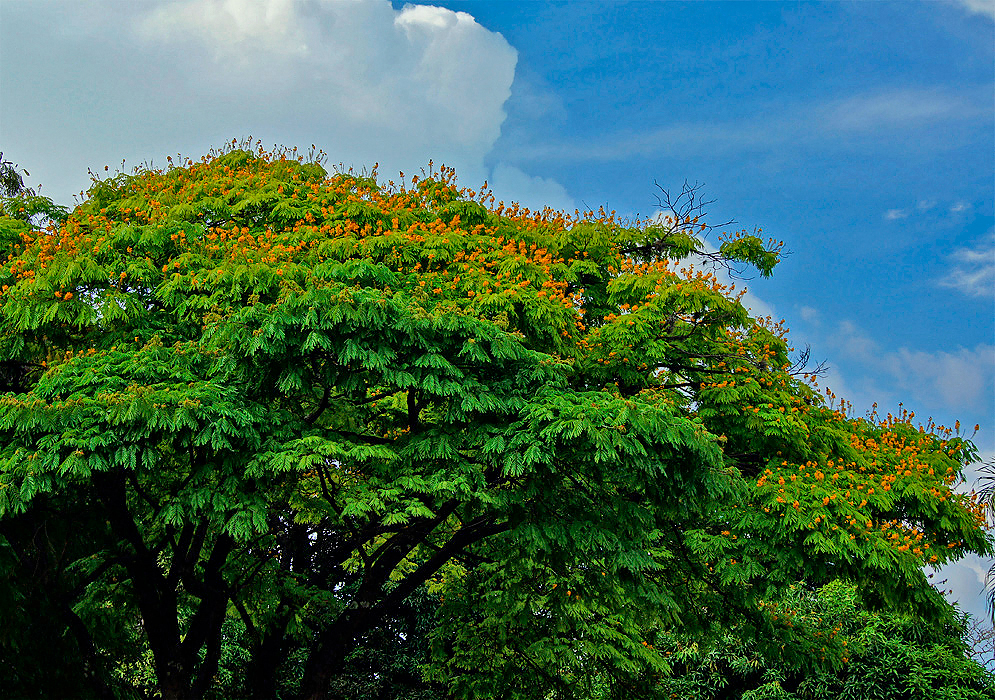
Native from Peru through Bolivia and Brazil to Paraguay and northwestern Argentina, sibipiruna is a tree of seasonally dry forests. Its yellow flowers form conspicuous upright clusters above a canopy of twice-divided leaves. The flattened pods split open as they mature, releasing the seeds. Several varieties occur across its range. It is extensively planted as a shade and street tree in Brazil and is also cultivated in Colombia, including Medellín.
Its wood is used locally in construction, carpentry, furniture, flooring, fence posts and rural bridges, as well as for firewood and charcoal. In Tacana traditional medicine in Bolivia, the bark is used for dysentery. Bark extracts have inhibited malaria parasites in laboratory cultures and reduced parasite levels in infected mice. A separate experimental bark preparation accelerated aspects of skin repair in rats, including the formation of new surface tissue and collagen. These are early laboratory and animal findings, rather than established treatments for people. Photographed in Medellin, Colombia.