
Bocconia frutescens
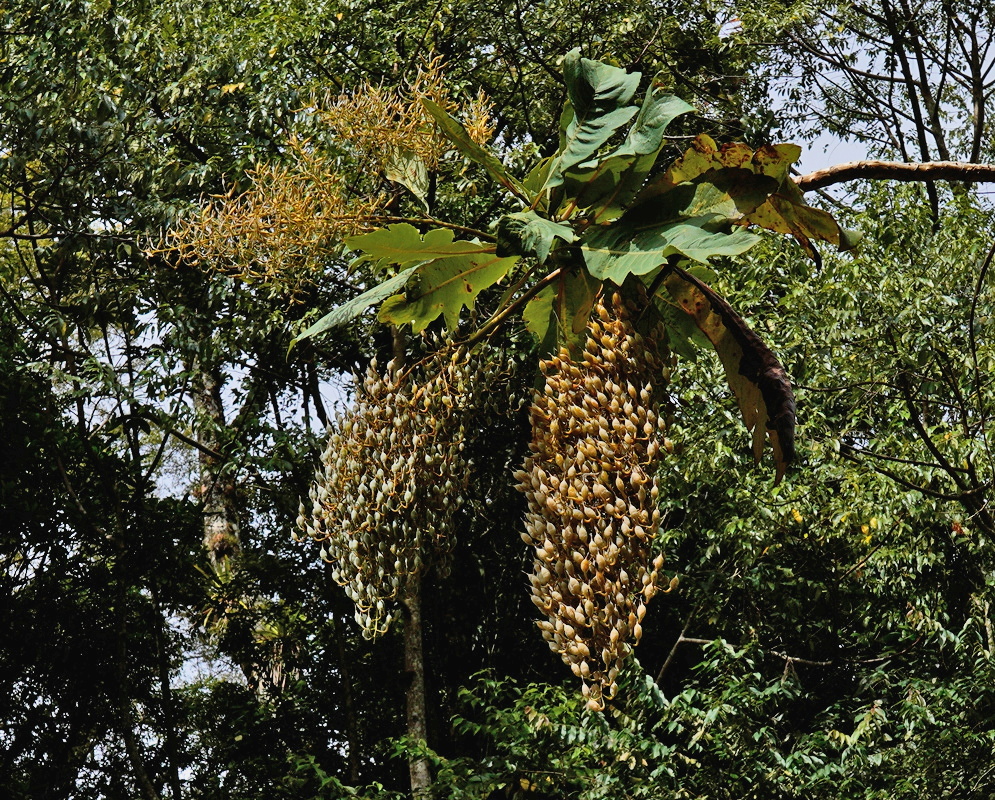
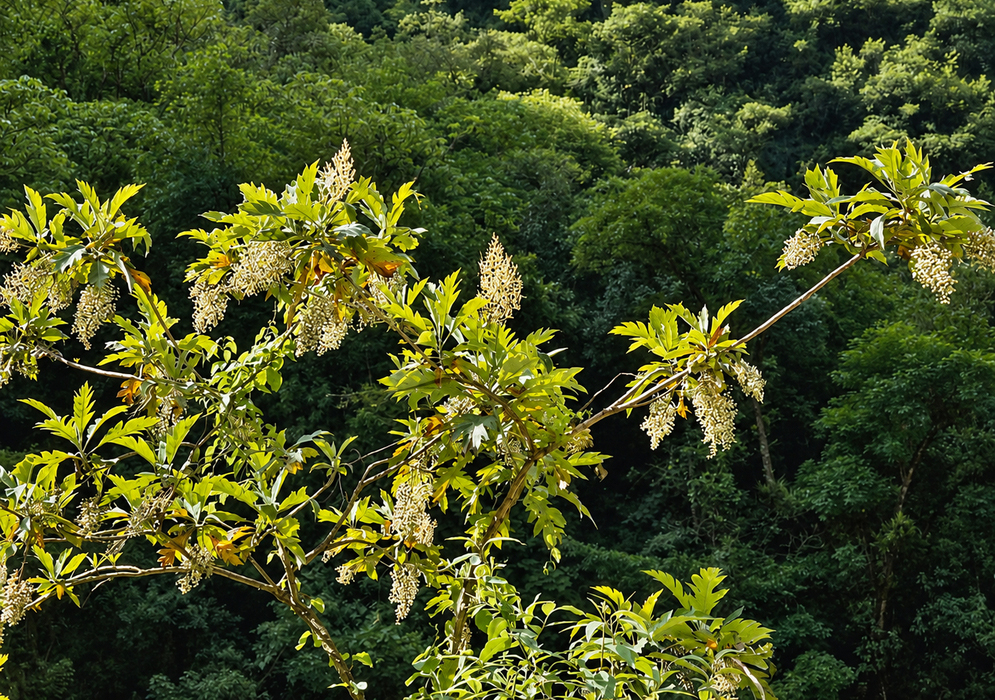
Native from Mexico to northwestern Argentina and across the Caribbean, plume poppy is a shrub with deeply lobed leaves and branched sprays of flowers that lack petals. Each flower sheds its two sepals and exposes the stamens. The hanging capsules split to reveal a single seed partly covered by a fleshy red aril. In Colombia, it grows at roughly 3,900–10,500 feet. Its yellow-orange sap has been used as a dye, and the bark has been used in tanning.
In Mexican traditional medicine, the aerial parts and sap are used for skin ulcers, eruptions and respiratory complaints. Leaf extracts have inhibited certain bacteria in laboratory cultures, although the purified compounds tested in the same study did not show antibacterial activity. Alkaloids from the roots have also been investigated in biochemical studies, including research on receptors involved in blood-vessel regulation. These experimental findings do not establish a treatment for infections or cardiovascular disease. Introduced as an ornamental in Hawaii, it has become an aggressive invader of dry forests, forming dense stands and resprouting after cutting. It is also naturalized in Java. Photographed in the central Andes of Colombia.