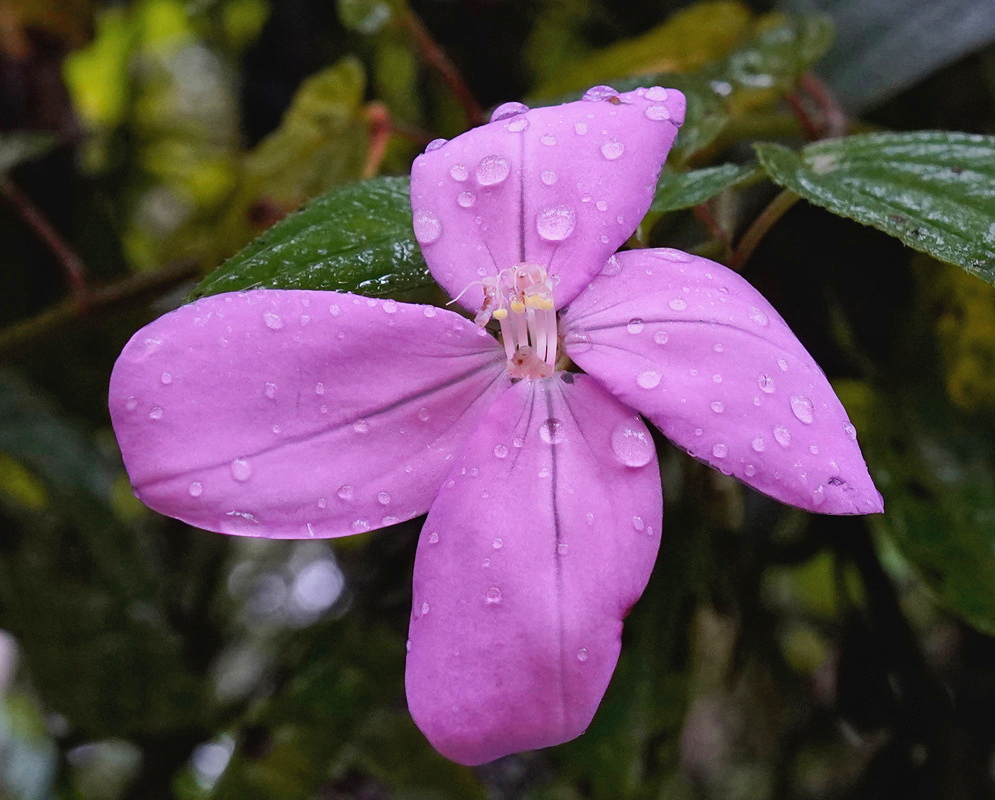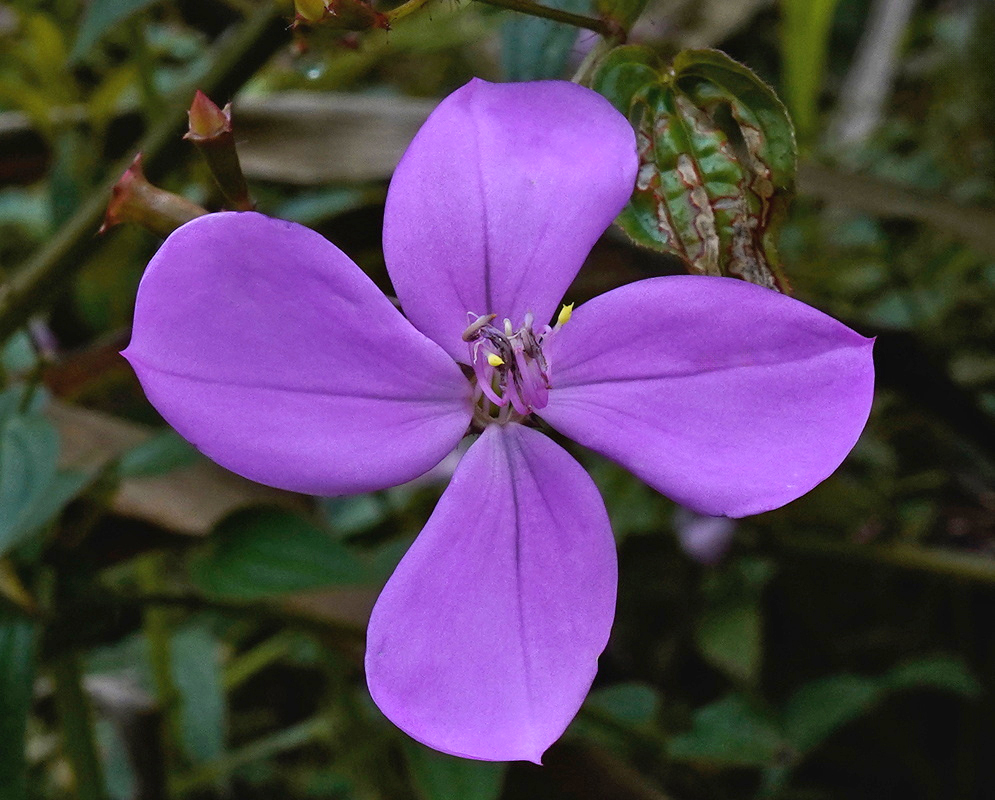

Arthrostemma ciliatum
Native to tropical America, this sprawling perennial herb grows along moist forest edges, streams and disturbed ground. Its angular, somewhat succulent stems can arch over surrounding vegetation. The pink flowers have four petals and eight stamens arranged in two unequal sets. Forked appendages below the anthers give the flower a distinctive structure, and pollen exits through a pore at each anther tip. Dry capsules release numerous seeds with strongly curved surface ridges.
In parts of Central America, the stems and leaves have been chewed to stimulate saliva and ease thirst, and the leaves are eaten in Chiapas, Mexico. Shuar healers in southern Ecuador have used the plant traditionally for acute diarrhea and respiratory complaints. Laboratory testing of an extract made from leaves, stems and flowers found no antibacterial or antifungal activity against the tested organisms at the tested concentrations, so those traditional uses should not be read as demonstrated infection treatments. Introduced to Hawaii, it has become naturalized in moist disturbed habitats. Photographed in the central Andes mountain range of Colombia.