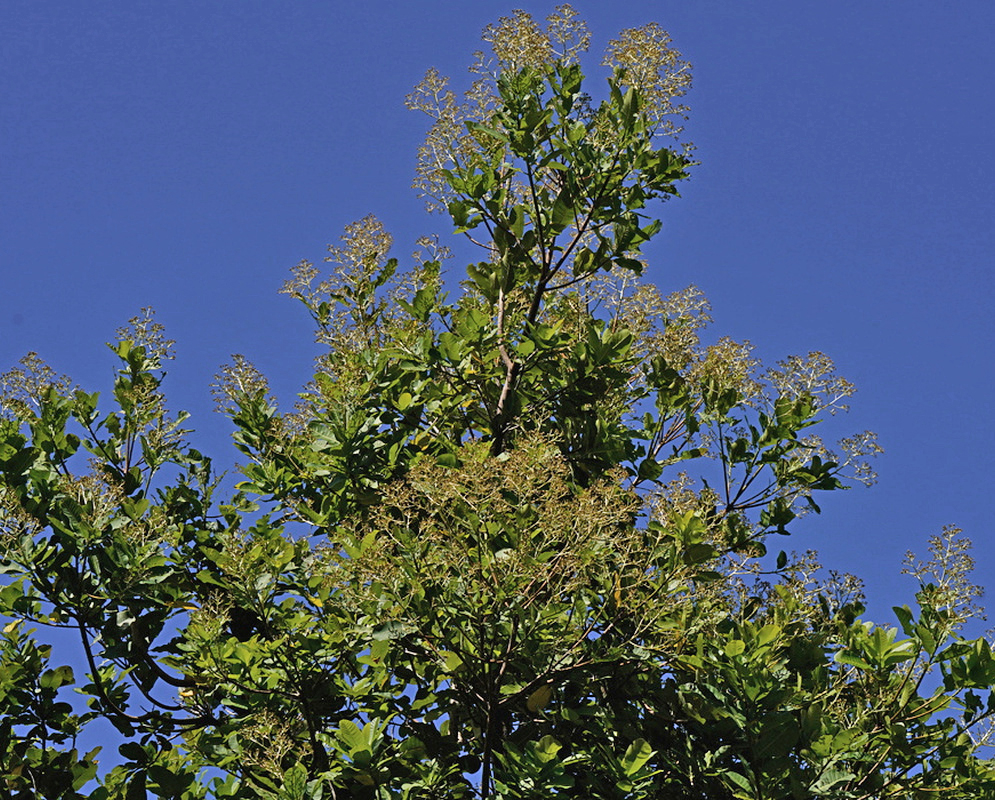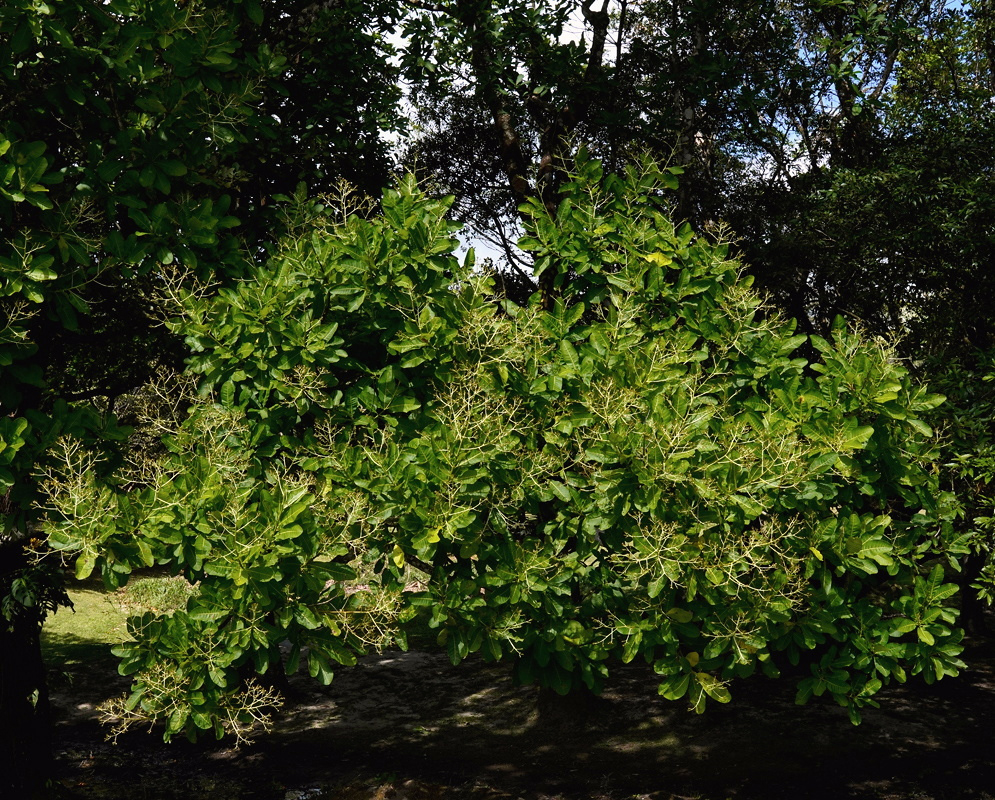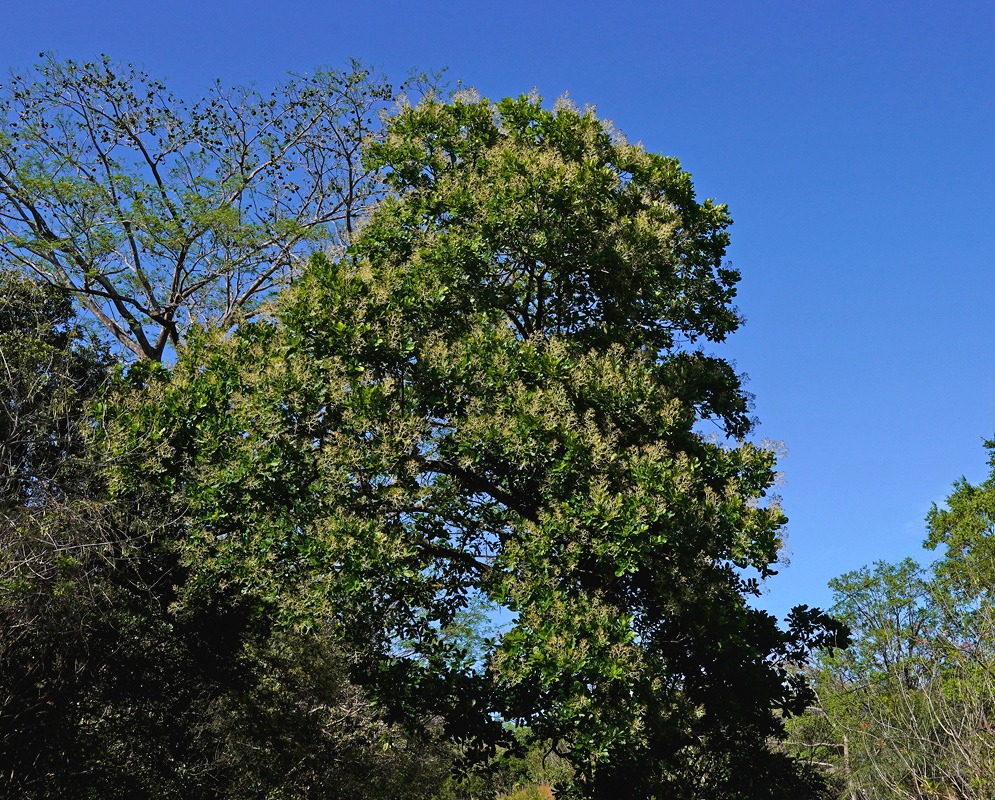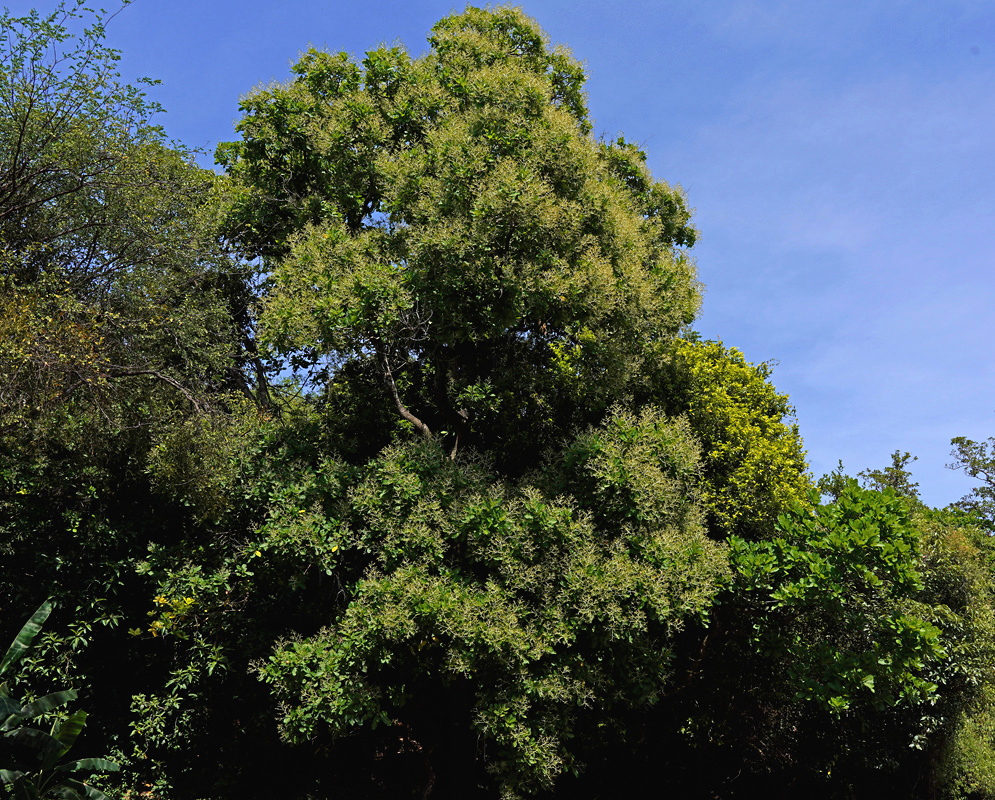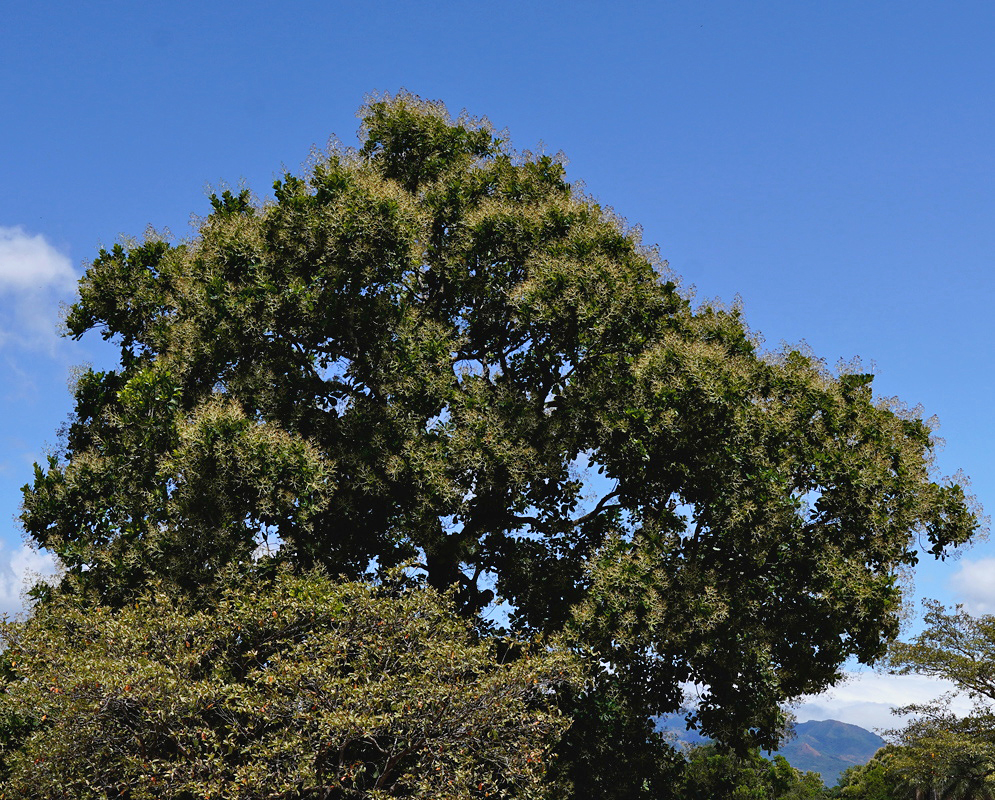

Anacardium excelsum (Wild Cashew)
Native to Cuba and from Central America to Venezuela and Ecuador, this tree is commonly called wild cashew or caracolí. It develops a spreading canopy and often grows beside rivers and streams. Clusters of cream-to-white flowers produce kidney-shaped fruits attached to swollen, fleshy stalks. The stalk has a sweet taste and is eaten locally. Seeds have traditionally been consumed after roasting, while raw seeds are toxic and caustic.
Its workable wood is used for canoes, boxes, tool handles, household utensils, rustic furniture, and building components. Resin from the trunk has been used as a substitute for gum arabic, and oil from the fruit covering has been used in varnishes and lacquers. Traditional medicinal uses in Colombia include applications of the fruit for warts and ulcers; this is a folk use, not a demonstrated clinical treatment. The tree is also planted for shade in coffee and cacao systems and to protect riverbanks. It has been assessed as Near Threatened in Colombia. Photographed in the department of Magdalena, Colombia.