

Agave americana (Century Plant)
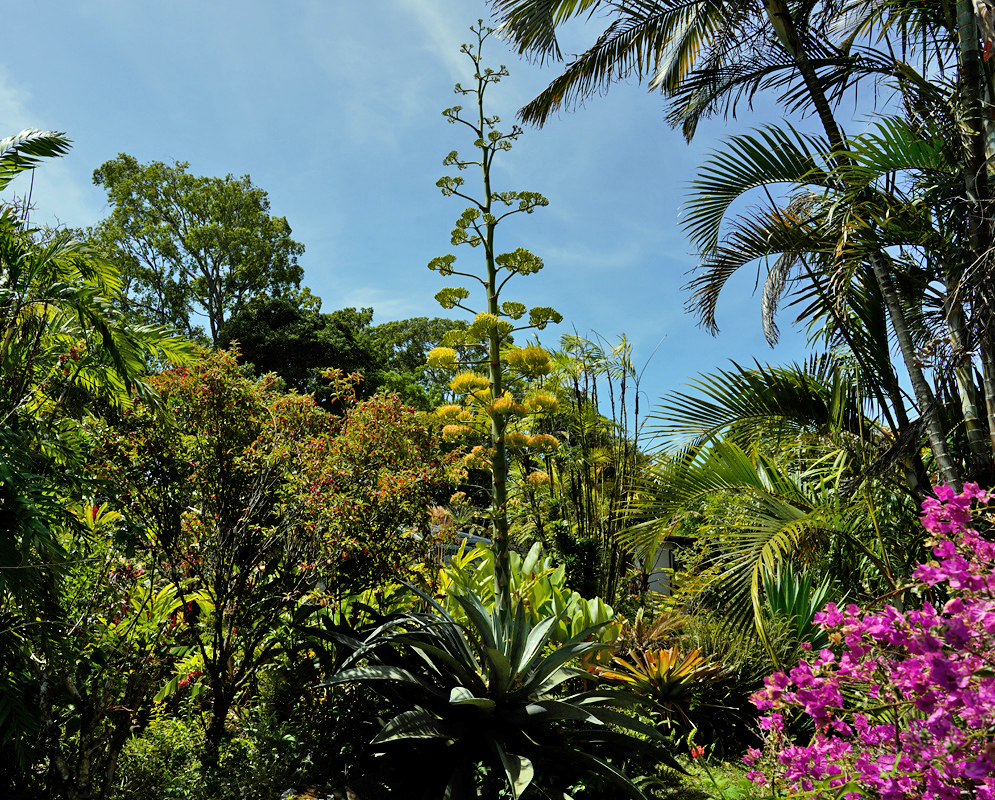
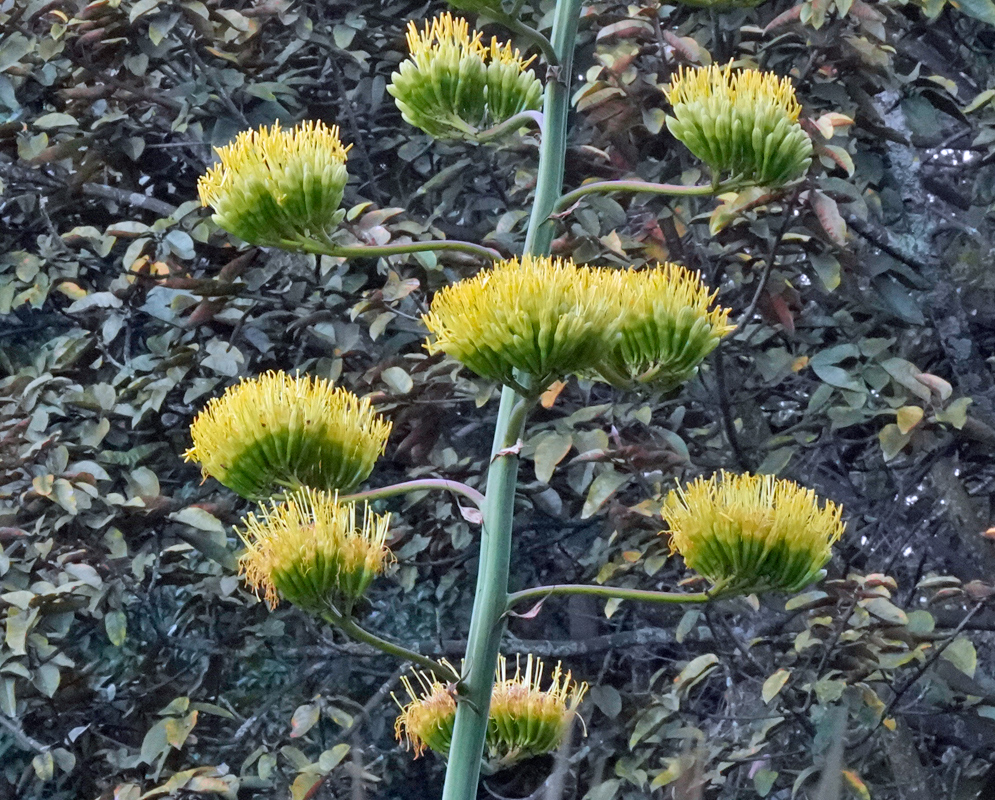
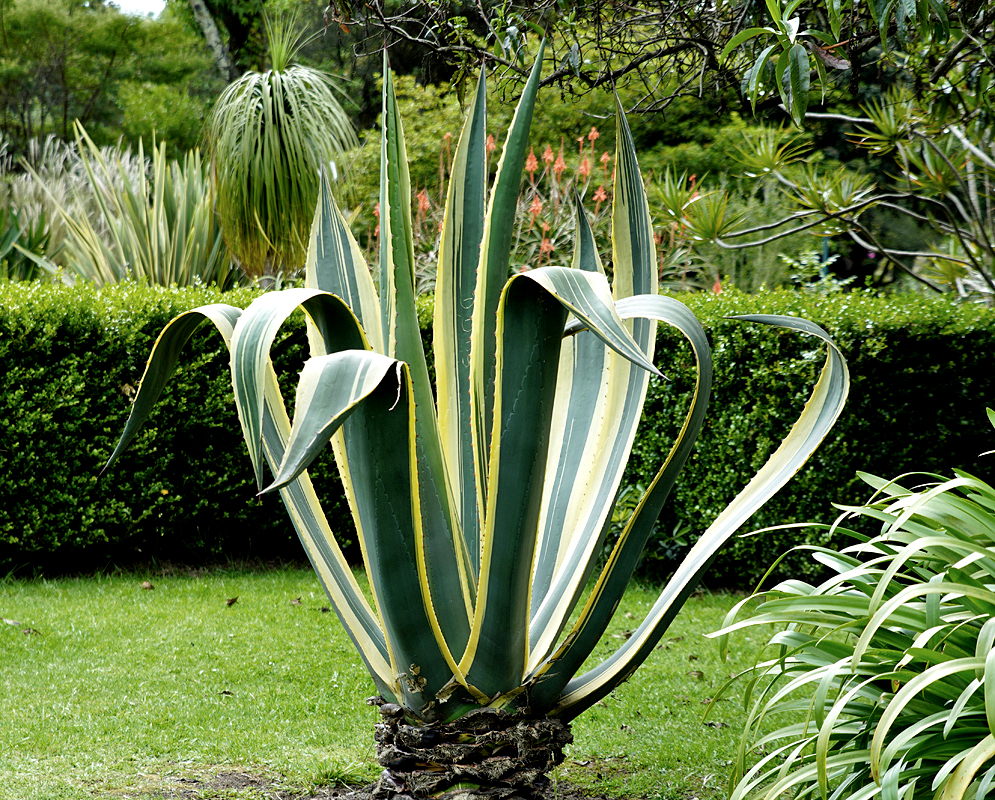
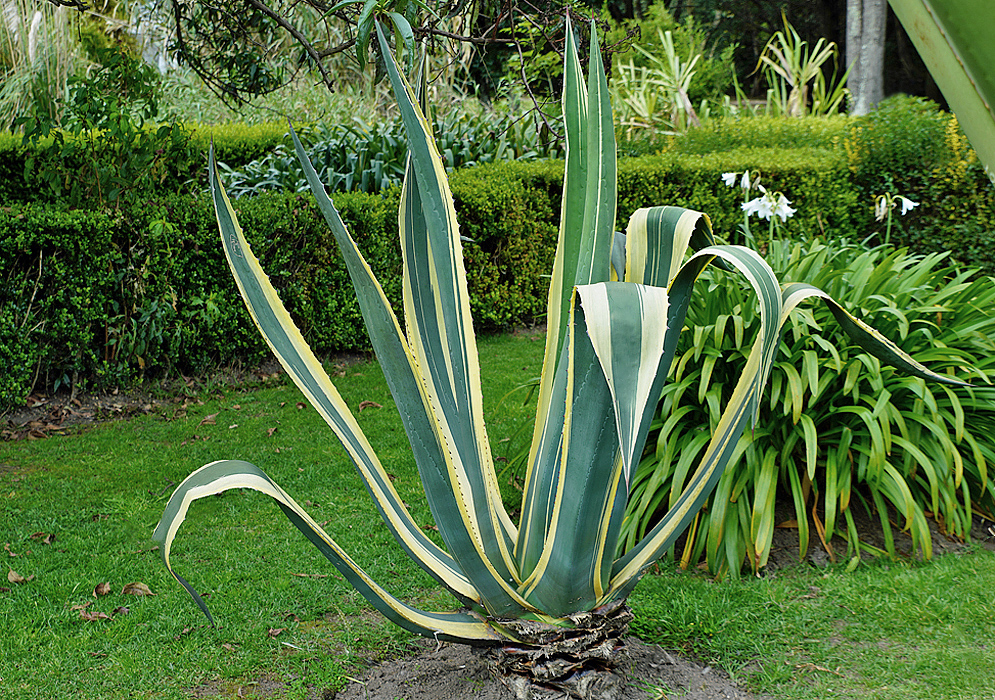
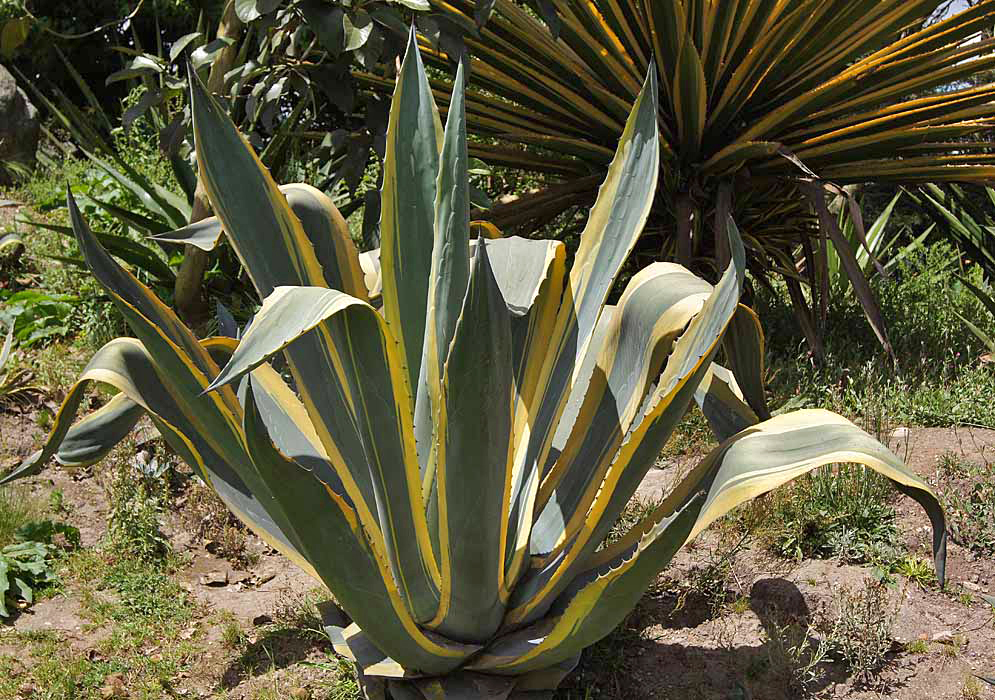
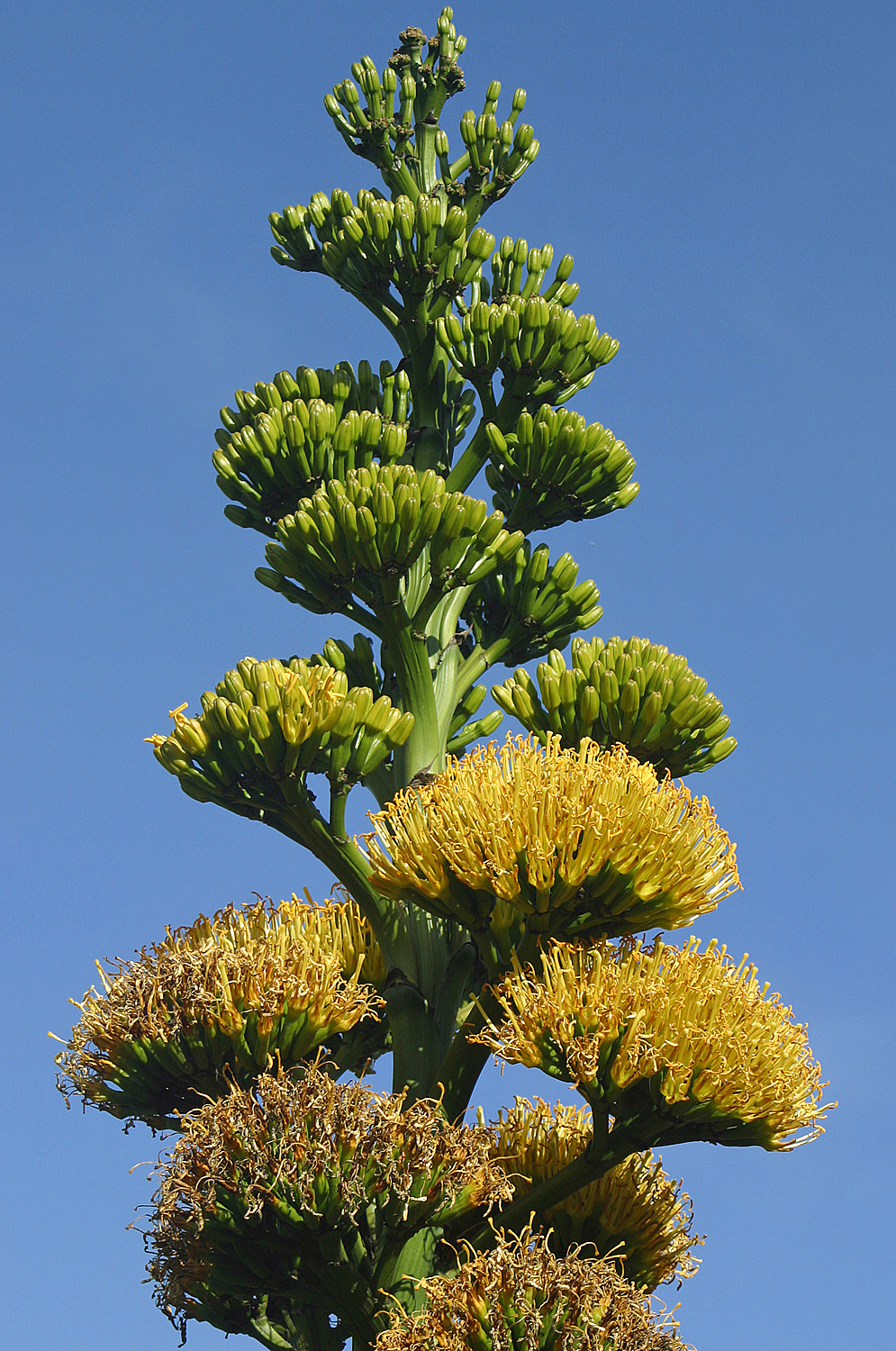
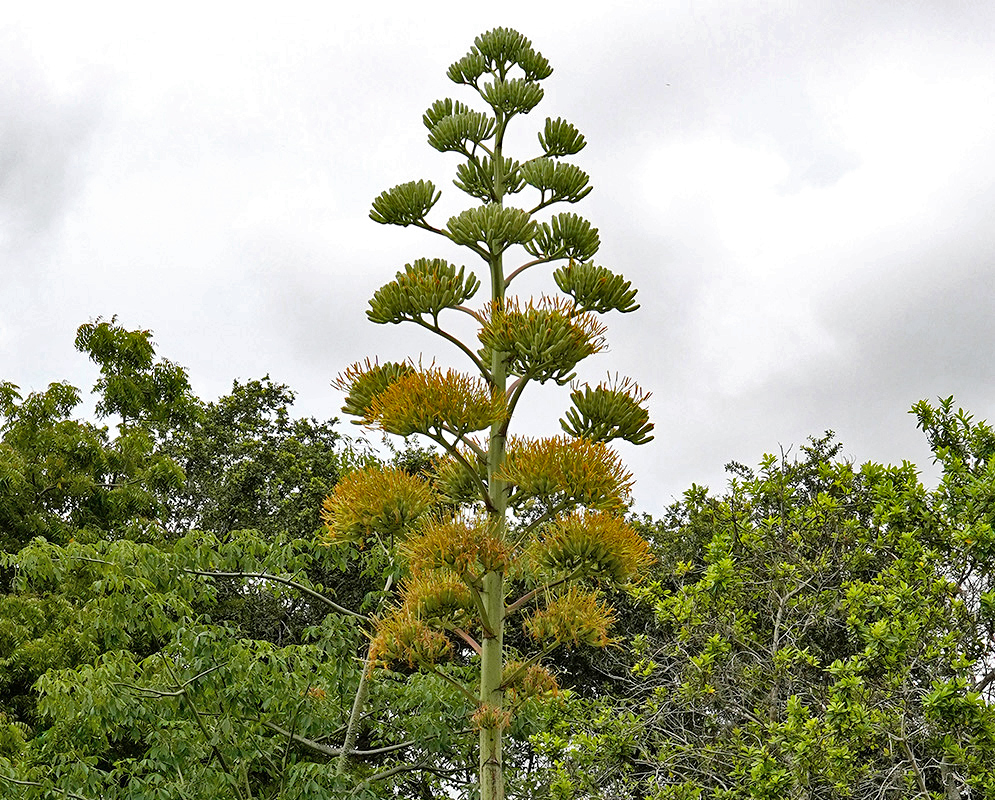
Native to Arizona, Texas, and Mexico, this evergreen succulent perennial, known as the century plant, forms a rosette armed with marginal teeth and a terminal spine on each leaf. Its name refers to the long wait for flowering, usually measured in decades rather than a century. A towering, branched stalk carries greenish-yellow flowers. The flowering rosette then dies, while offsets around its base can continue growing. The species received the Royal Horticultural Society’s Award of Garden Merit in 1994; ornamental selections include forms with cream or yellow leaf stripes.
In Mexico, its sap is used to make pulque, a fermented drink, and it is planted as a living fence. Traditional foods also include cooked flowers and the cooked flowering stalk. Leaf fibers have been used for cordage and textiles. In southern Spanish traditional medicine, leaves have been applied for lower-back pain and varicose veins, uses documented through interviews rather than clinical trials. Raw sap can cause painful dermatitis. The plant has naturalized in Mediterranean Europe, southern Africa, Australia, and New Zealand, and forms invasive stands in parts of coastal Australia. Photographed in Bogotá, Colombia.