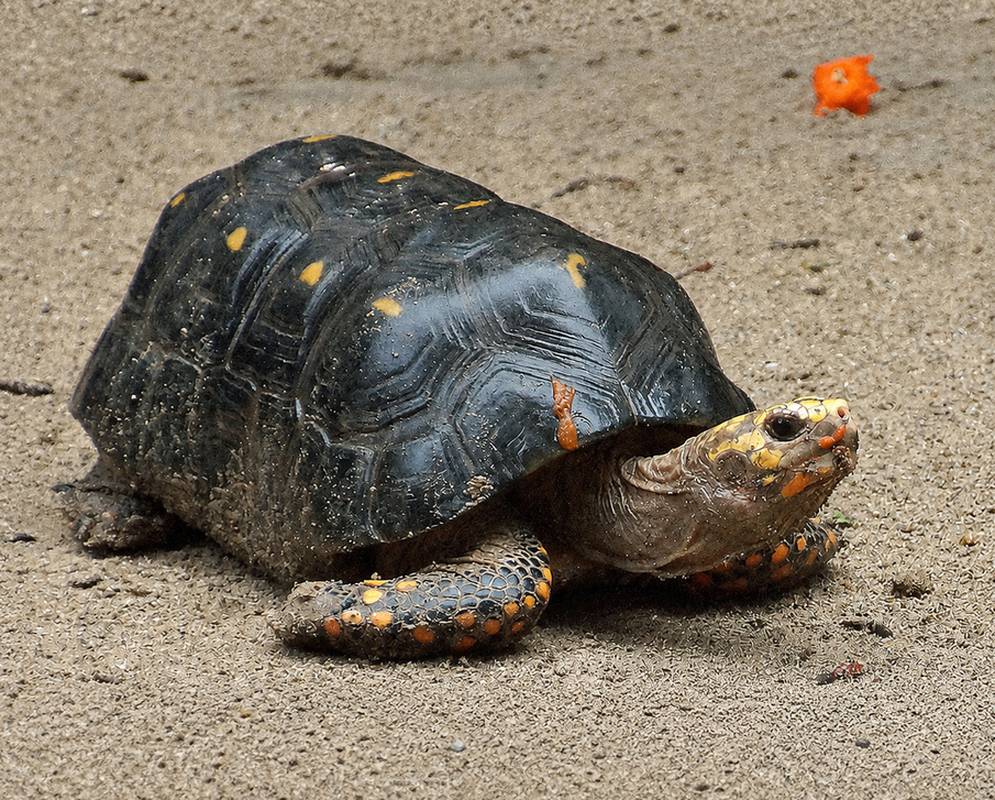


Chelonoidis carbonarius (red-footed tortoise) is native to tropical South America and also occurs on several Caribbean islands through human introduction. Its dark, high-domed shell usually has pale yellow or tan centers on the scutes, while scales on the head and limbs range from yellow and orange to red. Adults are terrestrial and occupy seasonally dry forest, savanna, forest edges, and other warm habitats with access to shelter and moisture.
The diet is broad and changes with availability, including fallen fruit, flowers, leaves, fungi, invertebrates, and carrion. Individuals use scent to locate food and may travel along familiar routes. During courtship, males produce distinctive clucking sounds and compete by pushing or overturning rivals. Females bury clutches of hard-shelled eggs, and incubation time varies considerably with temperature and moisture. The species is widely kept and bred in captivity, while wild populations face habitat loss and collection for food and the pet trade. Photographed in Colombia.