

Apeiba glabra
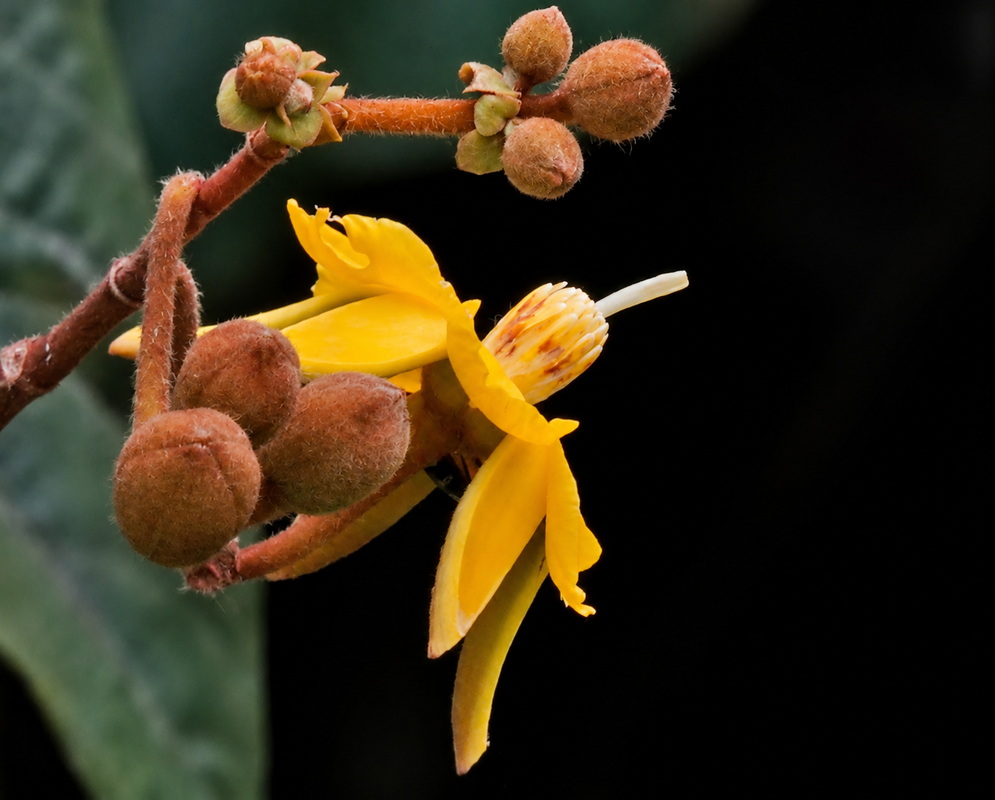
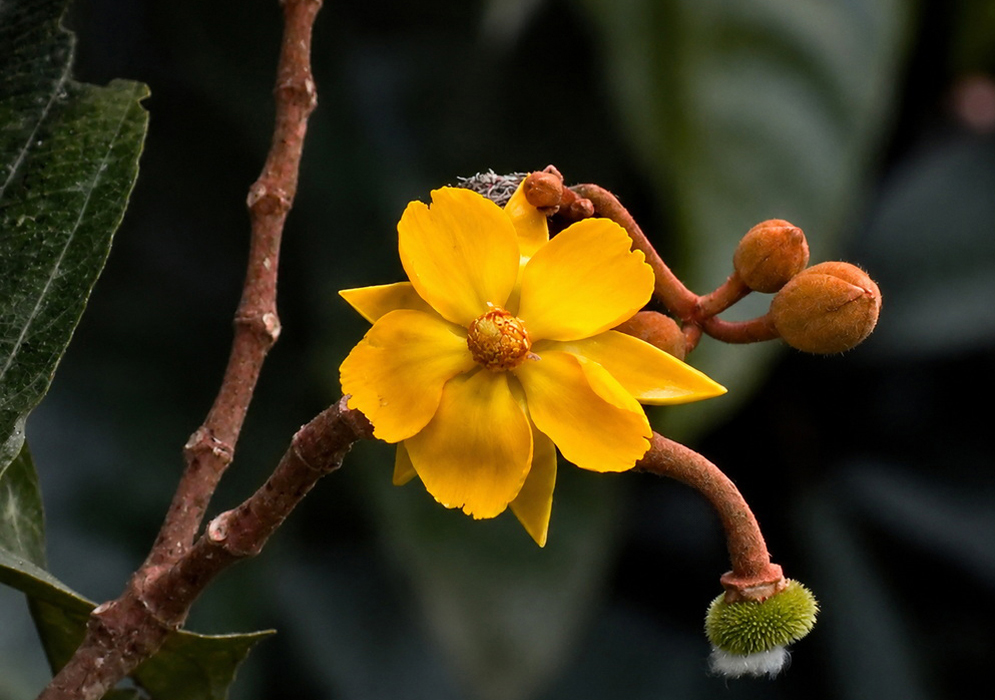
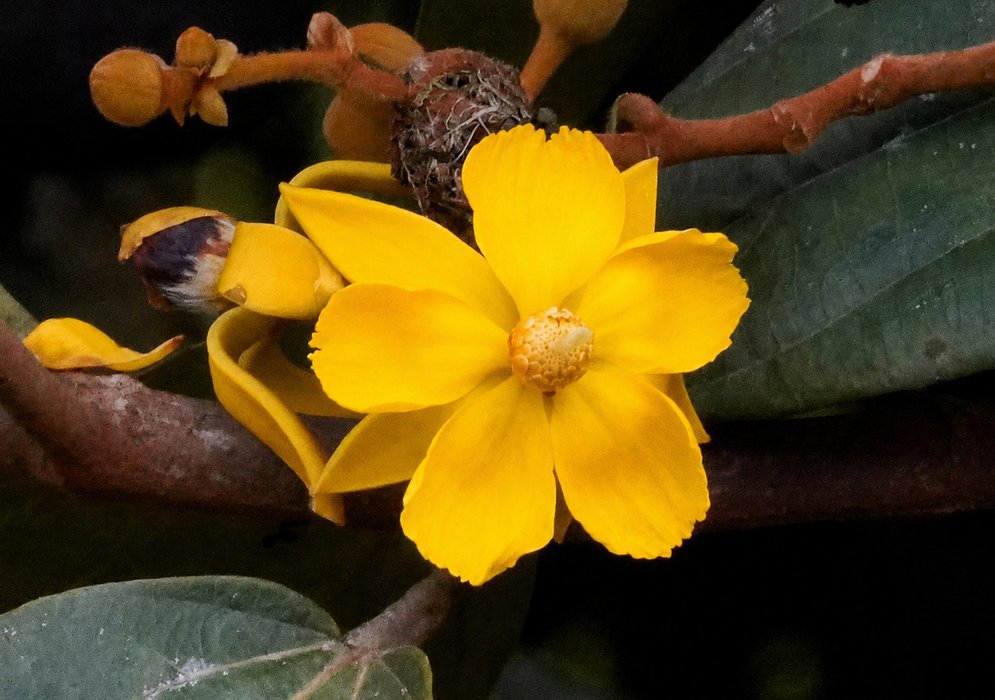
This species is native to the tropical regions of Central and South America. It typically grows as a medium to large deciduous tree in lowland evergreen and semi-deciduous forests, occurring naturally at elevations from sea level up to approximately 3,300 feet. The flowers are bright yellow and feature five thick, spreading petals that surround a prominent, dense cluster of central stamens. These blossoms emerge from fuzzy, brownish-rust colored buds and are frequently observed blooming on the newer growth of woody branches. The tree produces a distinctive circular fruit covered in soft, flexible spines that resembles a brush or comb, which serves as the basis for its primary common names.
The wood of Apeiba glabra is notably lightweight and soft. Traditionally, an infusion of the flowers is used to treat fever and headaches, while the bark is crushed and applied topically to manage skin infections and inflammation. The seeds contain a high concentration of fatty oils, which are sometimes extracted in Colombia and Peru to manufacture soaps or used as a base for traditional hair treatments. Photographed in Choco, Colombia.