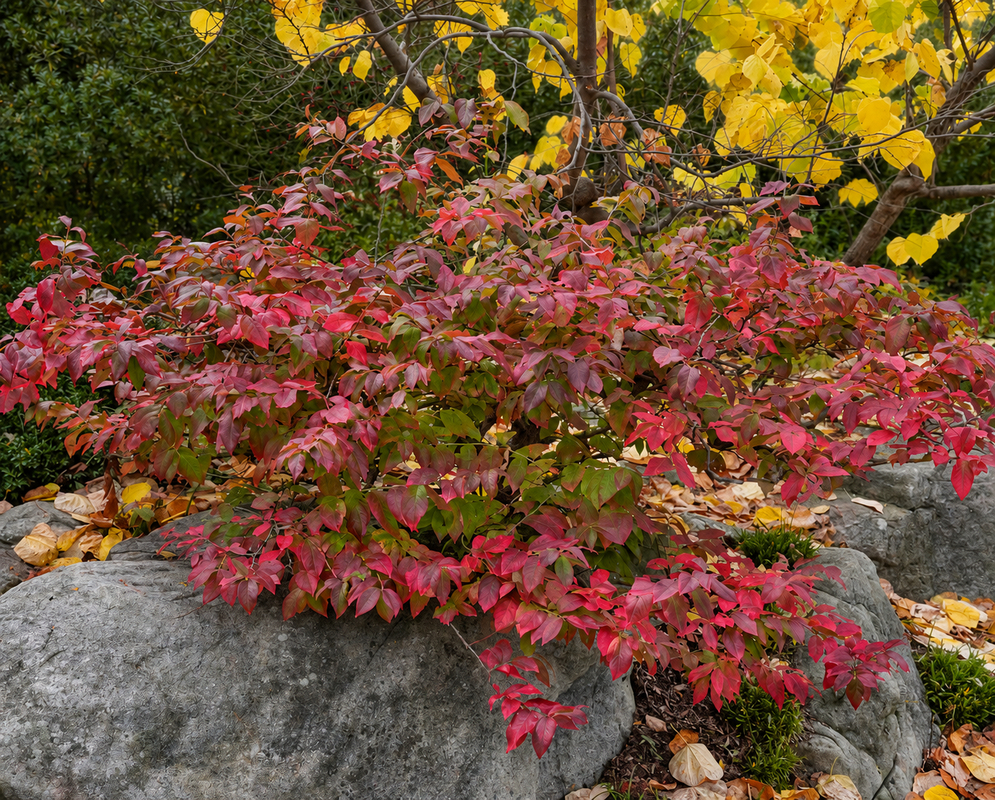

Vaccinium corymbosum (Highbush Blueberry)
Highbush blueberry is an upright deciduous shrub native to eastern Canada and the north-central and eastern United States. It grows naturally in moist acidic woods, bogs and swamps. White to pink, urn-shaped flowers develop into blue-black berries with a powdery wax coating and a persistent crown at the tip. The fruit is eaten fresh and processed into juice, preserves and baked foods. Autumn foliage can turn red or purple. The species has naturalized in Dorset, England.
Its commercial domestication grew from the collaboration of botanist Frederick Coville and New Jersey cranberry farmer Elizabeth White, who brought cultivated blueberries to market in 1916. White recruited local pickers to find promising wild plants; selections such as ‘Dunfee’ and ‘Rubel’ were named after their finders and became material for blueberry breeding. Medical research includes a controlled crossover trial completed by sixteen older adults using fruit of the ‘Legacy’ cultivar. A single serving improved a measure of peripheral blood-vessel response two hours later, without improving blood pressure or arterial stiffness in that short experiment. Photographed in Colombia.