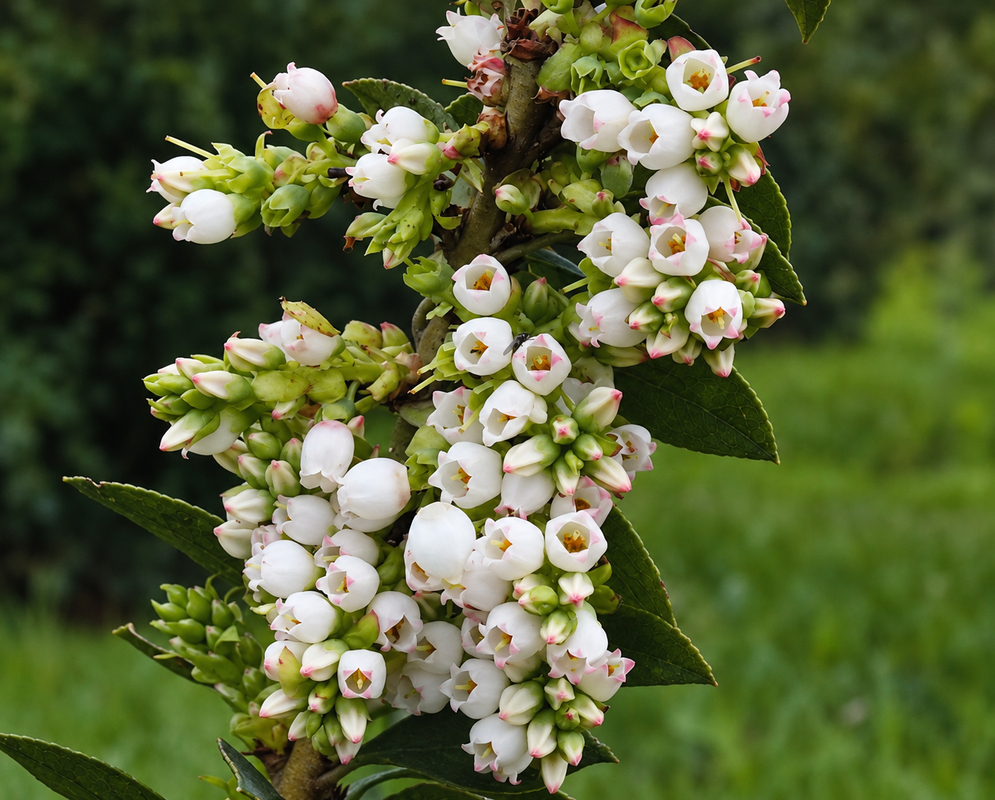

Vaccinium meridionale (Colombian Bilberry)
Native to Colombia and Venezuela, Colombian bilberry is an evergreen shrub known in Colombia as agraz or mortiño. It grows in Andean forests and upland vegetation between about 6,100 and 12,500 feet. Its leathery leaves have finely toothed edges, and clusters of urn-shaped flowers are white, sometimes tinged pink. The berries ripen to dark purple or black, retain a crown-like calyx and can have a waxy coating. Their flavor is tart and astringent. Colombian markets sell them fresh, and they are processed into juice, jam, desserts and wine.
The fruit contains anthocyanin pigments and other polyphenols that have prompted research into its nutritional and medical potential. A controlled crossover study of forty women with metabolic syndrome compared agraz nectar with a placebo, with each drink consumed for four weeks. Agraz improved one blood measure of antioxidant capacity and reduced a urinary marker of oxidative DNA damage. Insulin resistance and the overall inflammatory markers did not improve significantly. These early findings concern short-term biomarkers and do not establish agraz as a treatment for metabolic syndrome. Photographed in Bogotá, Colombia.