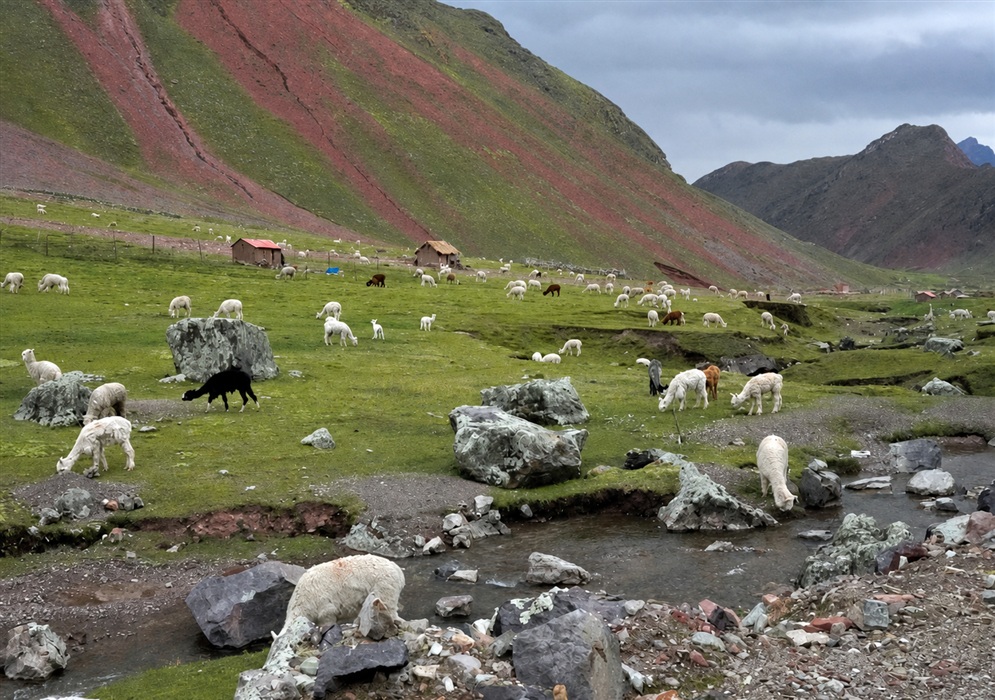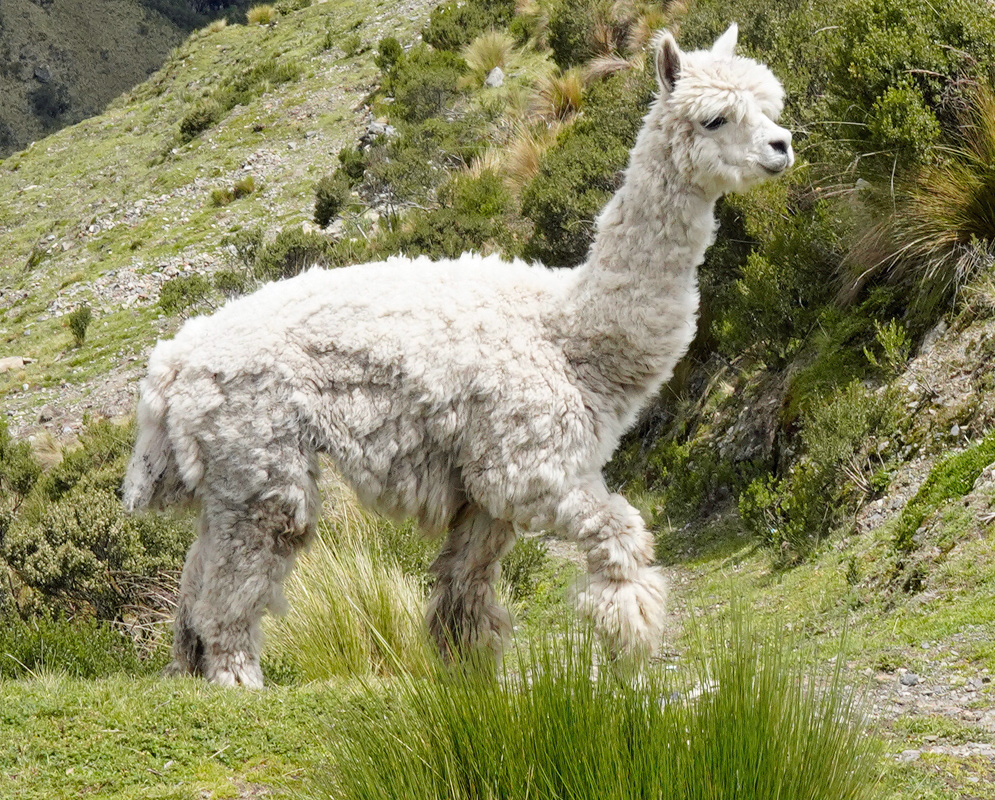

Vicugna pacos (alpaca) is a domesticated South American camelid developed in the central Andes, with Peru holding the largest national population. Alpacas are smaller than llamas and were selected primarily for dense, fine fiber rather than heavy pack work. Two recognized fiber types are Huacaya, with crimped fleece that grows outward, and Suri, with long fibers that hang in lustrous locks. Natural fleece occurs in many whites, creams, browns, grays, and blacks.
Herds graze high Andean grasslands where cold nights, intense sun, thin air, and seasonally limited forage constrain other livestock. Their padded feet and split upper lip allow precise feeding with relatively low damage to fragile ground. Alpacas communicate through humming, posture, ear position, and alarm calls; defensive spitting is usually directed at other camelids. Fiber supports a major textile economy, while meat, hides, and manure also remain important to Andean households. Photographed in Peru.