
Terminalia catappa (Tropical Almond)
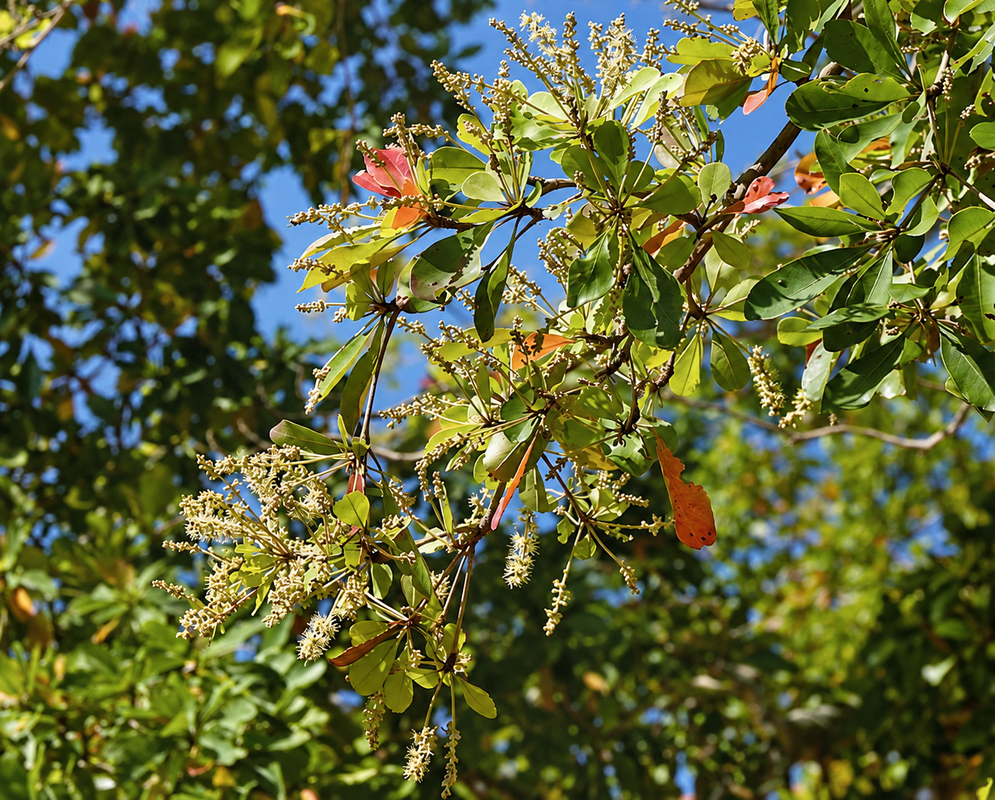
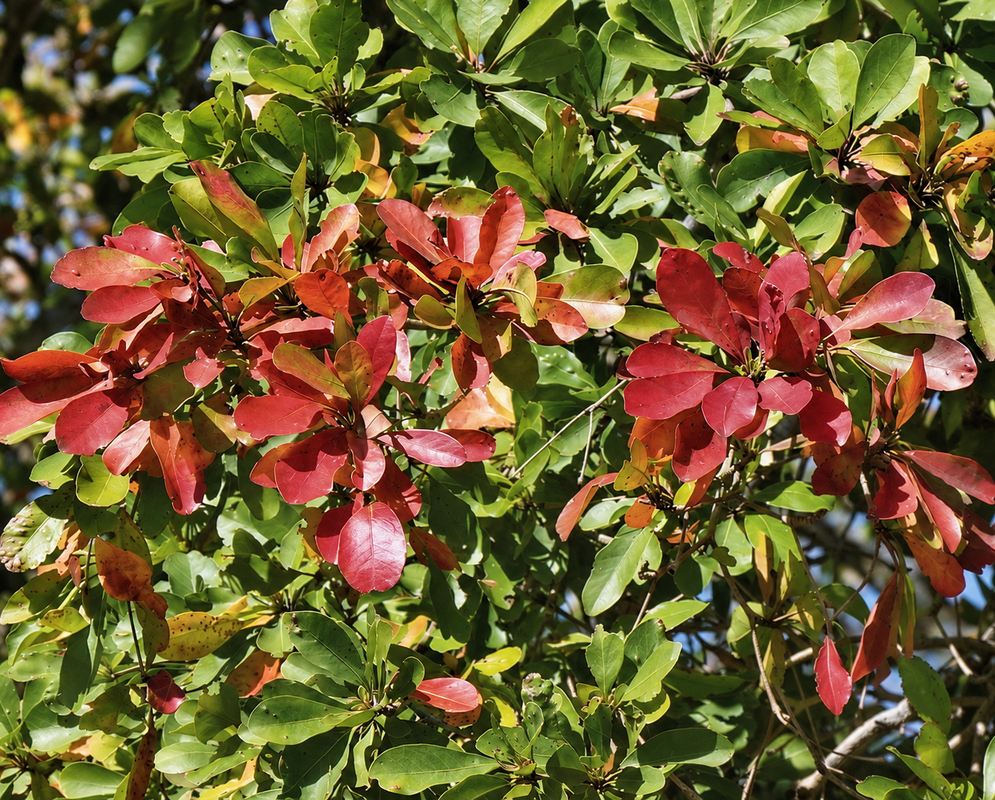
Native to Comoros, Madagascar, tropical and subtropical Asia, northern Australia and the Pacific, tropical almond is a deciduous coastal tree. Its spreading crown forms tiers of horizontal branches, and the leaves turn red, yellow or purple before falling. Fragrant greenish-white flowers grow along slender spikes, with male and bisexual flowers on the same tree. The flattened fruits contain an edible kernel with an almond-like flavor. Leaves and bark supply tannins for tanning and dyeing. The species has naturalized along tropical coasts, including southern Florida.
In traditional medicine in Edo State, Nigeria, young leaves are applied externally for scabies and other skin complaints; these uses have not been established as effective clinical treatments. Dried leaves and leaf extracts are also sold for freshwater aquariums, where they release tannins and alter water chemistry. Experimental fish studies have investigated these applications, but responses depend on the preparation, concentration and fish species. Photographed in Barranquilla, Colombia.