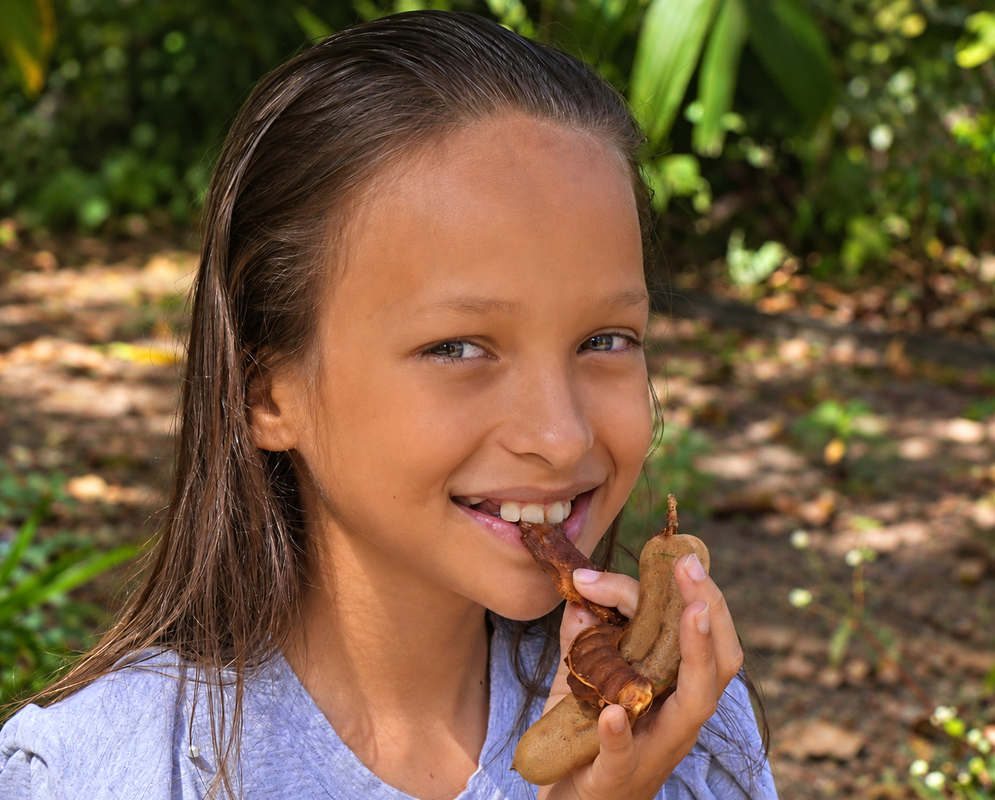
Tamarindus indica (Tamarind)
Native to Comoros and Madagascar, tamarind is an evergreen tree long cultivated in tropical and subtropical regions. Its spreading crown bears paired leaflets that fold at night. Yellow or cream flowers have red veins, three prominent petals and two reduced petals. Brittle pods enclose sticky, sweet-tart pulp used fresh or in drinks, chutneys, curries and sauces. Tender shoots and flowers are also eaten, and the wood is used for furniture. The species has become slightly naturalized in southern Florida and is an environmental weed in northern Queensland, Australia.
The fruit pulp has a traditional northern Peruvian use as a laxative. A separate medical application uses purified polysaccharide from the seed in lubricating eye drops. In a small, randomized clinical study, these drops improved dry-eye symptoms and tear-film stability, with objective results comparable to a hyaluronic-acid lubricant. The study was open-label and involved thirty patients. Its findings concern a manufactured ophthalmic preparation, not fruit pulp or homemade extracts. Photographed in the department of Atlántico, Colombia.