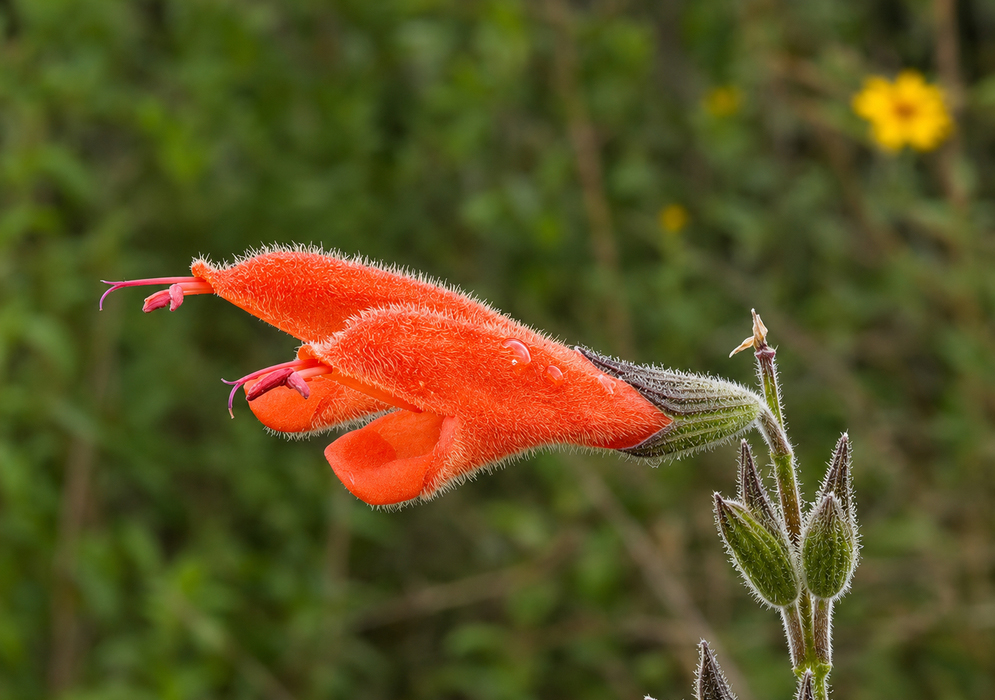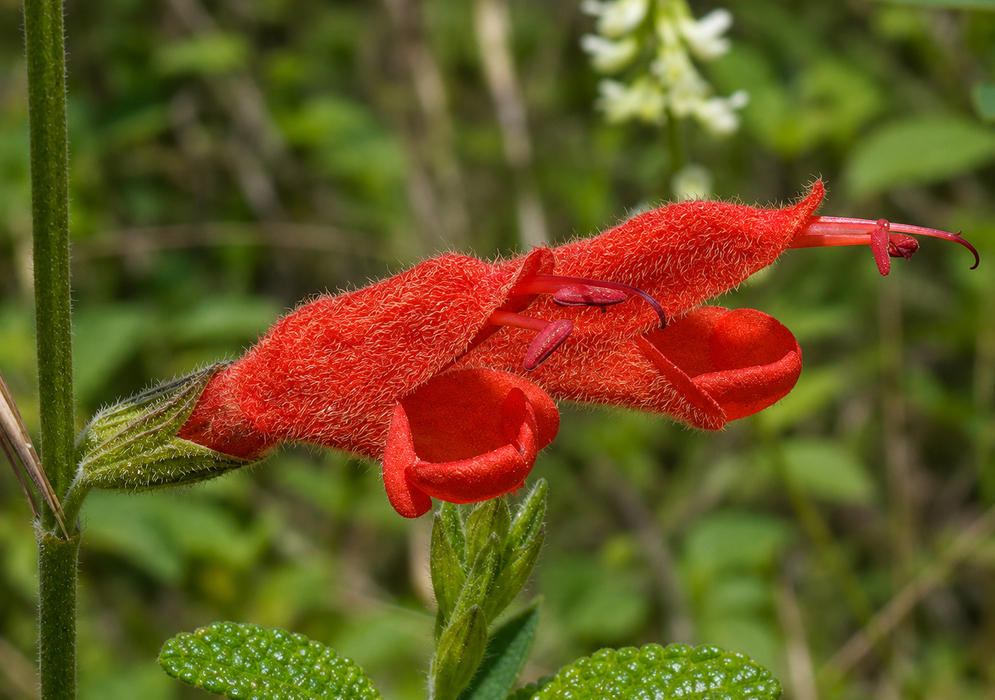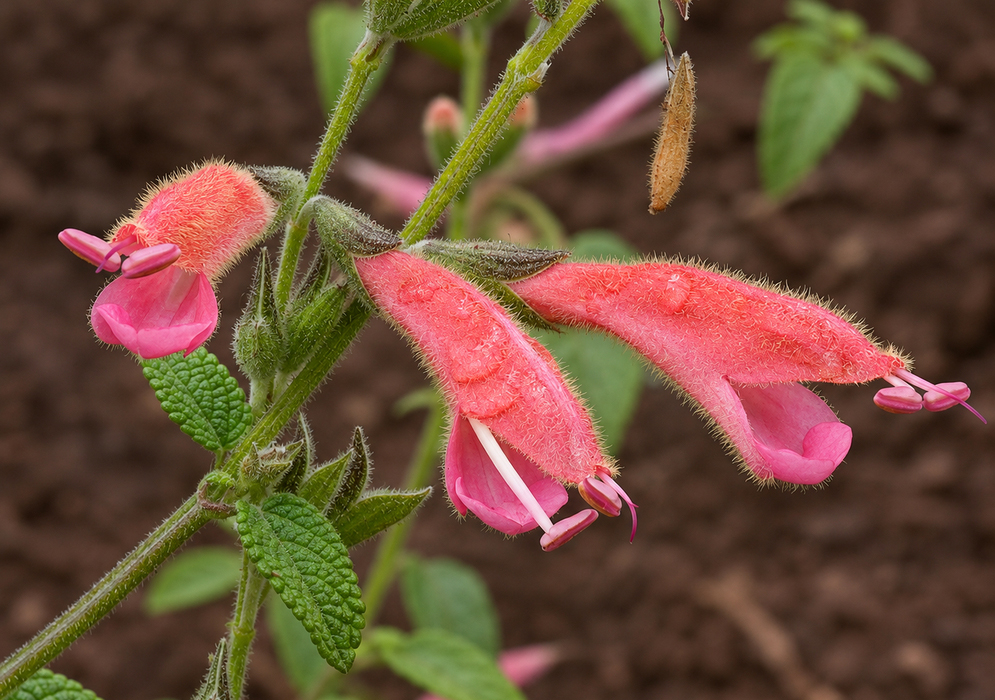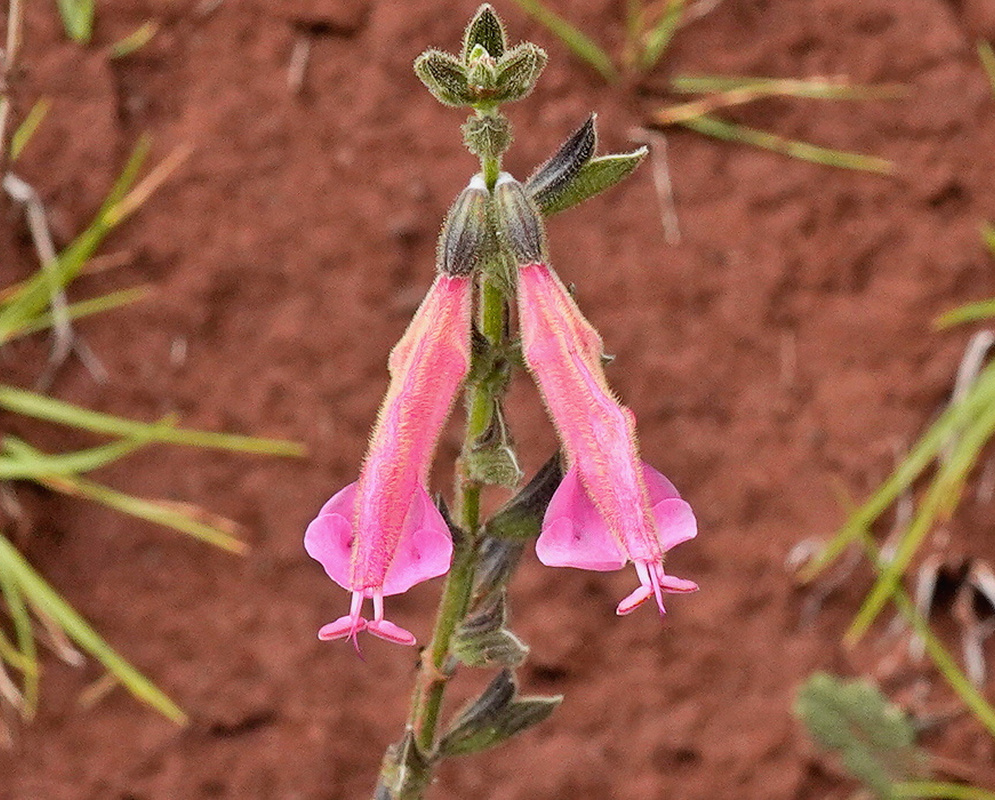


Salvia oppositiflora paired pink hairy tubular flowers with projecting styles and dark-tinged green calyces

Salvia oppositiflora


Native to Peru, Salvia oppositiflora is a perennial subshrub commonly called ñucchu. Its hairy stems bear pairs of long, pinkish-red tubular flowers with projecting stamens; the paired flowers explain the name oppositiflora. On the hills around Cusco, it grows at roughly 8,900–11,500 feet. The flowers have a particular place in Cusco’s Holy Monday procession of the Señor de los Temblores, also called the Taytacha. People offer them to the image of Christ and scatter them over it, their red color symbolizing blood and wounds. In the community of Huancalle, the flowers are also used in traditional medicine for body aches. Photographed in Peru.

Orange Salvia oppositiflora flowers have hairy tubes and curved projecting styles
Two orange-red Salvia oppositiflora flowers extend side by side from a leafy stem
Orange tubular Salvia oppositiflora flowers have curved lower lips and hairy upper surfaces
Two pink Salvia oppositiflora corollas extend from green calyces beside unopened buds
Red Salvia oppositiflora flowers droop from a slender leafy stem
A Salvia oppositiflora shrub bears scattered orange-red flowers among narrow leaves
Red Salvia oppositiflora flowers have densely hairy tubes and broad hanging lower lips
Salmon-pink Salvia oppositiflora flowers open among pointed green calyces

Privacy Policy, Legal Notices and Copyright 2016-2026. Engage the Exotic TM, All Rights Reserved.