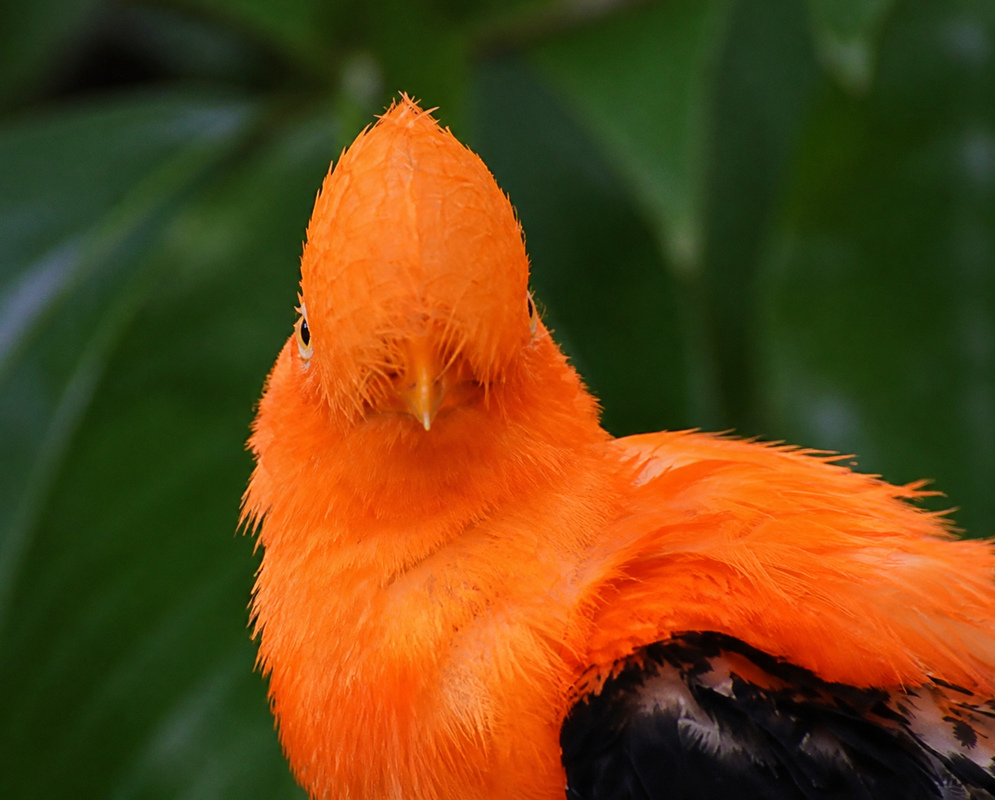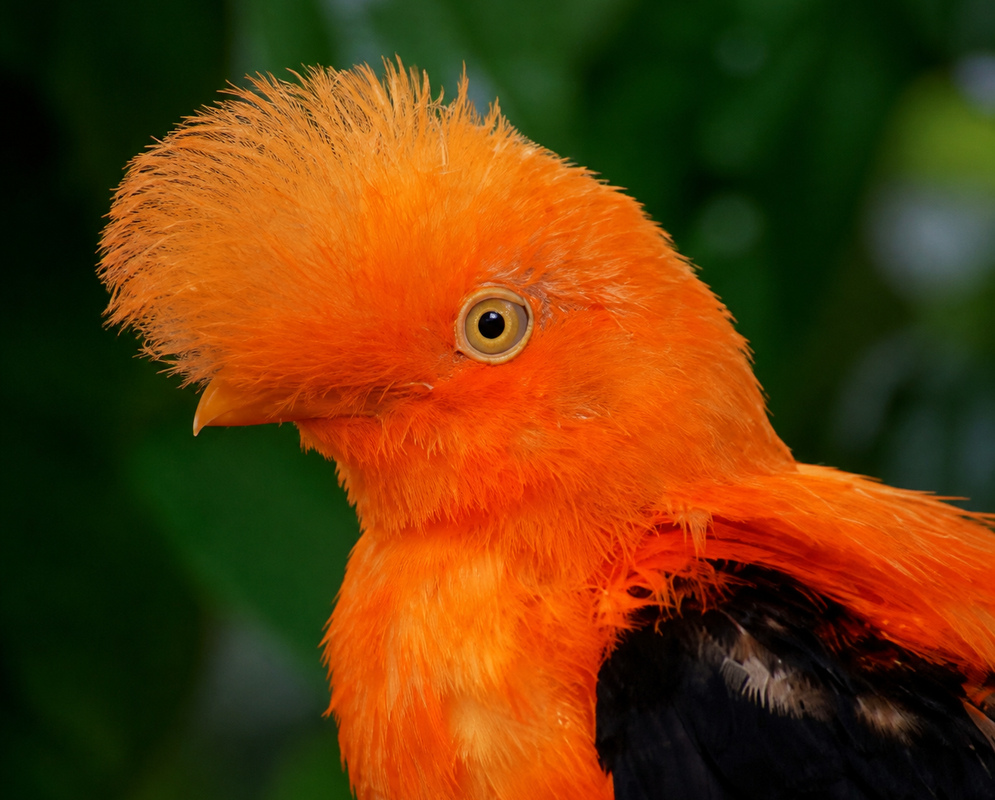


Rupicola rupicola (Guianan cock-of-the-rock)
Rupicola rupicola (Guianan cock-of-the-rock) is native to the Guiana Shield, occurring in eastern Colombia, southern and eastern Venezuela, Guyana, Suriname, French Guiana, and northern Brazil. It inhabits humid forest associated with rocky outcrops, caves, ravines, and large boulders. Adult males are about twelve inches long and have intense orange plumage, a broad semicircular crest that partly conceals the bill, and wings patterned with black, white, and orange. Females are brownish and have a smaller crest, colors that provide camouflage around the nest.
Males gather at traditional communal display grounds called leks. Each maintains a small display space, where ritualized bows, wing movements, calls, and confrontations allow visiting females to compare potential mates. Males provide no nest building or parental care. A female uses mud and plant material to attach a cup nest to a sheltered rock face and raises the young alone. Fruit forms most of the diet, supplemented by insects and small vertebrates, and swallowed seeds are dispersed through the forest. The species is distinct from the Andean member of the genus, and their natural ranges do not overlap. The IUCN classifies it as Least Concern because it remains widespread, although mining, forest loss, and disturbance around display and nesting sites can affect local populations. Photographed in Colombia.