
Ricinus communis (Castor Oil Plant)
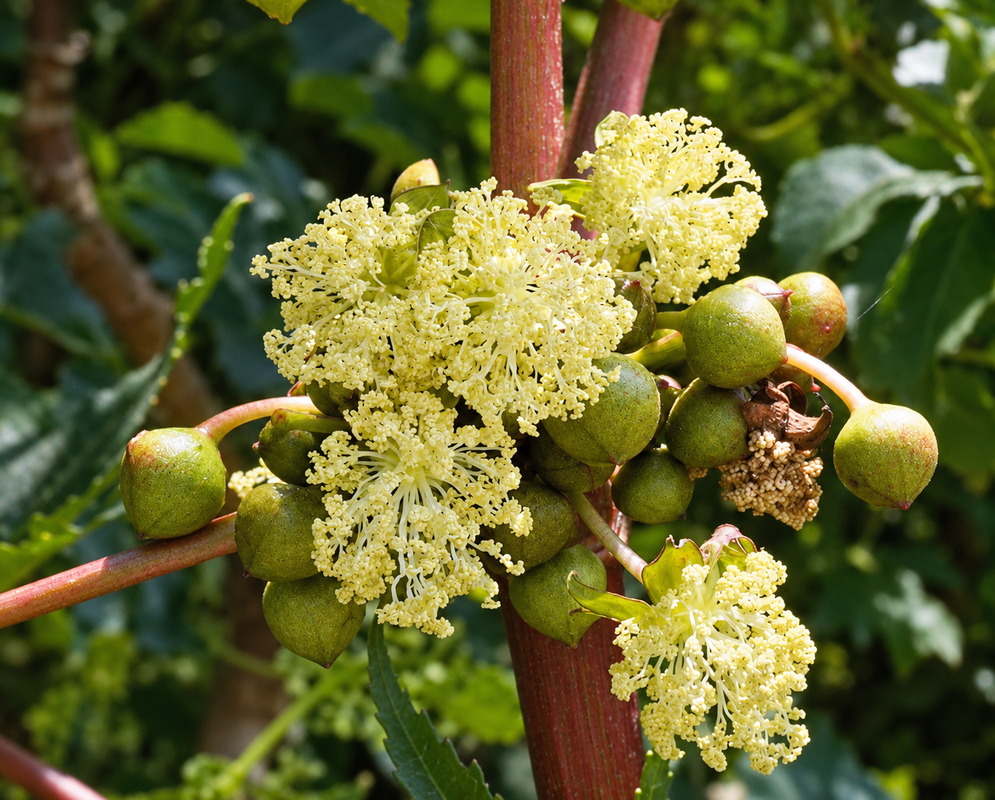
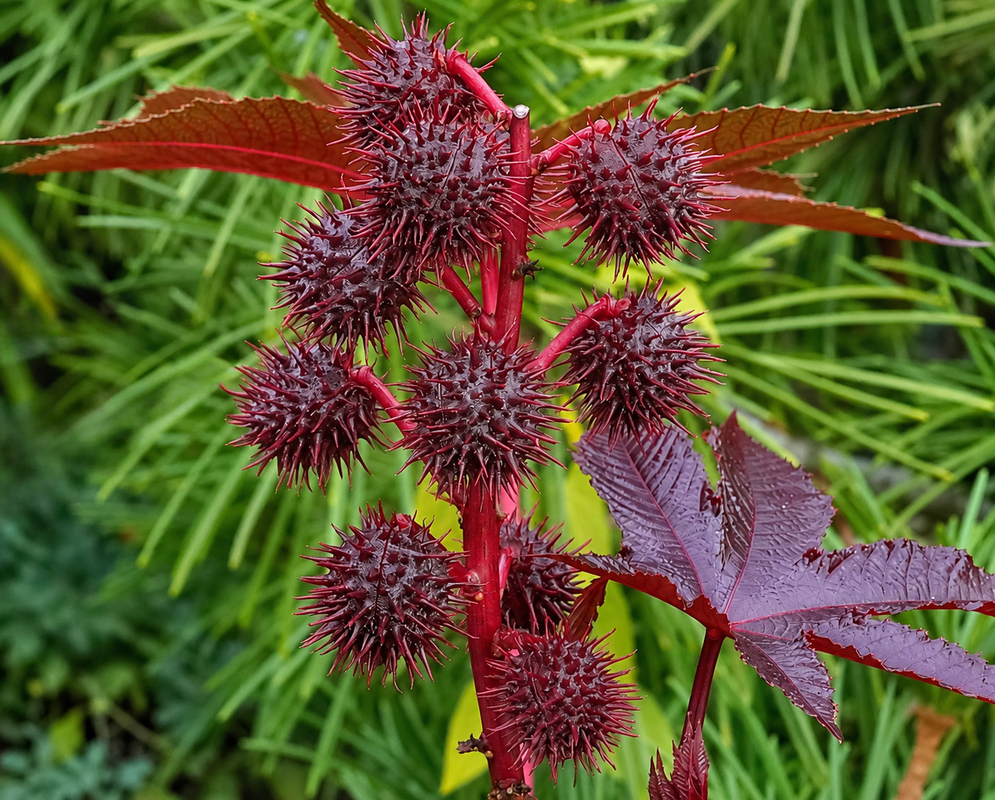
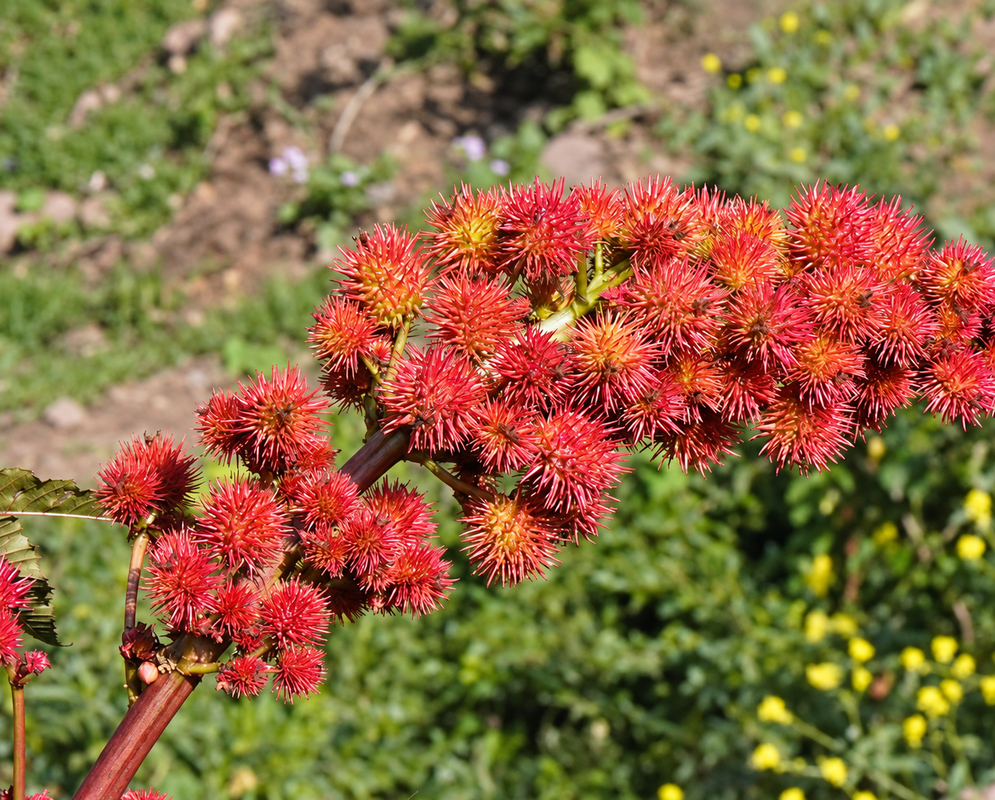
Native to northeastern tropical Africa, the castor oil plant grows as a shrub in warm climates. Hollow stems carry deeply divided leaves with toothed margins. Male and female flowers occur on the same plant, followed by three-lobed capsules that are usually softly spiny. The shiny, mottled seeds contain ricin, a highly poisonous protein. The species has naturalized widely and is invasive in Florida, where it colonizes roadsides, abandoned fields, and other disturbed ground.
The seeds are the commercial source of castor oil, a product used in pharmaceuticals, cosmetics, lubricants, and other industrial materials. Medicinal castor oil is a stimulant laxative used for short-term relief of occasional constipation. That use concerns a processed pharmaceutical oil with controlled quality. The raw seeds and other plant material remain toxic. Photographed in Colombia.