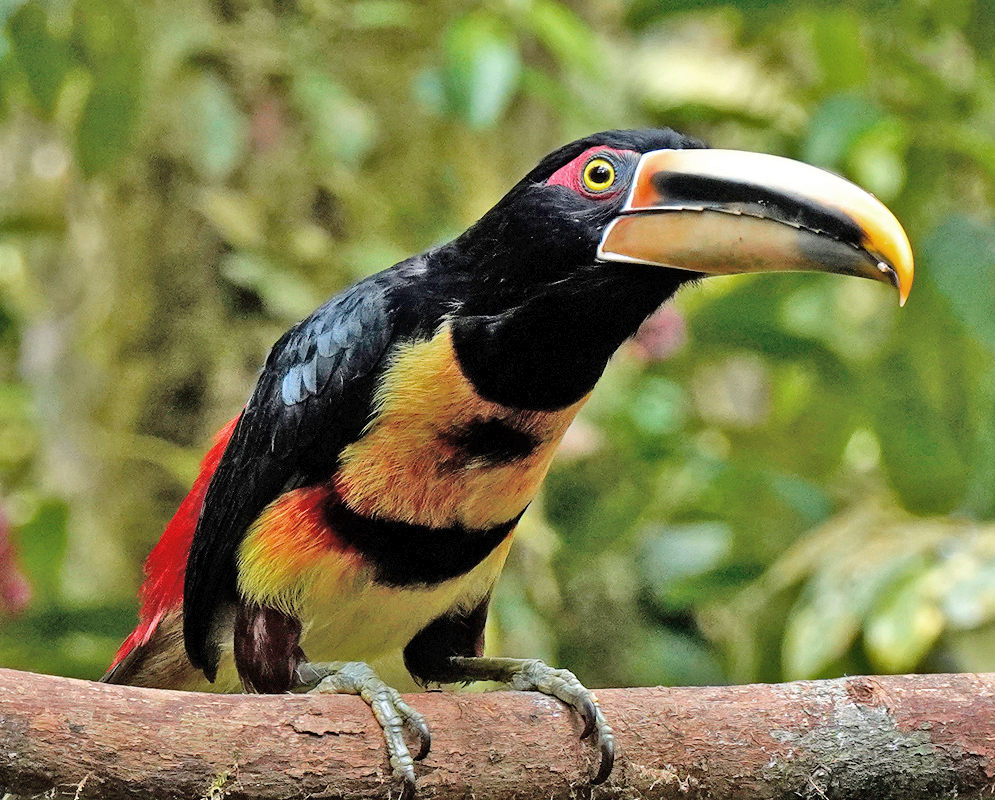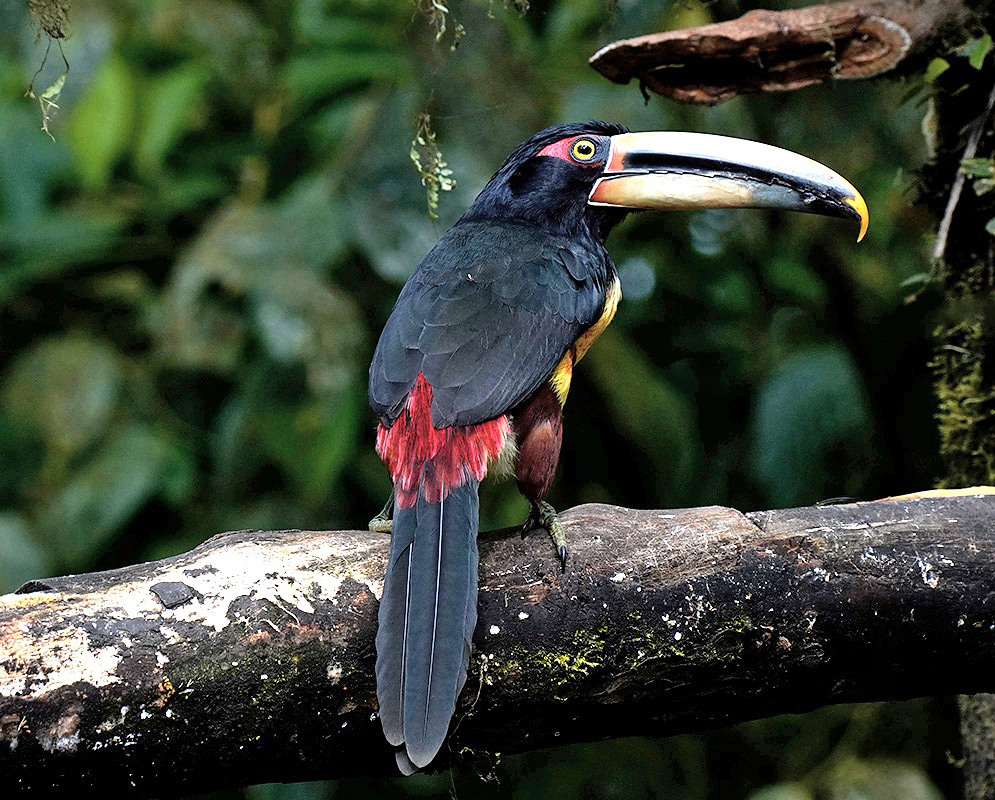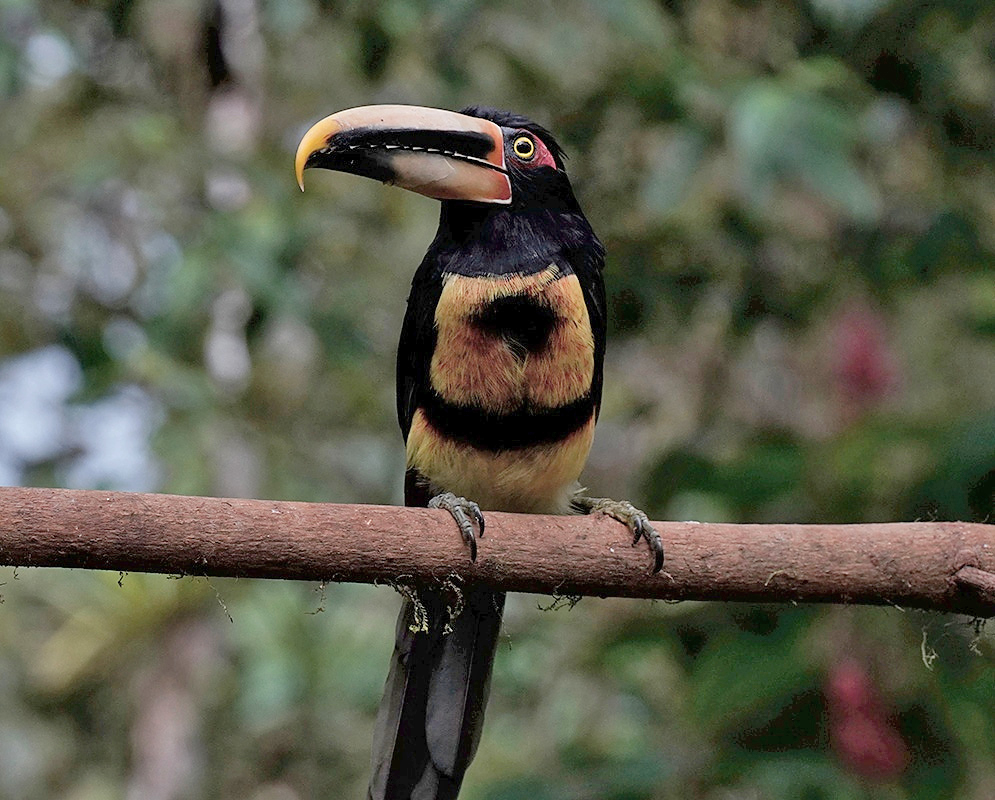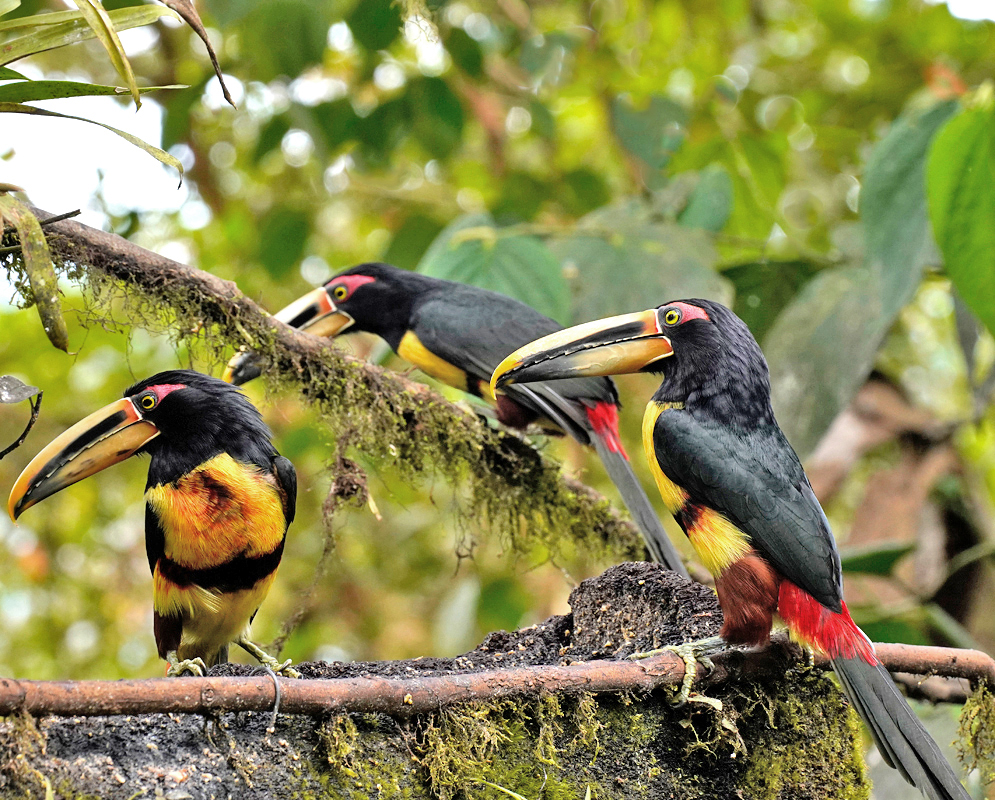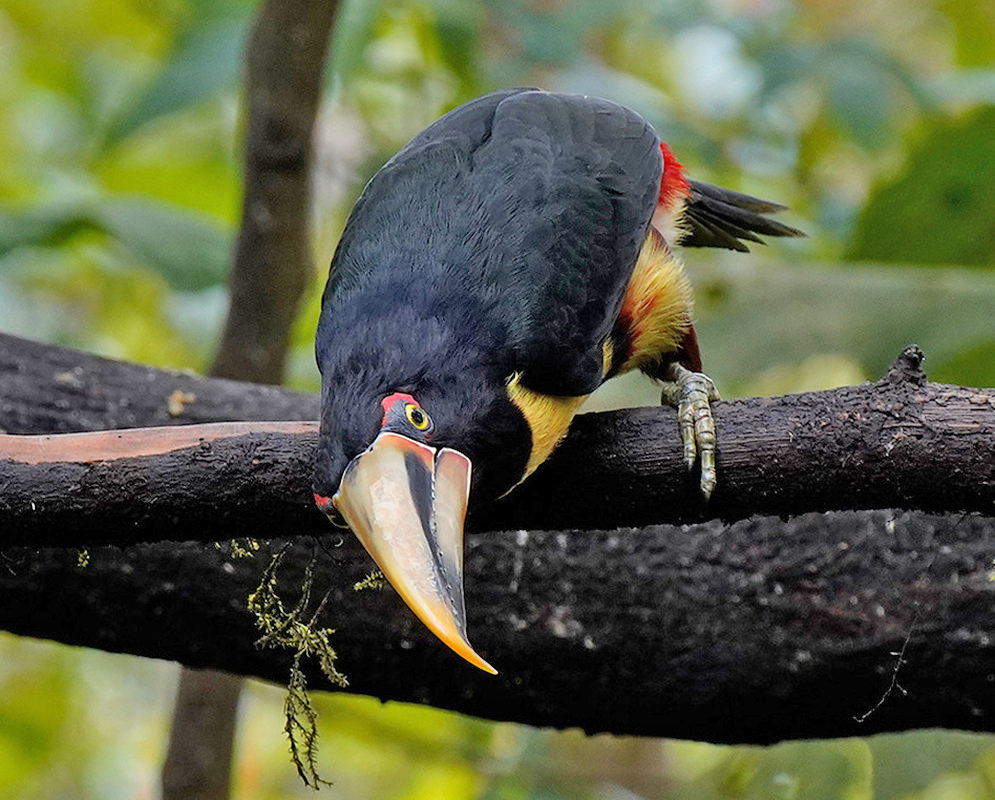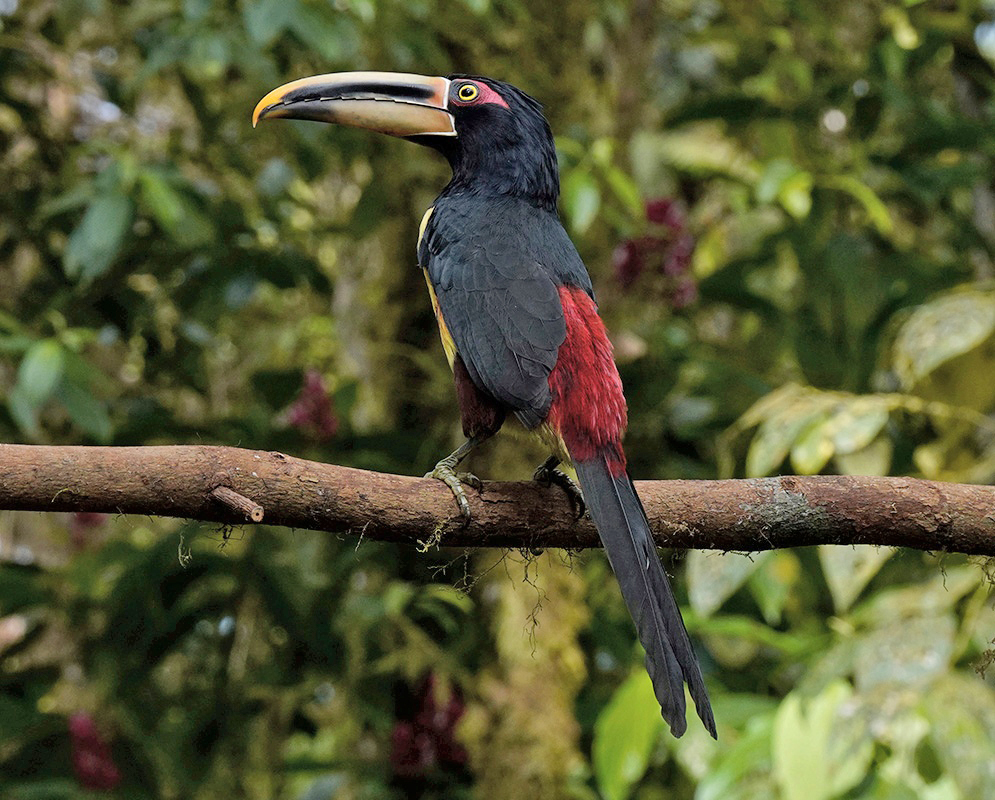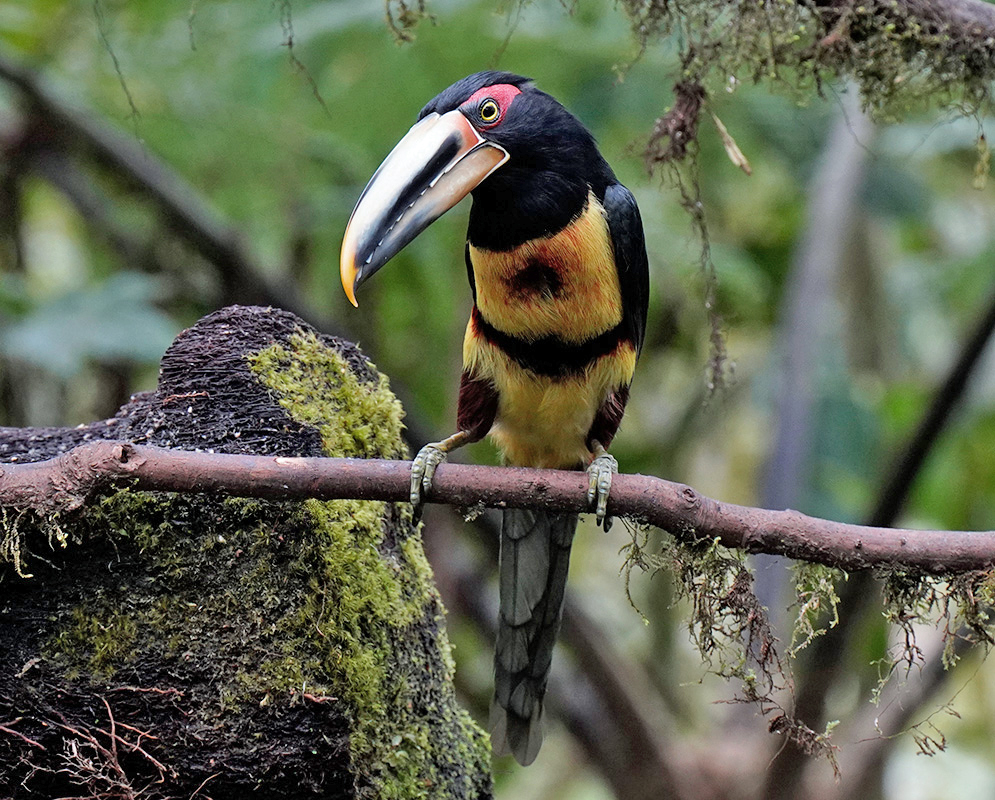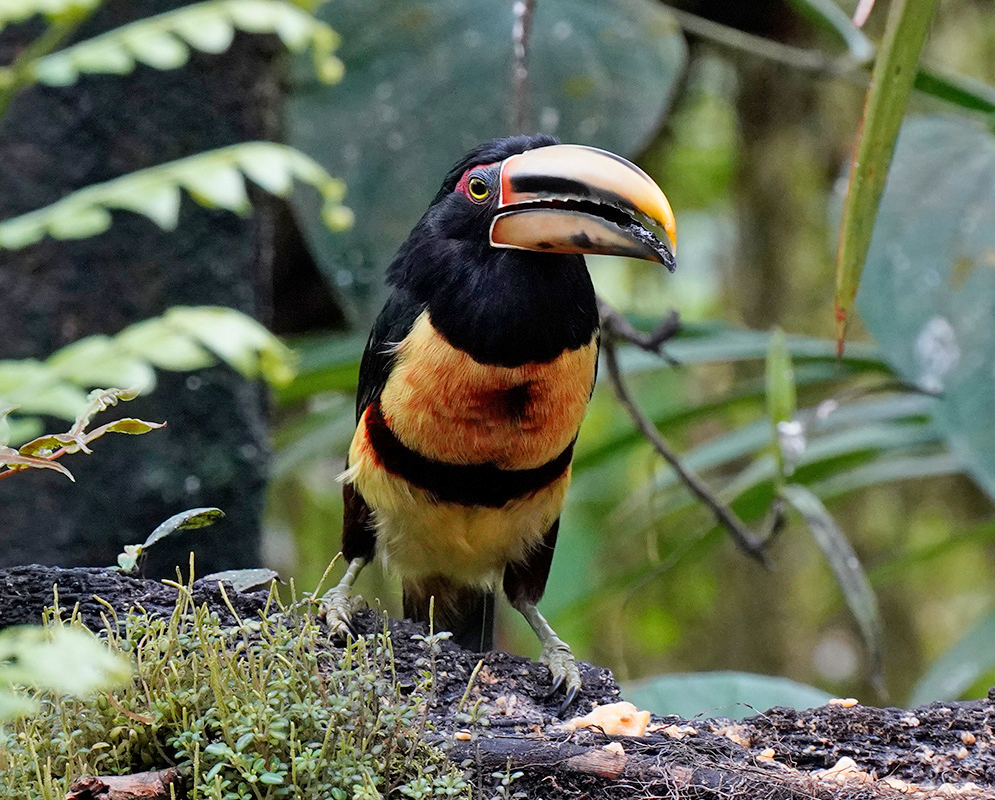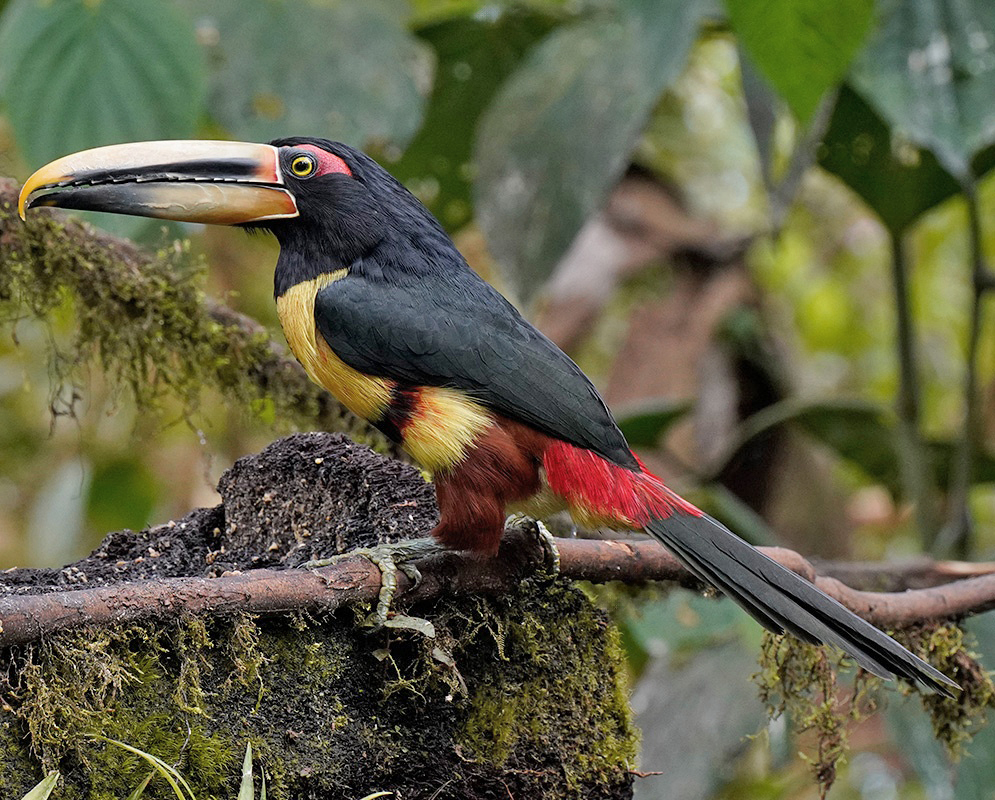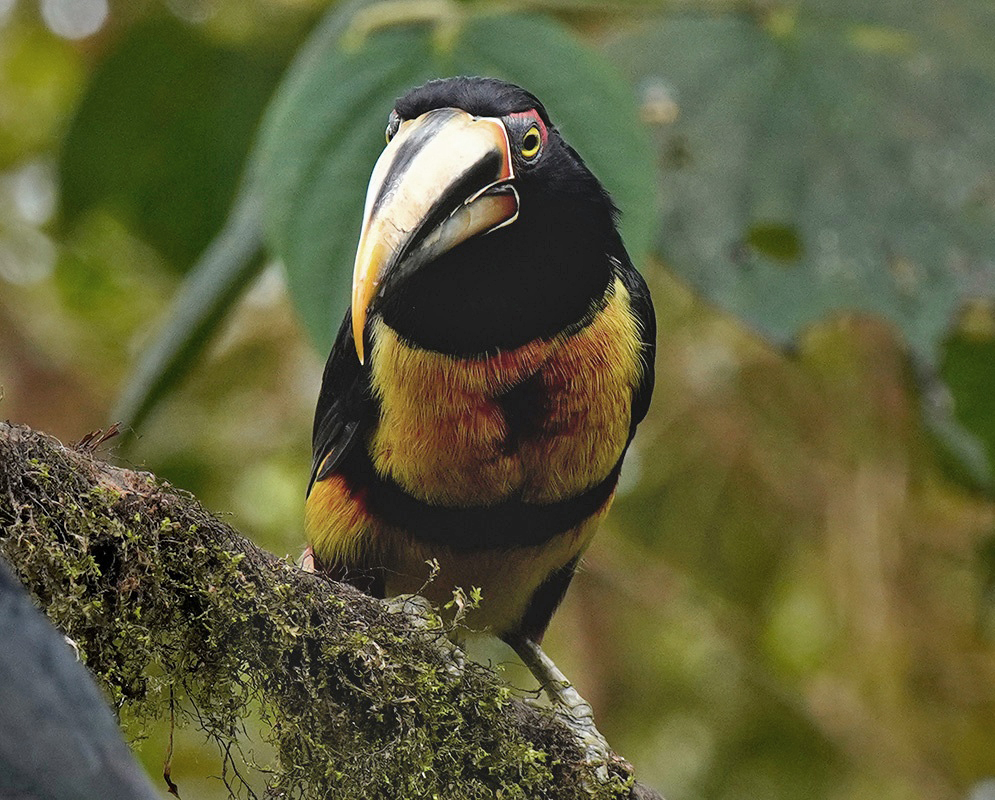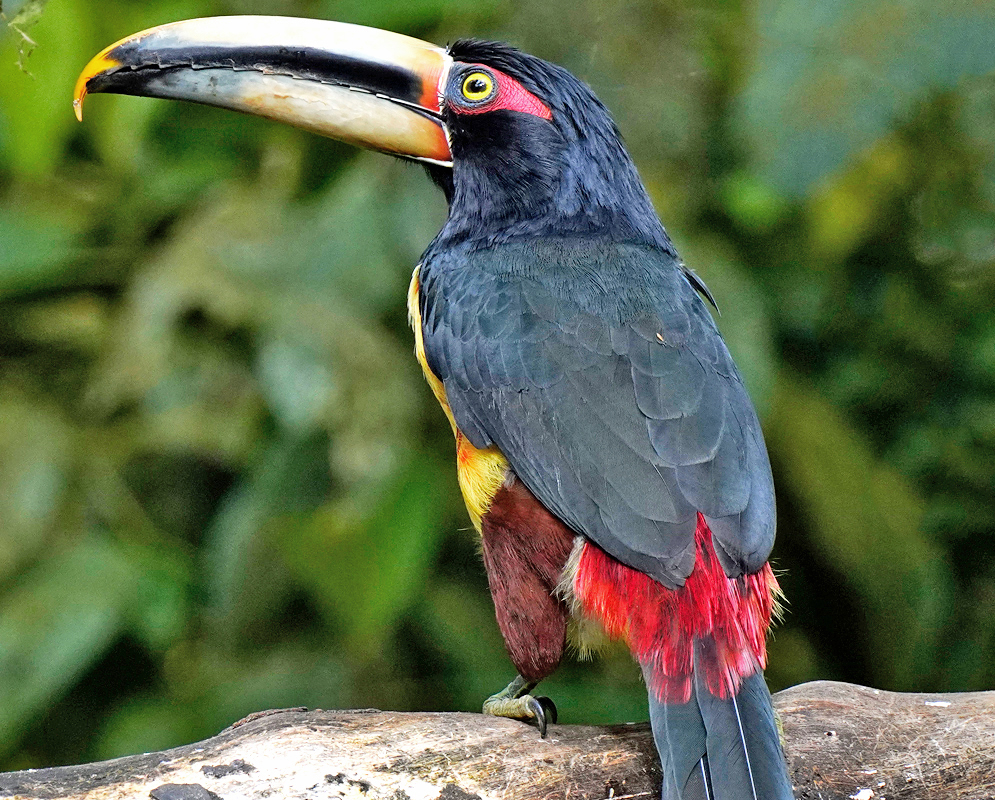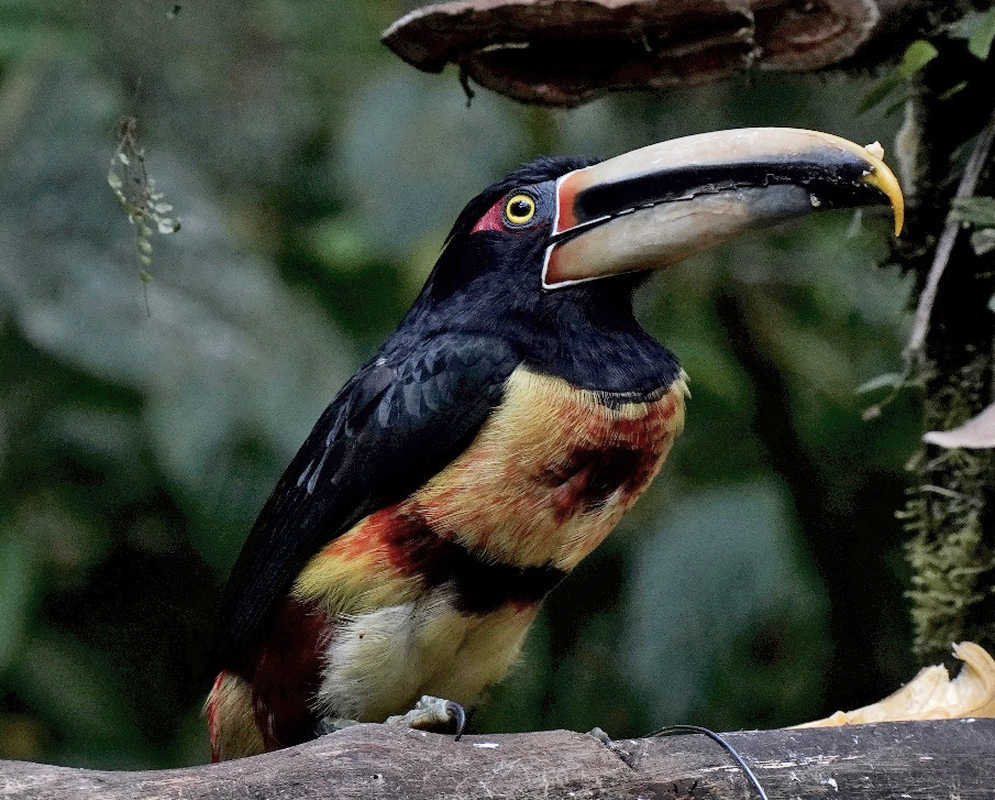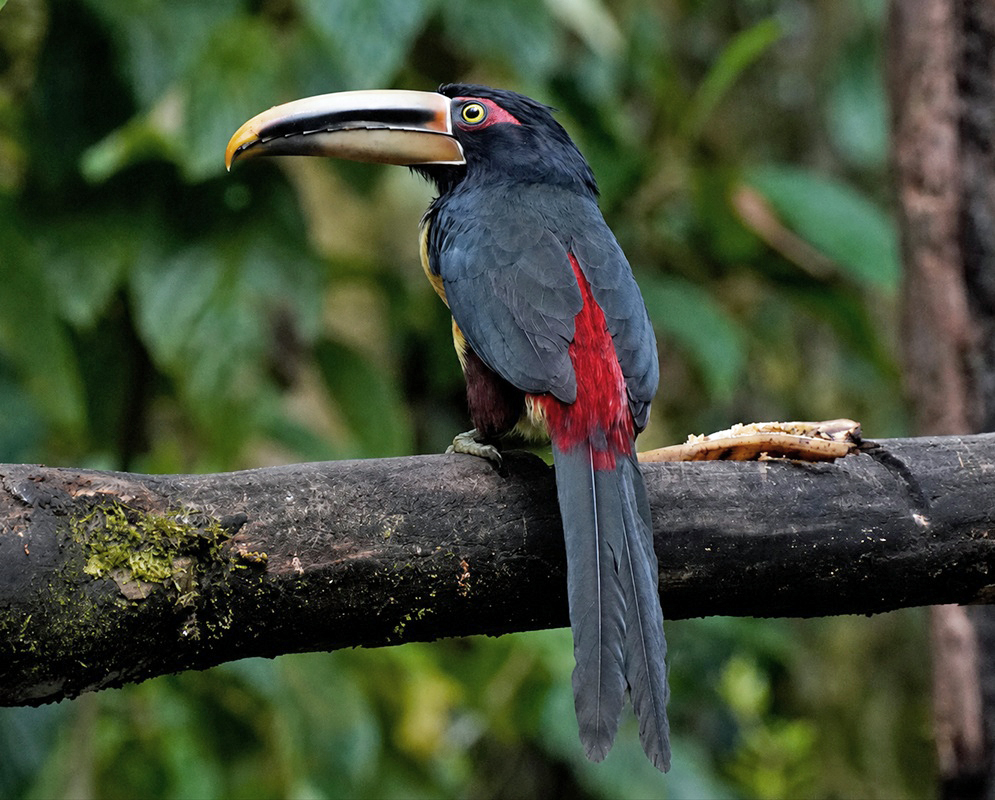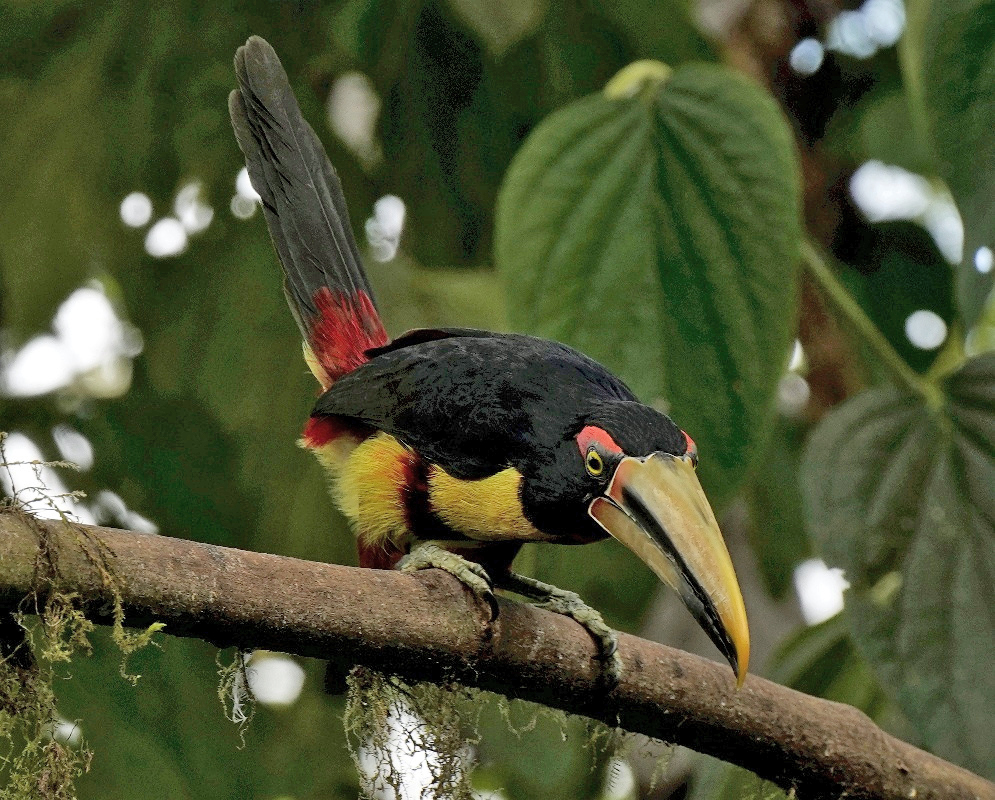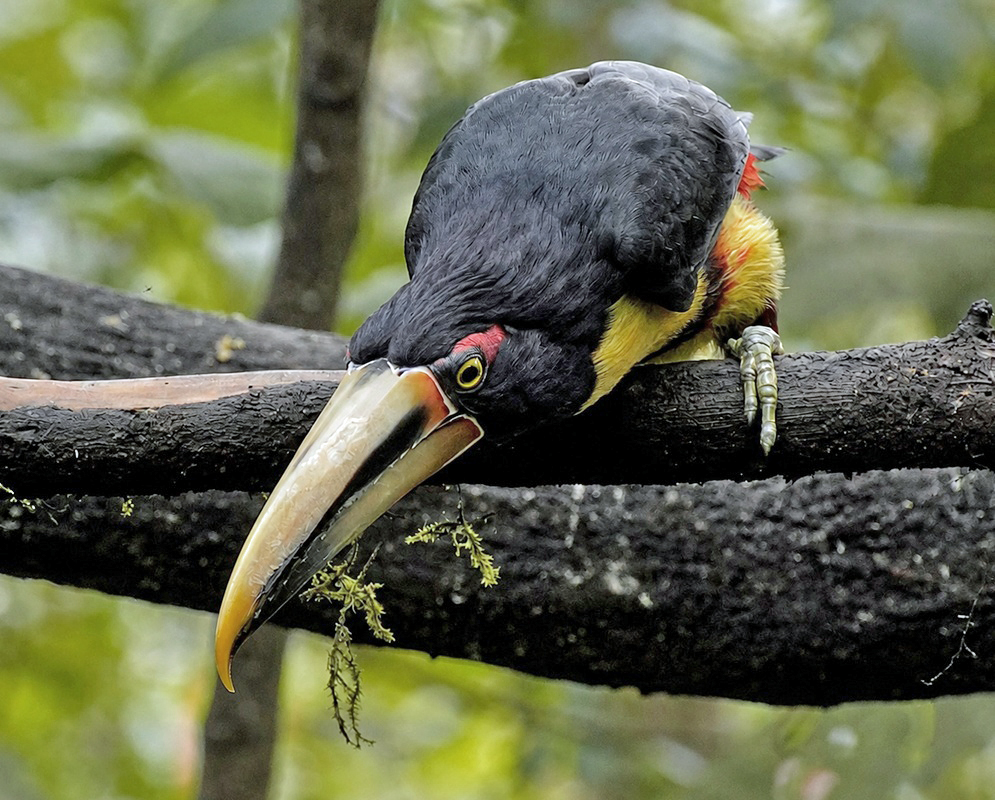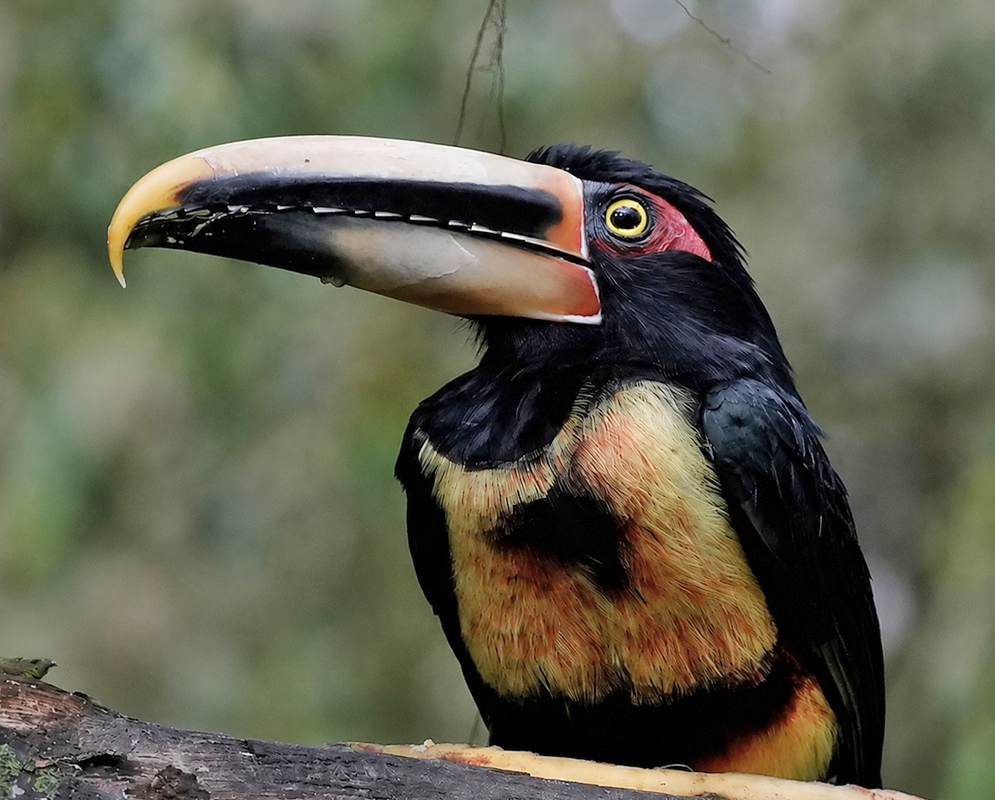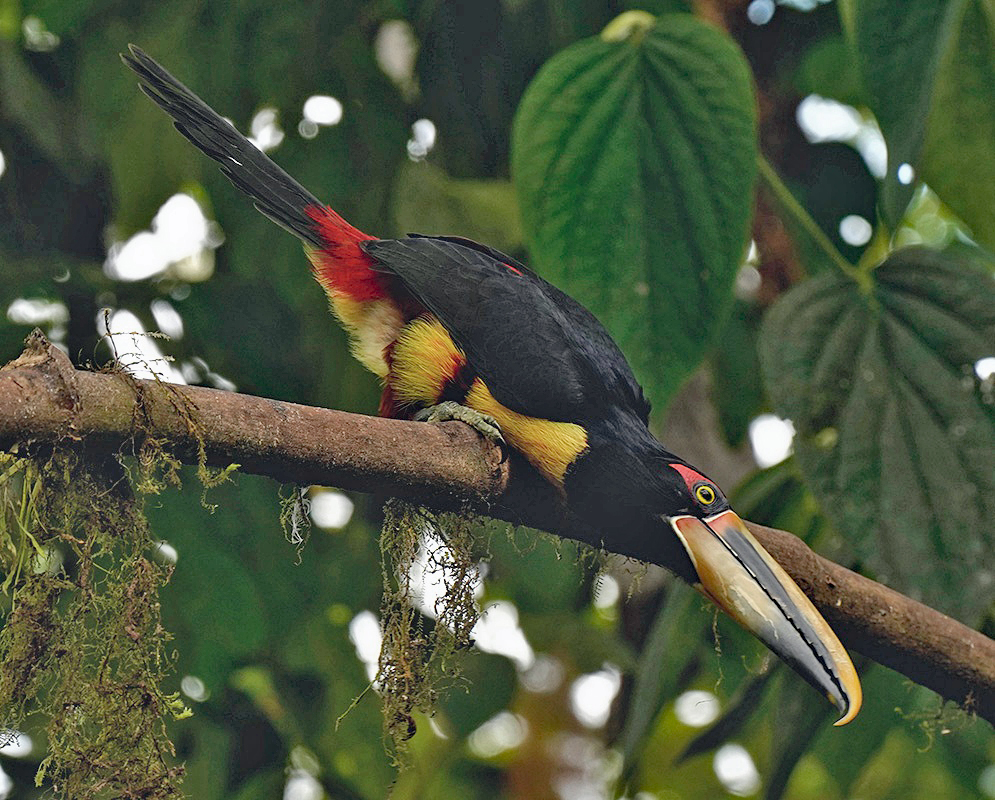


A Pteroglossus torquatus erythropygius feeding with its bill, head, and plumage visible

Pteroglossus torquatus erythropygius


Pteroglossus torquatus erythropygius, a subspecies found in the Pacific lowlands of western Ecuador and northwestern Peru, occupies humid tropical forests, secondary growth, and the edges of agricultural land. This bird typically remains in elevations ranging from sea level to around 4,000 feet and is resident throughout its range. It is not migratory and tends to form small, active groups that move together through the mid- to upper-level canopy in search of fruit, often vocalizing with high-pitched squeals. It tolerates moderate habitat degradation and frequently visits plantations and disturbed woodlands, though it prefers forested regions.

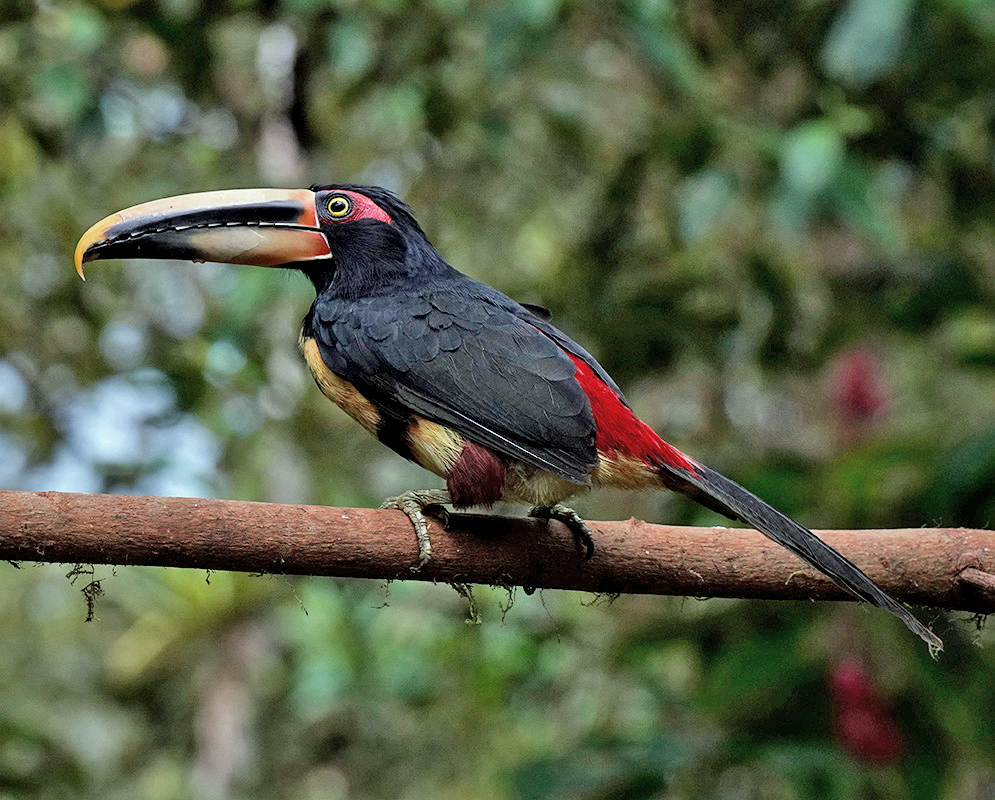
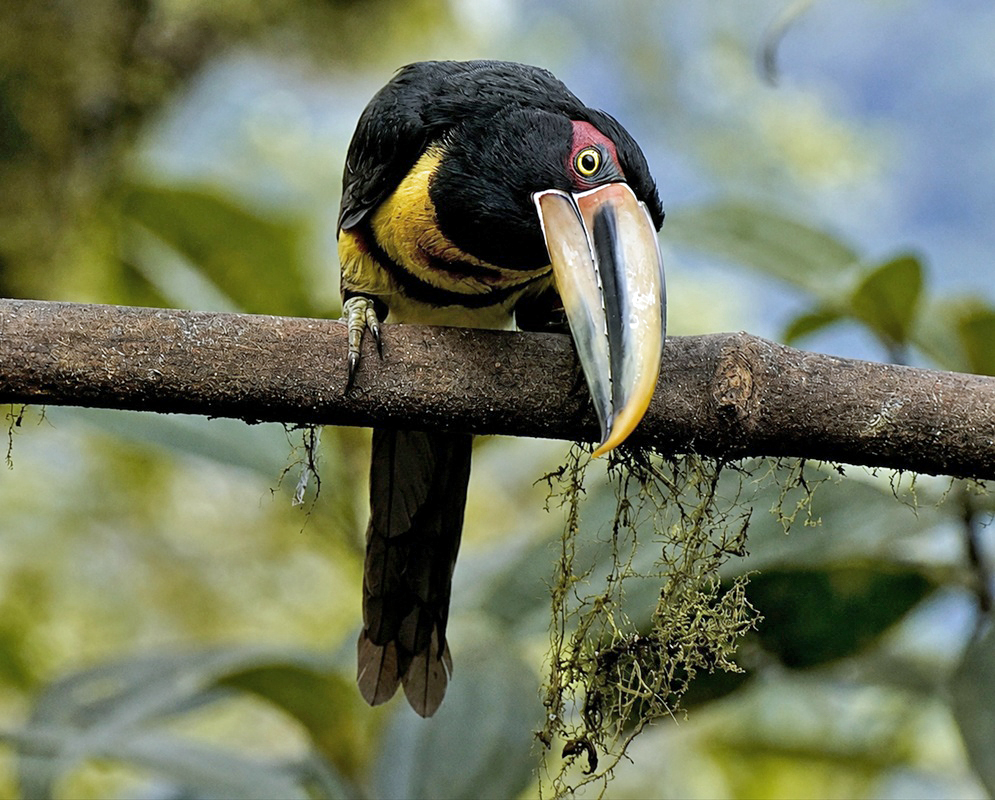
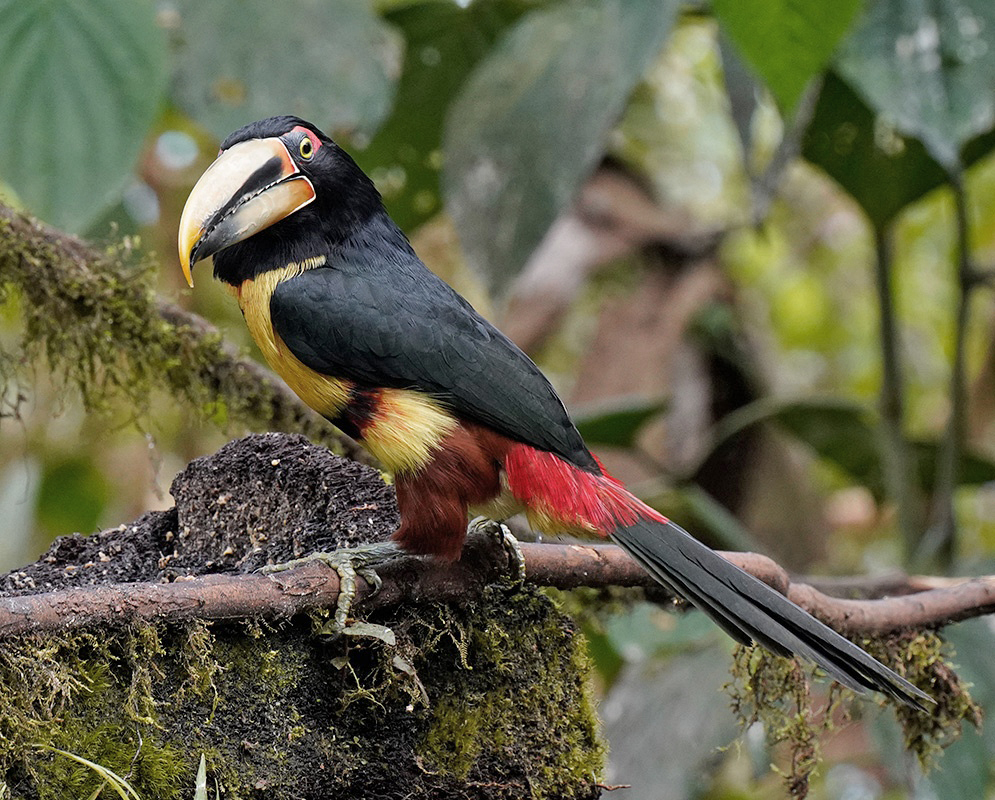
This subspecies measures around 16 to 17 inches in length, with a long, decurved bill that is yellowish with a contrasting dark base.

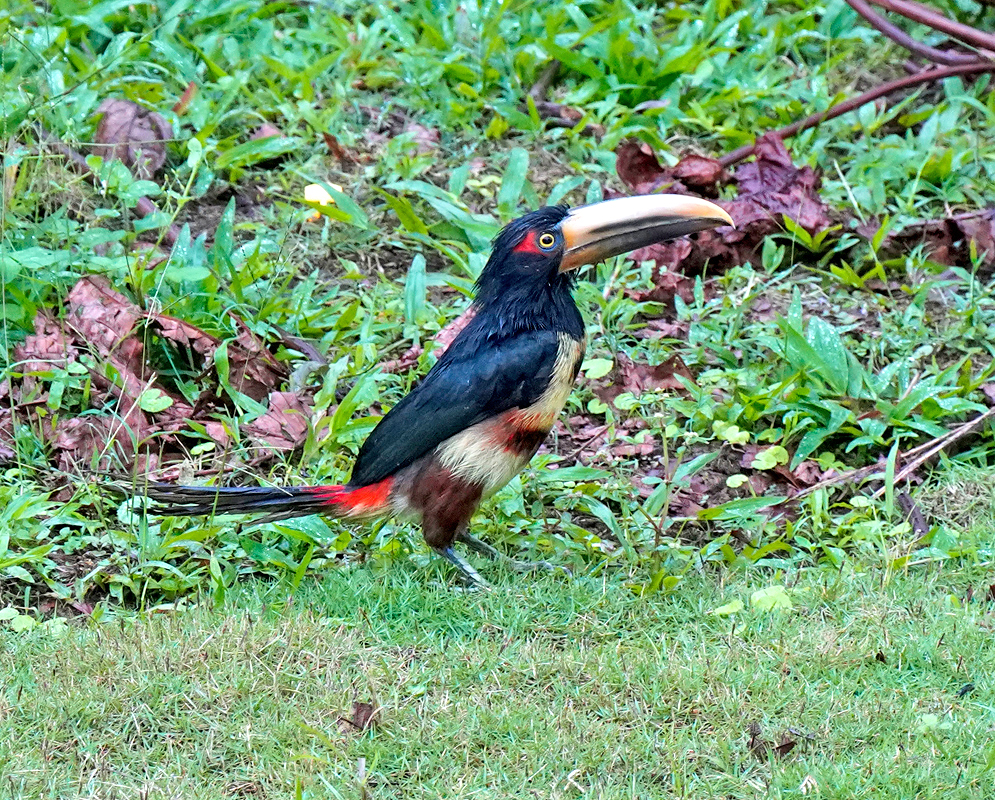
It can weigh between 6 and 9 ounces. Its body is primarily black above with a red rump, and its underparts are yellow with a central black spot and a chest band that blends red and black. Males and females are similar in appearance, though the female may have a slightly shorter and stubbier bill. They nest in tree cavities, often in abandoned woodpecker holes, and may breed from December to May. Both sexes incubate the clutch of 3 to 5 white eggs, and helpers often assist in feeding the chicks.

The nestlings remain in the cavity for nearly a month before fledging, and the adults continue feeding them primarily with insects during this period.

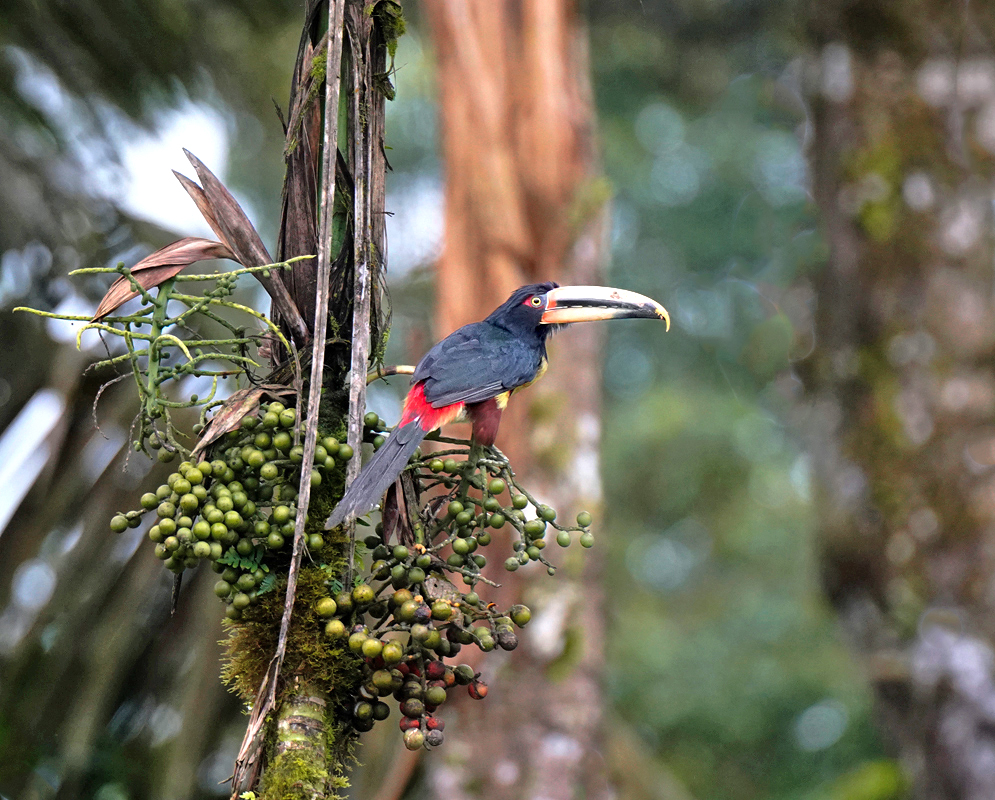
This species relies heavily on a fruit-based diet, feeding on various tropical fruits and playing a role in seed dispersal by swallowing fruit whole and regurgitating the seeds. They may occasionally consume insects, small lizards, or nestlings. While not known to be commercially raised or exported in quantity, individuals have been seen at feeding stations, indicating some comfort with human presence in forest-edge communities.

There is no verified global population estimate, but regional observations suggest it remains locally common. It is not classified as endangered. Photographed in the Chocó region of Ecuador.
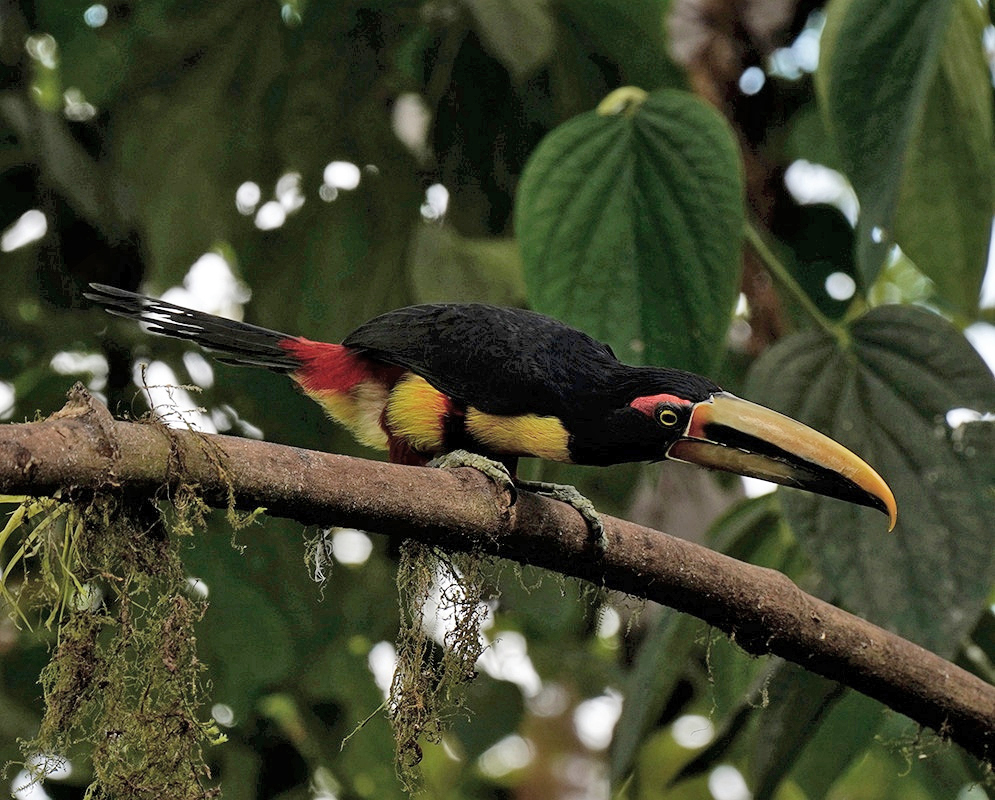
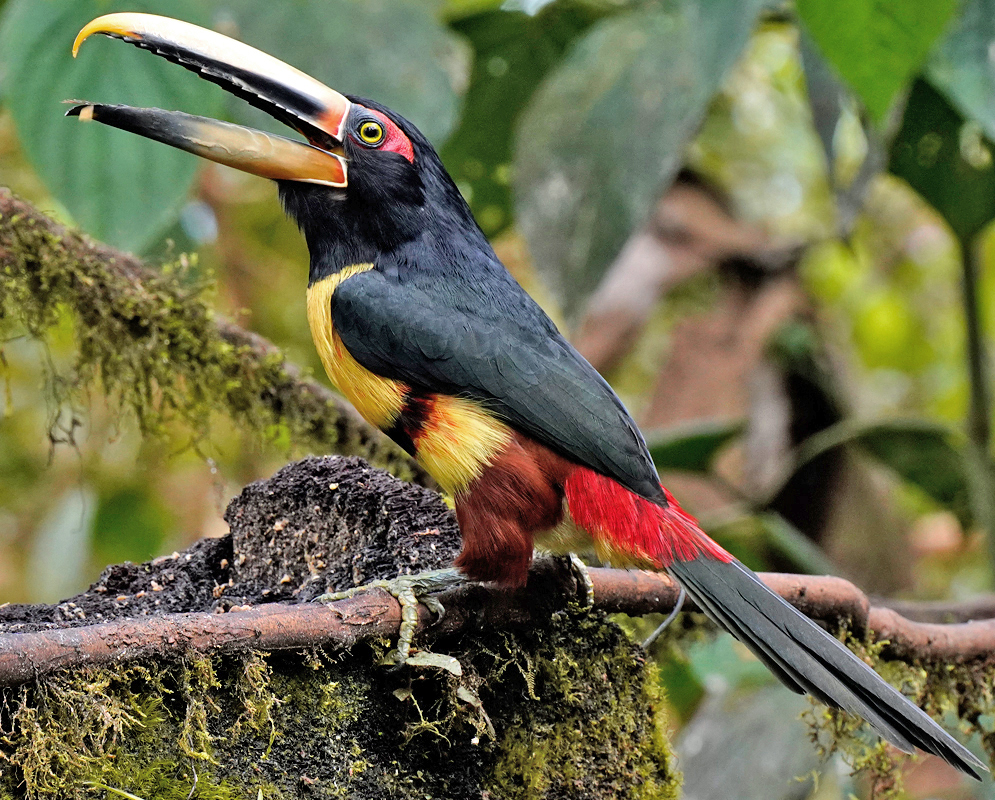
A Pteroglossus torquatus erythropygius perched sideways on a branch with its bill and body plumage visible
A pteroglossus erythropygius with red, yellow, and black plumage caught mid-action holding a seed in its bill while perched on a log
A pteroglossus erythropygius standing on a tree branch with its head turned, showing yellow underparts, red thighs, and a thick curved bill
A Pteroglossus torquatus erythropygius shown as the pale mandibled aracari in a clear view with its characteristic plumage visible
A Pteroglossus torquatus erythropygius shown in a full-body view with its plumage and body shape visible
Three pteroglossus erythropygius birds perched close together on a moss-covered branch in dense green forest
A Pteroglossus torquatus erythropygius shown in a view emphasizing side looking down, with its characteristic plumage visible
A Pteroglossus torquatus erythropygius perched with its plumage and characteristic features visible
A Pteroglossus torquatus erythropygius facing forward with upright plumage visible
A Pteroglossus torquatus erythropygius facing forward with its head, breast, and bill visible from a second distinct angle
A Pteroglossus torquatus erythropygius perched in profile with its side plumage and bill visible
A Pteroglossus torquatus erythropygius facing forward with its head, breast, and bill visible
Rear-side view of a perched pteroglossus erythropygius highlighting its dark glossy back and red undertail feathers
A Pteroglossus torquatus erythropygius feeding with its bill, head, and plumage visible from a second distinct angle
A Pteroglossus torquatus erythropygius perched with its plumage and characteristic features visible from a second distinct angle
A Pteroglossus torquatus erythropygius shown in a full-body view with its plumage and body shape visible from a second distinct angle
A Pteroglossus torquatus erythropygius hanging in an inverted position with its bill and plumage visible
A Pteroglossus torquatus erythropygius perched in profile with its side plumage and bill visible from a second distinct angle
A Pteroglossus torquatus erythropygius shown in a view emphasizing leaning down, with its characteristic plumage visible
A Pteroglossus torquatus erythropygius shown in a view emphasizing head down, with its characteristic plumage visible
A ground-level pteroglossus erythropygius standing alert on a grassy clearing surrounded by foliage and forest debris
Pteroglossus erythropygius perched on palm fruits during a cloudy day
A Pteroglossus torquatus erythropygius shown in a close portrait with its head and facial features visible

Privacy Policy, Legal Notices and Copyright 2016-2026. Engage the Exotic TM, All Rights Reserved.