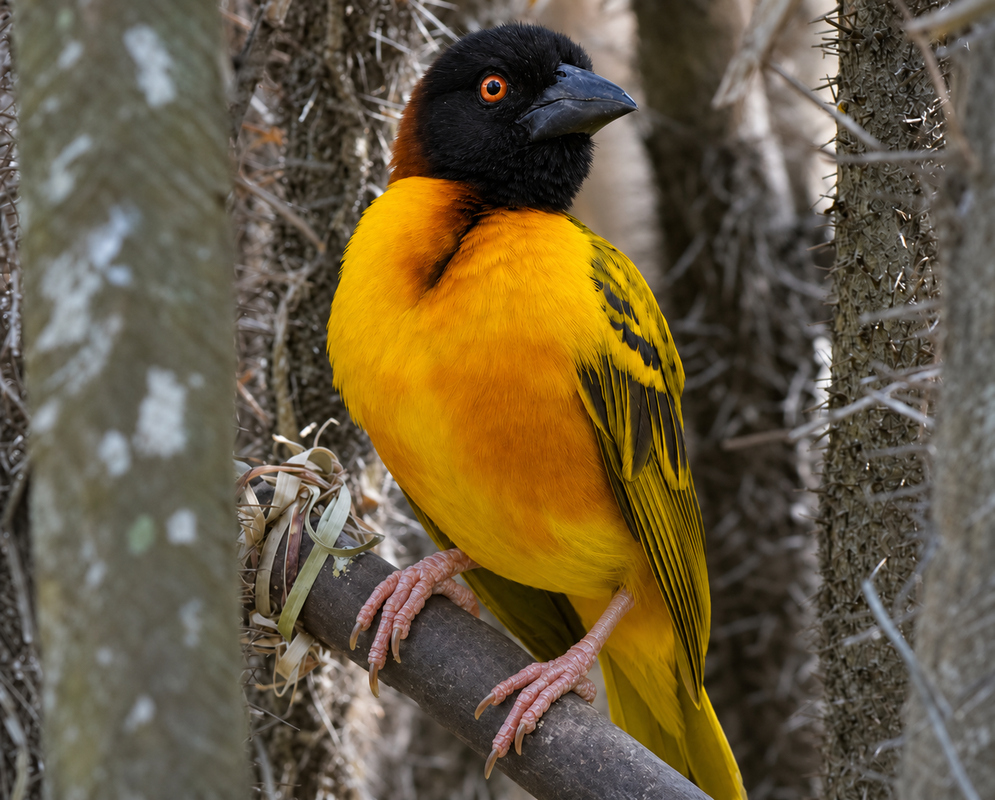


Ploceus cucullatus (Village Weaver)
Ploceus cucullatus, the Village Weaver, is native to much of sub-Saharan Africa and has established introduced populations in the West Indies, Mauritius and Réunion. It uses bushy savannas, wetlands, riverine woodland and forest clearings, as well as farms, villages and urban gardens. The birds often live close to people and gather in noisy flocks. Breeding males combine yellow plumage with black head and throat markings, although the amount of black and chestnut varies geographically. Both sexes have reddish eyes and a strong bill. Females and males outside breeding plumage are duller.
Seeds and cultivated grain form an important part of the diet, supplemented by fruit, nectar and invertebrates. Large feeding flocks can damage cereal crops. Breeding takes place in colonies where many nests hang together, sometimes with hundreds in one tree. The male weaves a rounded nest from flexible strips of grass, reeds or palm leaves, suspending it from vegetation with the entrance underneath. He advertises by hanging below the nest opening, calling and fluttering his wings. A female inspects the structure and lines a nest she accepts. A male may build around twenty nests during a season and mate with several females. Clutches usually contain two to four eggs. The female incubates, and she generally provides most of the care for the chicks. Photographed in Colombia.

