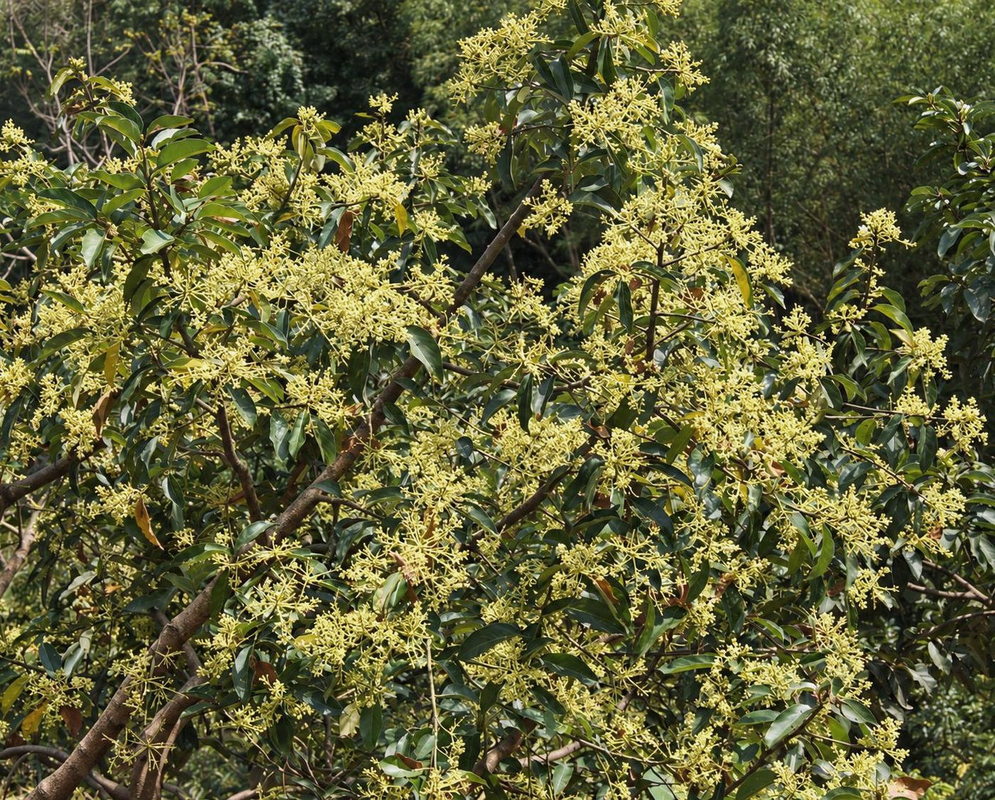

Persea americana (Avocado)
Native from central Mexico to Costa Rica, avocado is an evergreen fruit tree cultivated throughout tropical and subtropical regions. Small greenish-yellow flowers have six tepals. Each flower opens first in a female phase and later in a male phase, with timing differing among varieties. The fleshy fruit ranges from pear-shaped to rounded and contains one large seed. It begins to soften and ripen after harvest. Cultivars include rough-skinned Hass and smooth, green-skinned Fuerte; their creamy flesh is eaten in salads, spreads and other foods, and the oil has culinary and cosmetic uses.
The flesh supplies fiber and predominantly monounsaturated fat. In a six-month randomized trial involving more than a thousand adults with increased waist circumference, adding avocado to the usual diet modestly lowered total and LDL cholesterol but did not reduce abdominal visceral fat. These were dietary findings, rather than evidence of a weight-loss medicine. The plant contains persin, which is toxic to horses and can damage the heart and mammary glands. Photographed in the central Andes mountain range of Colombia.