

Paroaria coronata
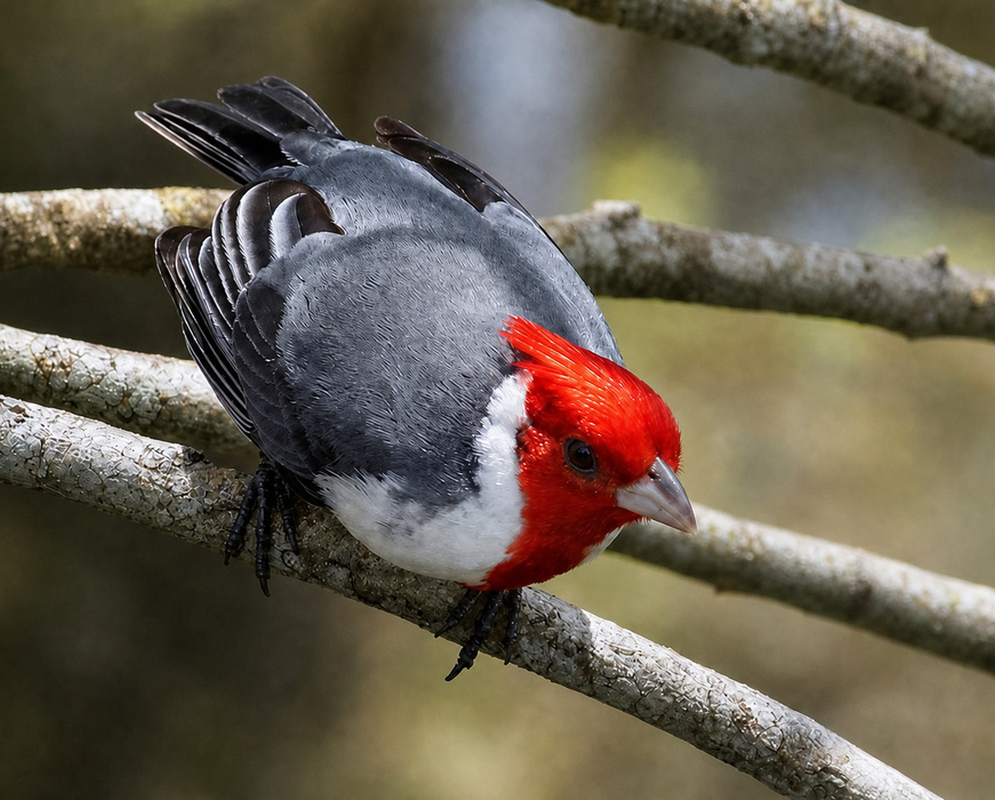
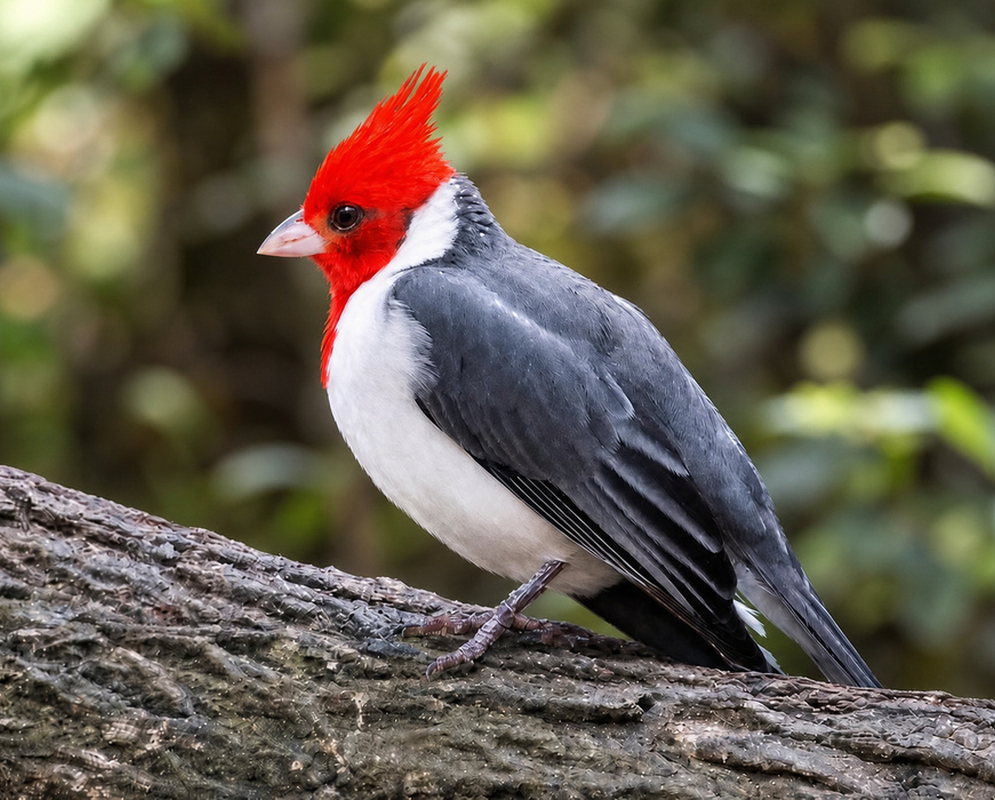
Paroaria coronata, commonly called the Red-crested Cardinal, is native to southern and central South America, occurring from Bolivia and southern Brazil through Paraguay and Uruguay to northern Argentina. Introduced populations also live outside the native range, including Hawaii and Puerto Rico. It favors open woodland, savanna, scrub, agricultural edges, parks, and gardens, and it often adapts to settled landscapes. Adults have a pointed red crest, red face and throat, white underparts, and gray upperparts; juveniles replace the bright red areas with brownish orange. Despite the name, this bird is a tanager rather than a true cardinal. Its sturdy, conical bill is adapted for handling seeds and small fruits, while the pointed crest changes its outline when raised.
Pairs or small groups forage mainly on the ground and in low vegetation for seeds, fruit, insects, and other small invertebrates. The birds commonly move with short hops, raise the crest during social interactions, and give clear, whistled notes. Breeding pairs build an open cup nest from grasses and rootlets, usually placed in a shrub or small tree. The species remains widespread and is assessed as Least Concern, although local abundance varies across its broad range. Its tolerance of lawns, pastures, and urban green spaces makes close observations possible where introduced populations have become established. Photographed in Colombia.