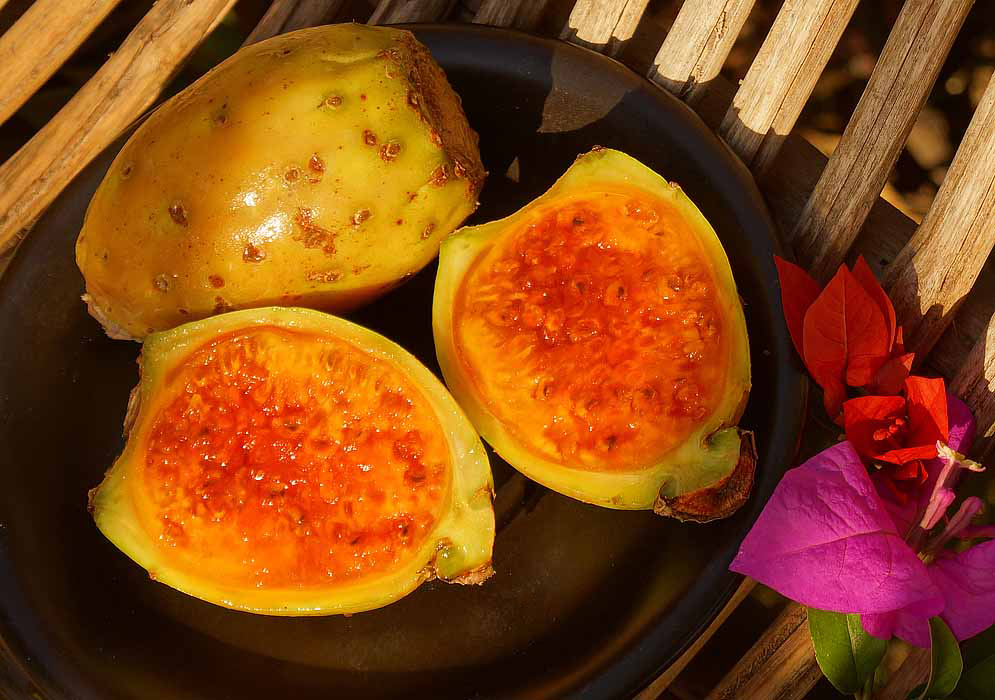


Opuntia ficus-indica (Prickly Pear)
Native to Oaxaca in Mexico, prickly pear is a succulent shrub widely cultivated in arid and semiarid regions. Its flattened stem segments carry out photosynthesis and store water. Carbon dioxide is taken in mainly at night, reducing water loss during hot days. Yellow or orange flowers are followed by sweet, juicy fruits that vary from yellow and orange to red or purple among cultivated varieties. The fruit is eaten fresh or processed into juices and preserves. In Mexico, tender young stem segments, called nopalitos, are eaten as a vegetable.
The plant is also grown as livestock forage and as a host for cochineal insects, which supply the red colorant carmine. It has become invasive in South Africa. Nopal has a traditional Mexican medicinal use for diabetes. In a small clinical study involving fourteen people with type two diabetes, adding steamed nopal to a high-carbohydrate breakfast reduced the rise in blood glucose after the meal. That short-term result does not establish long-term diabetes control or the effectiveness of other nopal products. Photographed in Colombia.