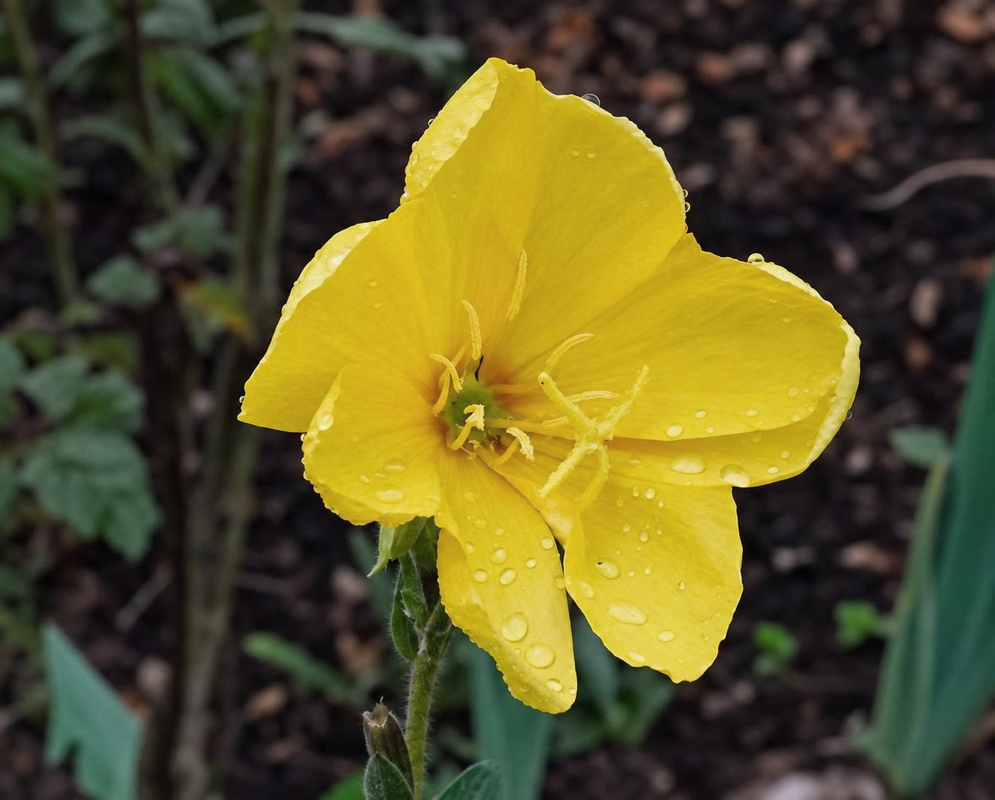

Oenothera biennis (Common Evening Primrose)
Native from Canada to central Mexico, this upright biennial herb grows in fields, along roadsides and on disturbed ground. It has become widely naturalized in Europe, where it grows along riverbanks, in thickets and in sandy places. It forms a rosette of leaves in its first year, then sends up flowering stems in its second year and dies after setting seed. Its yellow, four-petaled flowers have a mild lemon scent. They open near sunset and remain open through the morning before closing during the day. Narrow capsules split when ripe to release numerous seeds, which can remain viable in soil for decades. The seeds yield evening primrose oil, used in dietary supplements and skin products; the oil contains the fatty acid gamma-linolenic acid. The flowers feed night-flying moths and early-morning bees, while birds eat the seeds. Photographed in Bogotá, Colombia.