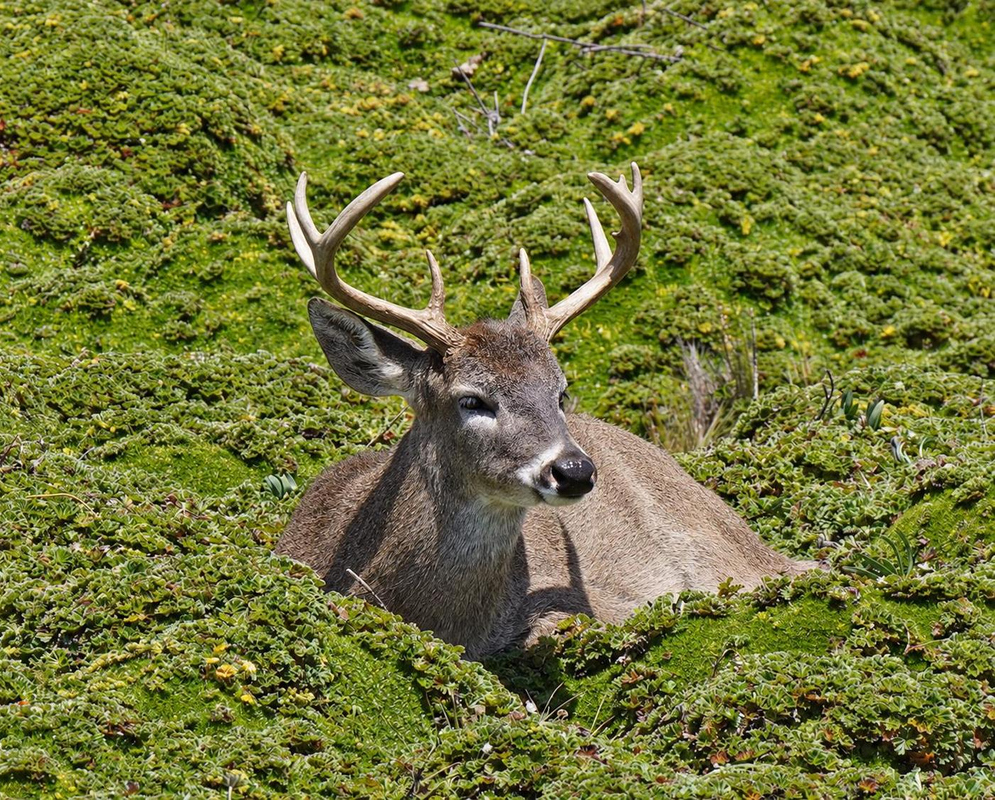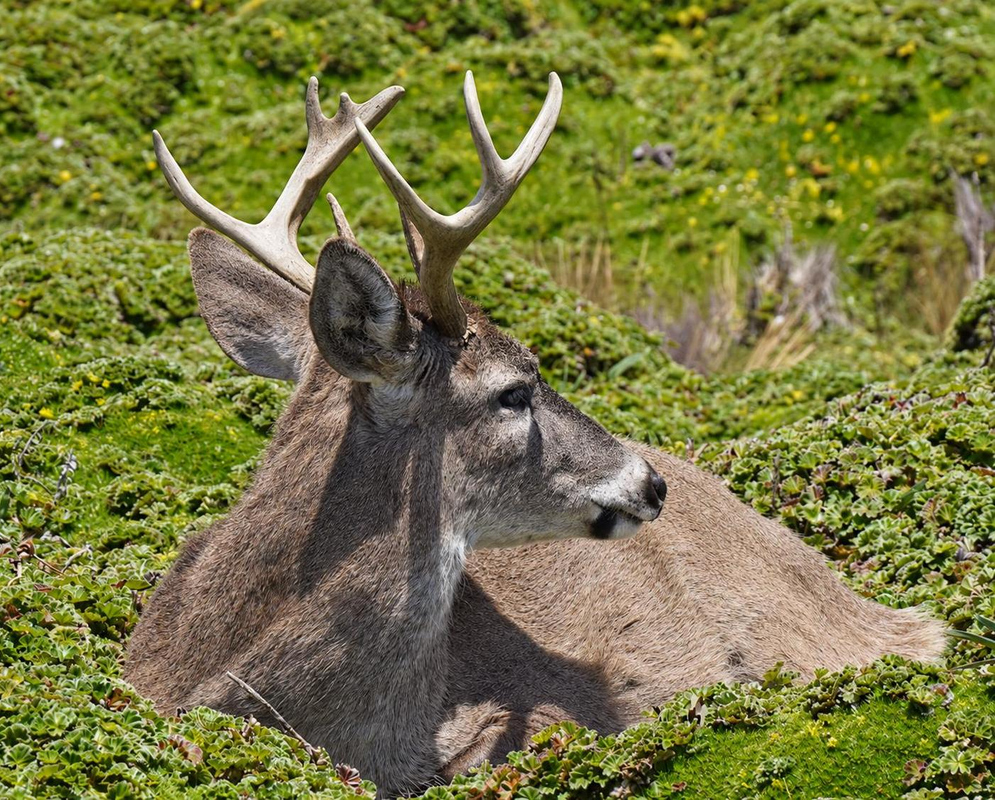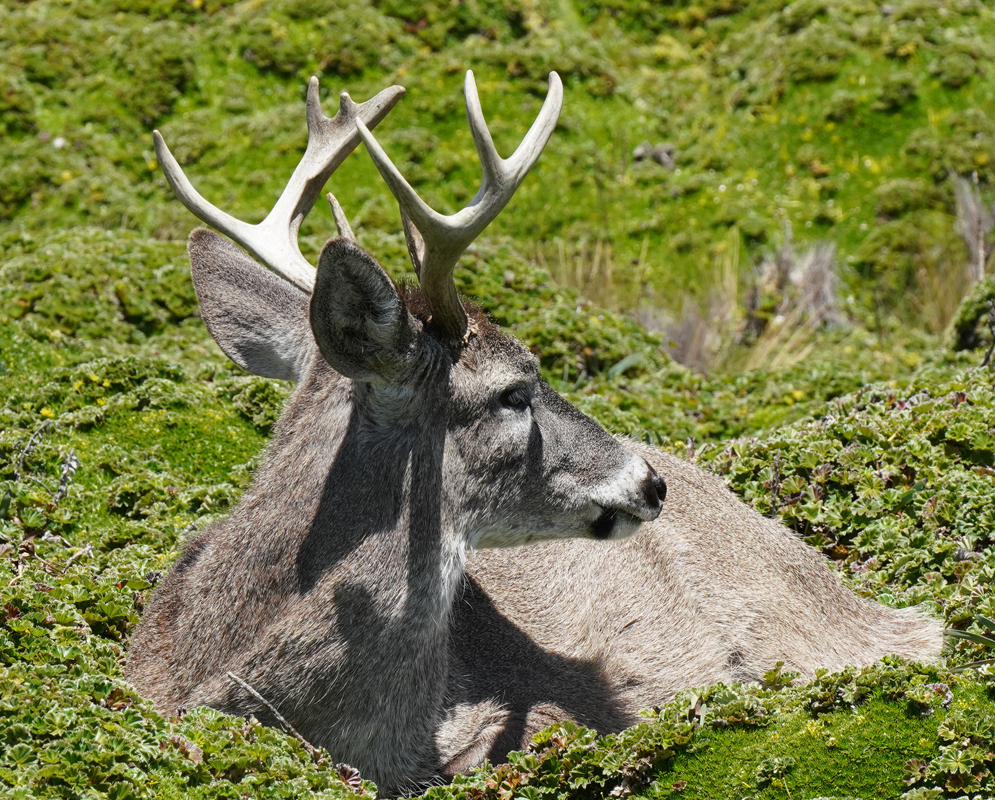


Odocoileus virginianus (White-Tailed Deer)
Odocoileus virginianus (white-tailed deer) has the broadest range of any deer in the Americas, extending from southern Canada through most of the United States, Mexico, and Central America to northern South America and Bolivia. Tropical and Andean populations can differ considerably in size and coat color from northern animals. Males grow antlers that are shed and replaced, while both sexes raise the white underside of the tail as a conspicuous alarm signal when fleeing.
The species uses forest, woodland edge, savanna, scrub, farmland, and some urban landscapes. Its diet changes with habitat and season and includes shoots, herbs, leaves, fruit, seeds, and fungi. Activity is commonly concentrated around dawn and dusk. Females conceal young fawns in vegetation and return periodically to nurse them, reducing scent and movement that could attract predators. White-tailed deer are widely hunted and managed, and the species has also been introduced beyond its native range. Photographed in Ecuador.