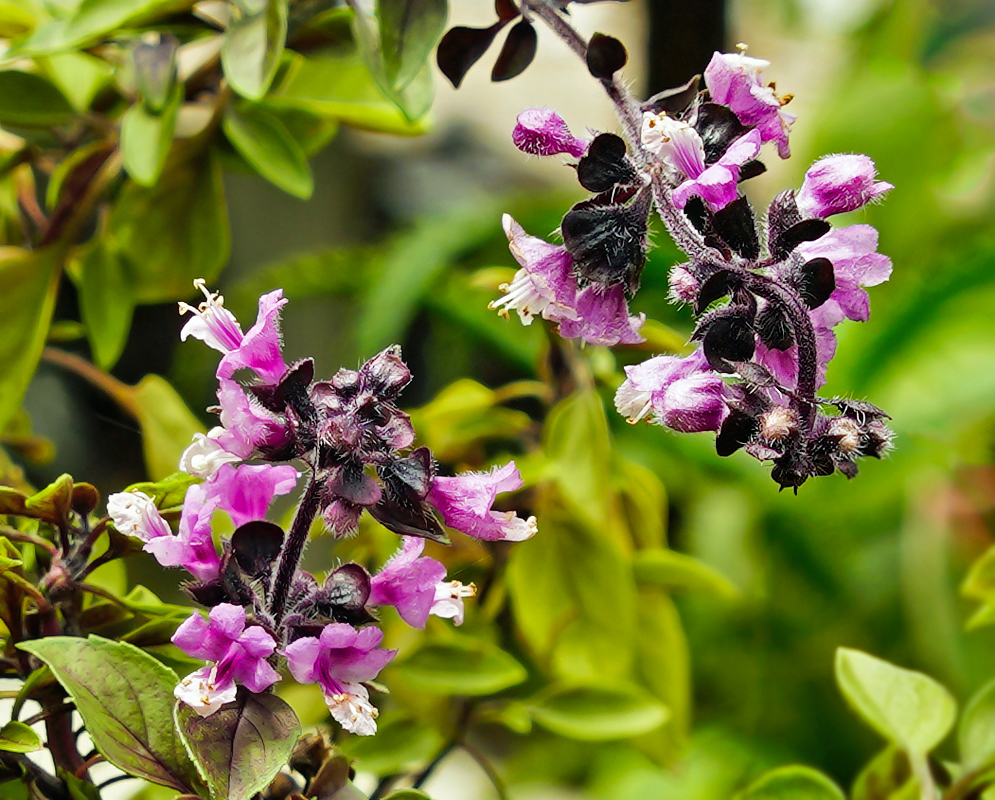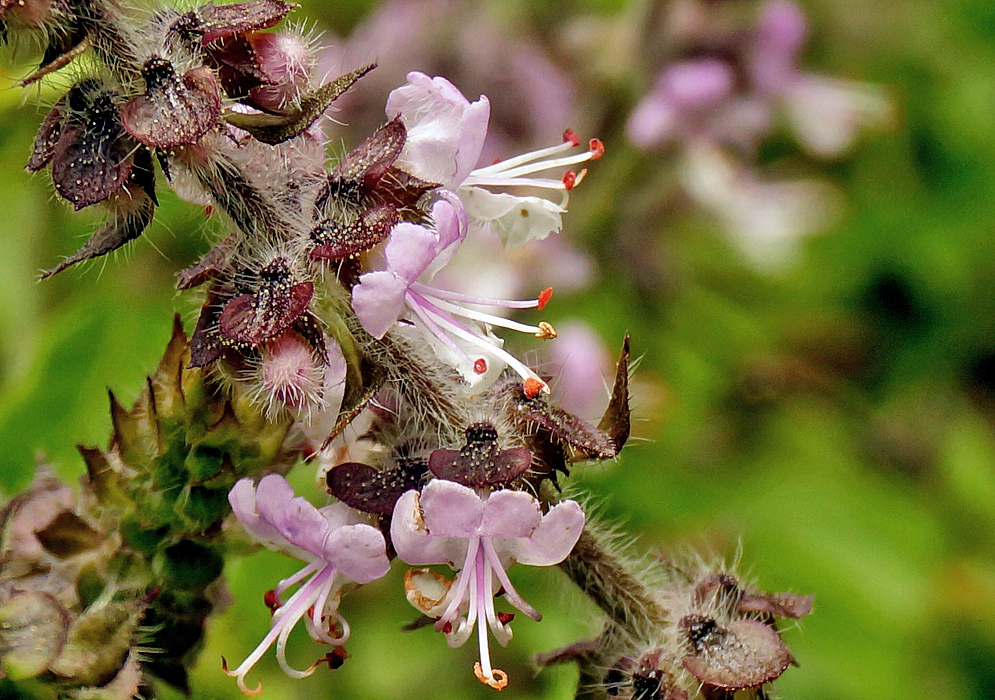


Ocimum tenuiflorum (Holy Basil)
Native to Andaman Is., Assam, Bangladesh, Bismarck Archipelago, Borneo, and Cambodia and nearby regions, this is an herbaceous plant in the Lamiaceae family. Originating in north-central India. This well-branched herb blooms with purple flowers and comes in two distinct cultivars; Rama or Sri Tulsi with green leaves, and Krishna or Shyama Tulsi with purplish leaves, both of which have unique botanical and phytochemical profiles. Holy Basil holds a significant place in Indian tradition and medicine, for its adaptogenic properties, it aids in maintaining homeostasis and combating stress effects, historically and presently revered for its anti-stress effects promoting body balance. Its medical prowess extends to fighting skin infections and acne due to its antibacterial, antiviral, antifungal, anti-inflammatory, and analgesic properties, largely attributed to active compounds like eugenol, oleanolic acid, ursolic acid, rosmarinic acid, and carvacrol. It’s often consumed as a supplement or brewed as Holy Basil tea, and its extracts, oils, and supplements are derived from its seeds, leaves, flowers, and stems, marking its widespread commercial cultivation and utilization. Photographed in Bogotá, Colombia.