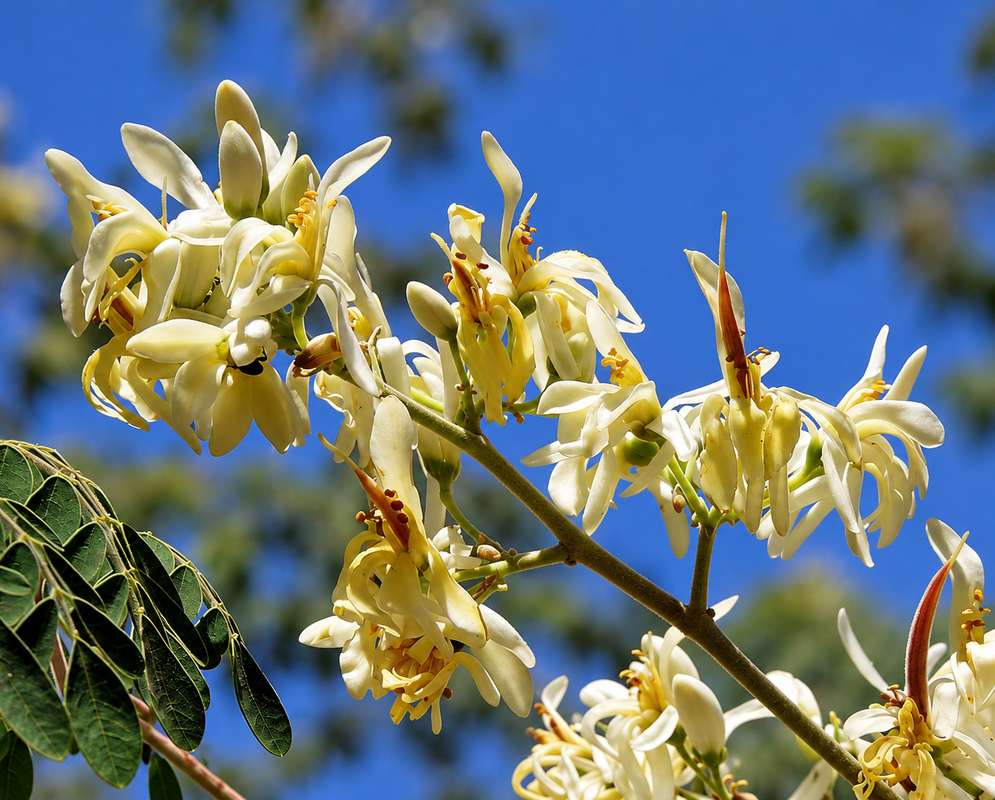

Moringa oleifera (Miracle Tree)
Native from northeastern Pakistan to northwestern India, this fast-growing tree is now grown throughout the tropics for food and many other uses. It tolerates drought and can regrow after repeated cutting, allowing frequent harvests of its finely divided foliage. Branching clusters carry fragrant white to cream flowers. The long, slender seed capsules have three prominent angles and split when dry to release winged seeds. Immature pods, known as drumsticks, are cooked in curries; their soft contents are eaten and the tough outer walls discarded. The leaves can taste bitter and are cooked like spinach or dried and powdered for soups and sauces.
The name miracle tree reflects its combination of nutritional value, traditional medicinal uses, and practical products. Its edible leaves supply protein, beta-carotene, calcium, and iron. Mature seeds yield ben oil, used in cooking, cosmetics, perfumery, and precision lubrication. Ground seeds are also used to clarify muddy water by helping suspended particles clump together and settle. Among the Mijikenda of coastal Kenya, traditional medicinal uses include stomach complaints, ulcers, wounds, and body pains, as well as diabetes and high blood pressure. Clinical findings on blood-sugar control are mixed: a twelve-week trial in people with prediabetes found improvements in blood-glucose markers, while a separate trial in people with type two diabetes found no significant improvement. Photographed in Mompox, Colombia.