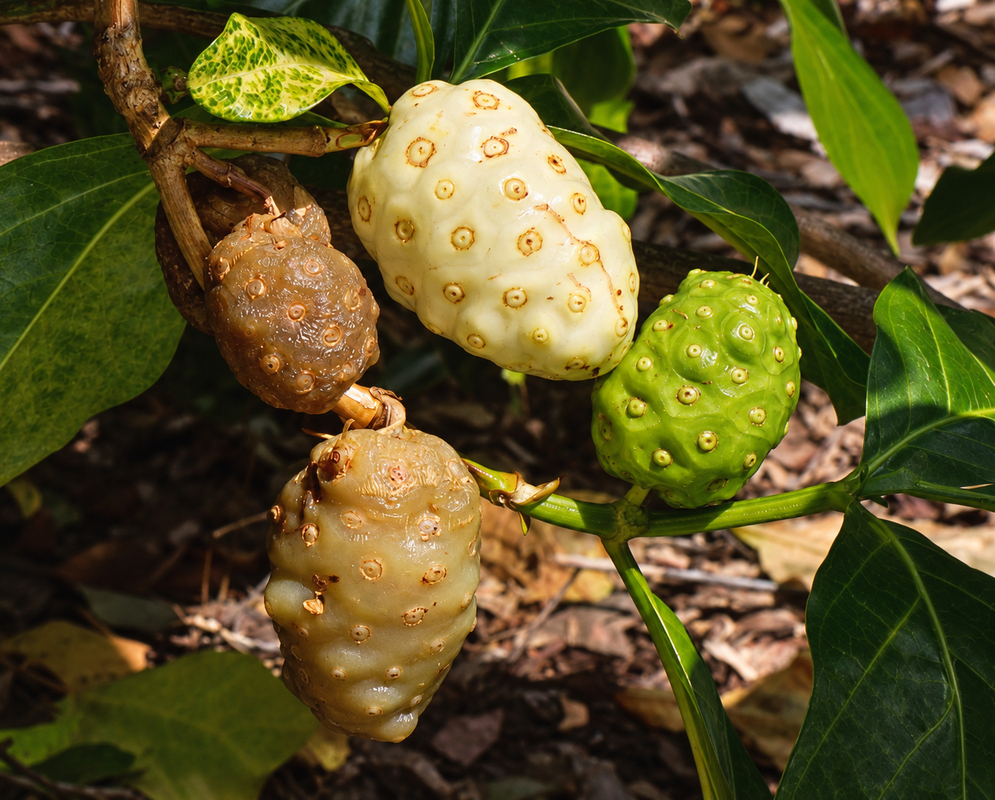

Morinda citrifolia
Native from tropical and subtropical Asia to northern Australia, noni is a small evergreen tree often found in coastal vegetation. Its white flowers grow in compact heads, and their developing fruits unite into a fleshy multiple fruit. Ripe fruit becomes soft and strongly scented, with an odor resembling overripe cheese. Seeds contain a buoyant air chamber that helps coastal dispersal. Fruits and young leaves have been used as food, while root bark supplies a red textile dye used in traditional batik making.
Noni also has a long history in traditional medicine for fevers, digestive complaints and other illnesses, using different plant parts. Its juice is sold commercially as a health supplement. Laboratory studies have examined antioxidant and other biological activities, but human research has not established a beneficial effect on a health condition. Noni products can contain substantial potassium, which matters for people with kidney disease. Liver injury has been reported after noni products, although whether noni caused it remains uncertain. Photographed in Barranquilla, Colombia.