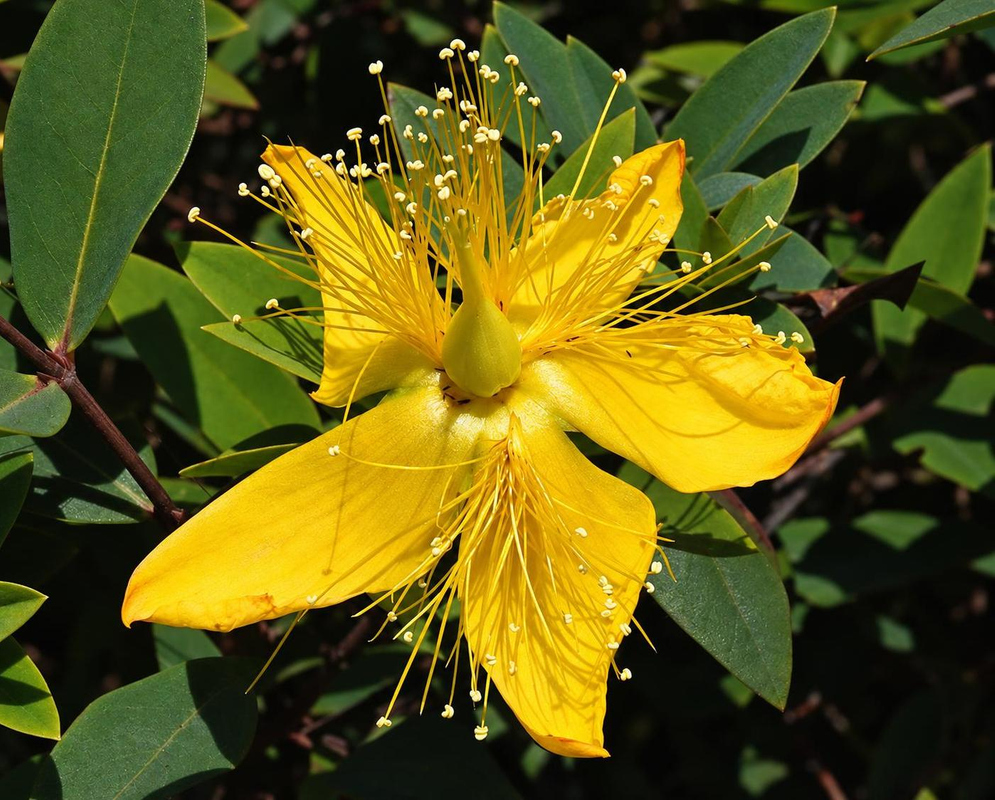


Hypericum perforatum (Common St. John’s Wort)
Native to Europe, North Africa, and western Asia, common St. John’s wort is a perennial herb that spreads through underground stems. Opposite, stalkless leaves contain translucent dots, while darker glands can mark their edges. Yellow flowers usually have five petals with black dots near the margins and numerous stamens. The species grows in sunny grassland, open woodland, roadsides, and disturbed ground. It is invasive in New South Wales, Australia, and its hypericin can make grazing livestock dangerously sensitive to sunlight.
Flowering shoots provide extracts used in herbal medicines. Certain standardized extracts have clinical evidence for relieving symptoms of mild to moderate depression over the short term. The plant also has a history of traditional external use for wounds and skin complaints. Its medicinal activity comes with important interactions: St. John’s wort can reduce the effectiveness of many drugs, including some contraceptives and transplant medicines, and can cause serious effects when combined with certain antidepressants. Products differ in their active constituents. Photographed in Colombia.
