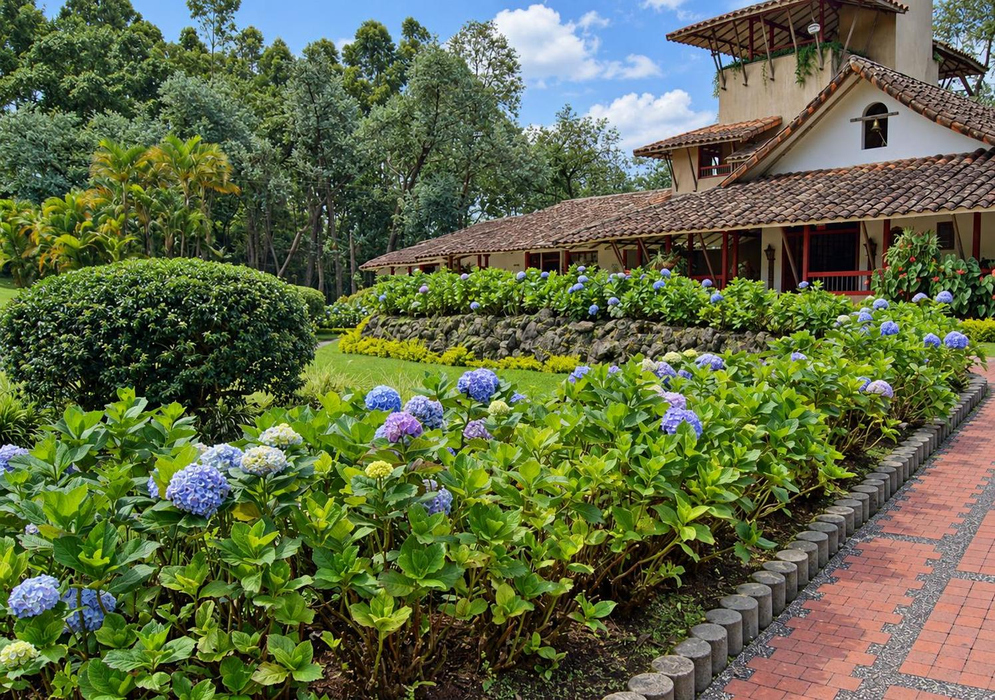
Hydrangea macrophylla
Native to southern central Japan, Izu Ōshima and Kazan Rettō, it is a deciduous shrub widely cultivated for its flower heads. Garden forms include rounded mopheads and flatter lacecaps, whose small fertile flowers are surrounded by larger showy flowers with petal-like sepals. In cultivars capable of producing pink or blue flowers, soil acidity affects aluminum availability: more available aluminum favors blue, while alkaline conditions favor pink. White cultivars do not turn blue through this mechanism. Flower heads are used fresh or dried in arrangements. Named cultivars, including the lacecap ‘Veitchii’, have received the Royal Horticultural Society’s Award of Garden Merit. It is poisonous if eaten in large quantities and can cause stomach pain and vomiting. Photographed in Colombia.