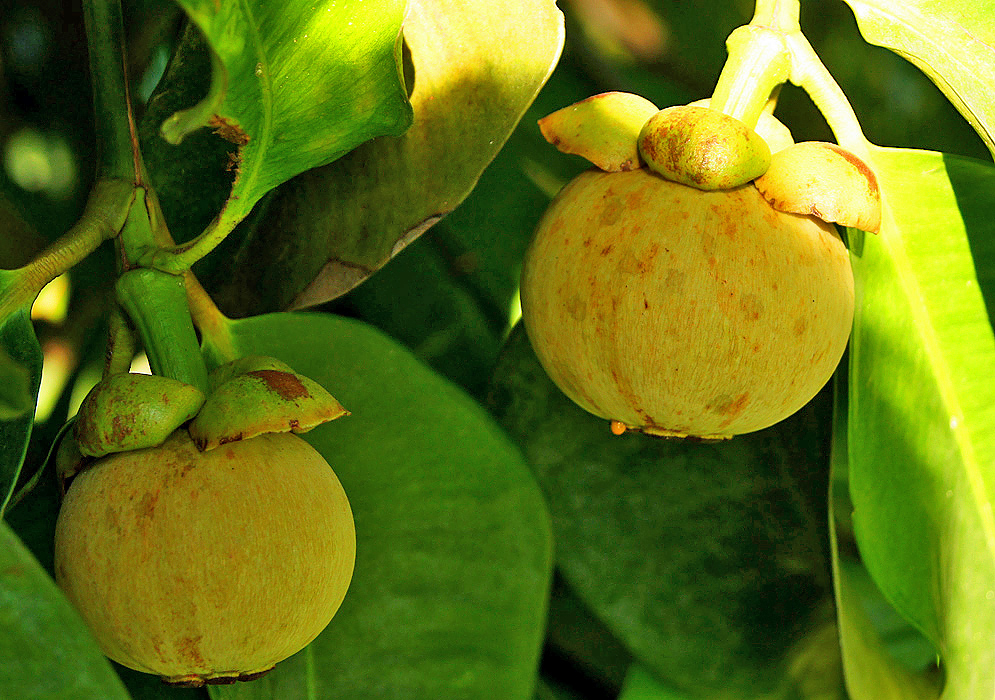


Garcinia mangostana (Mangosteen)
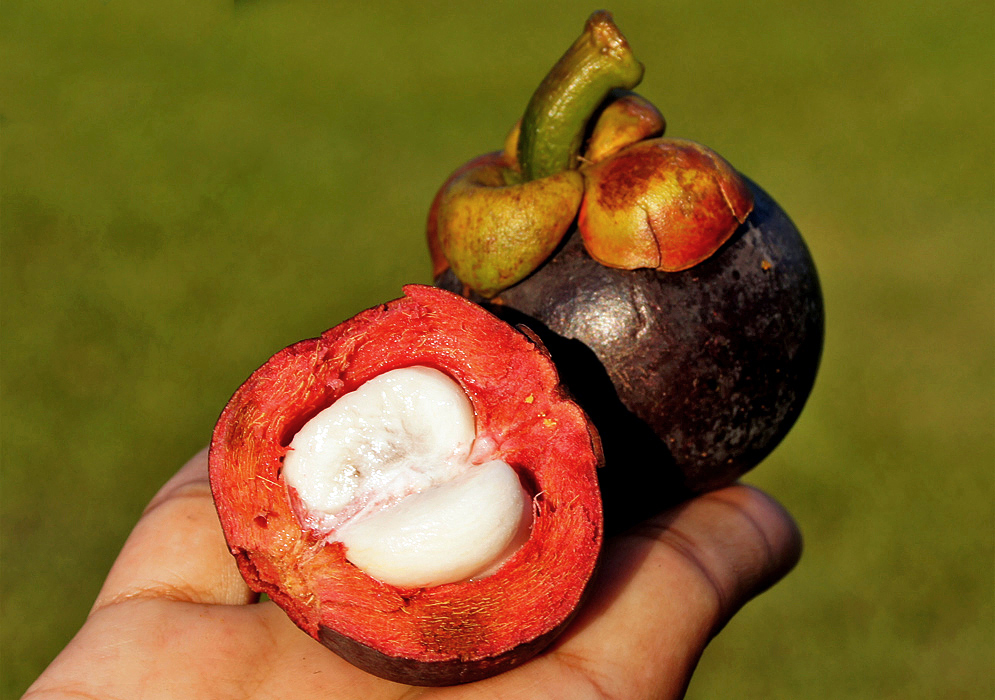
Native to the Malay Peninsula and Borneo, mangosteen is a slow-growing evergreen fruit tree cultivated for its sweet, mildly tart flesh. Its thick, four-petaled flowers develop into rounded fruits with a tough purple rind and soft white segments inside. The number of segments corresponds to the lobes of the persistent stigma at the blossom end, allowing the exterior to indicate the fruit’s internal divisions. Cultivated mangosteen can form fruit and viable seeds without pollination. The juicy segments are eaten fresh and used in desserts; in Colombia, the crop is grown in areas including Tolima and Meta.
The fruit rind has a traditional medicinal use in Southeast Asia for diarrhea and skin complaints. It contains xanthones such as alpha-mangostin, which have been investigated in laboratory studies. These findings concern extracted compounds and laboratory models; clinical effectiveness for the traditional uses remains unestablished. Photographed in Mariquita, Colombia.