
Fridericia chica
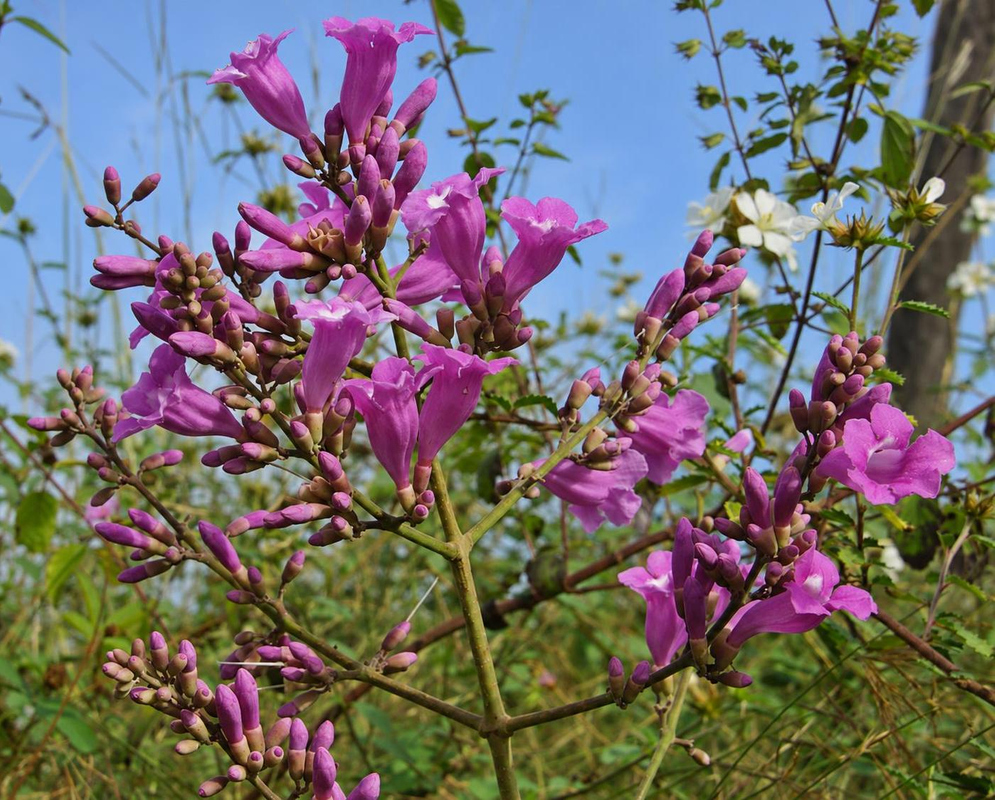
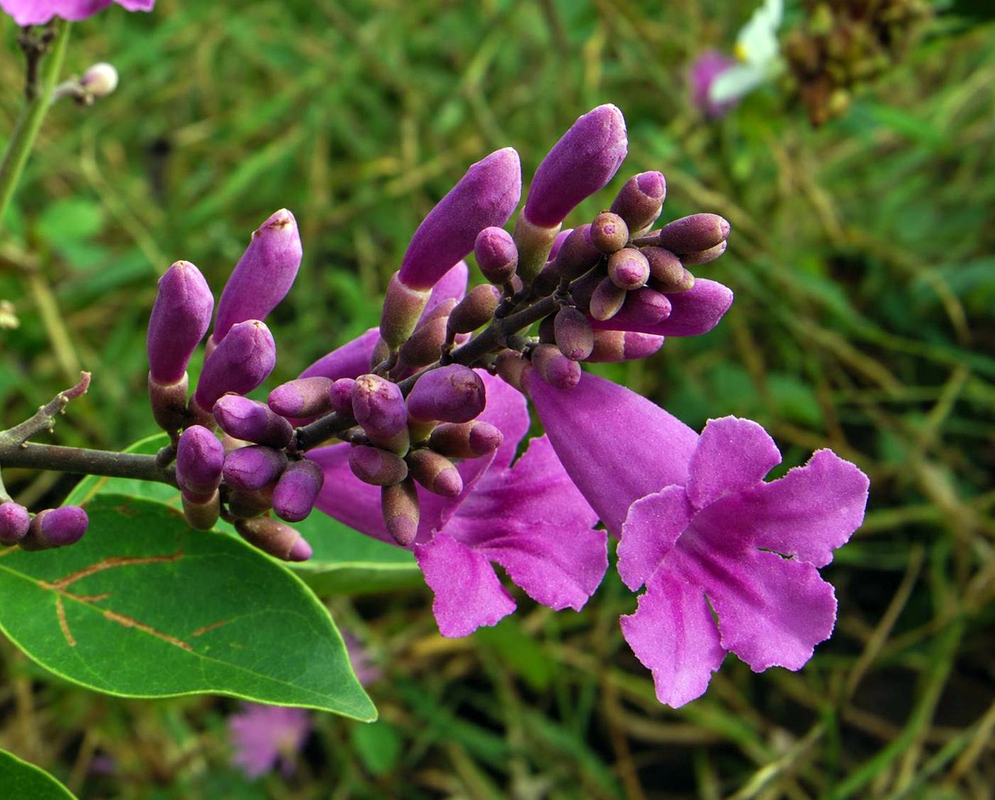
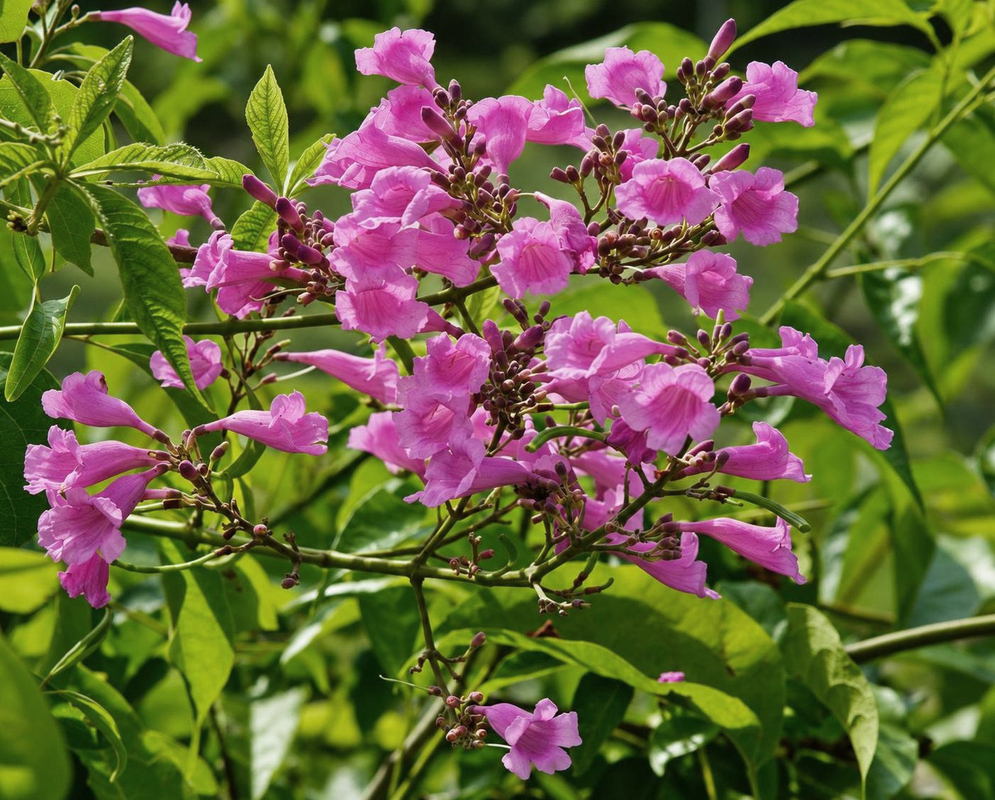
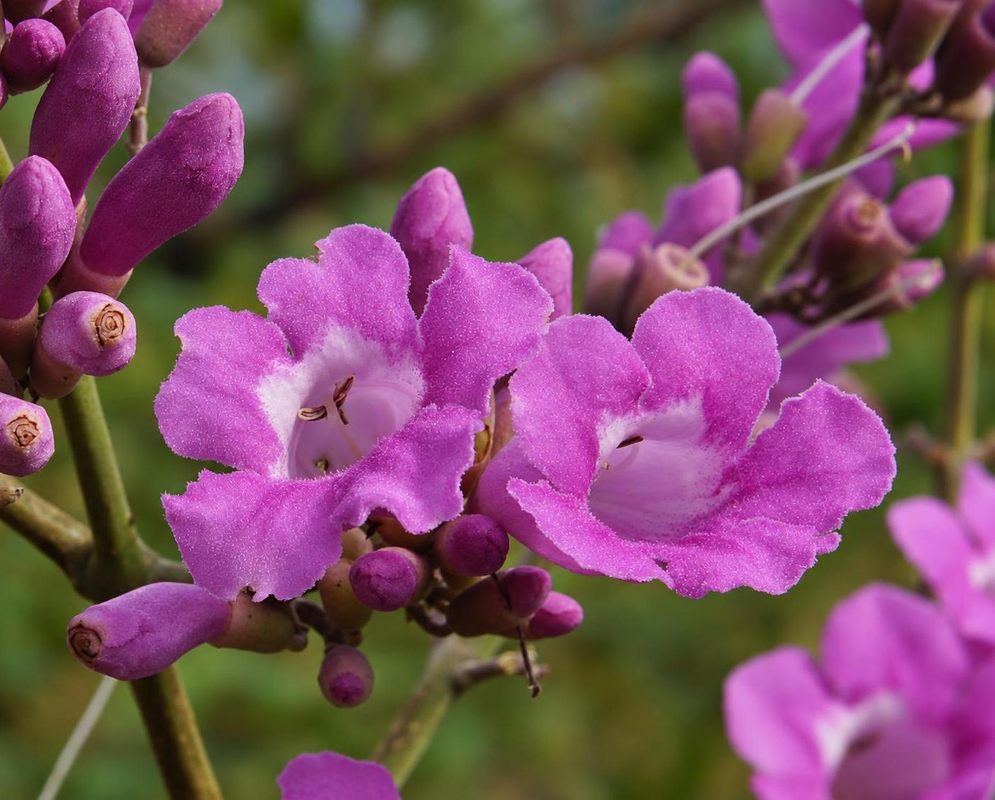
Native from central Mexico through tropical America, this woody climber grows in forests and secondary vegetation. Its leaves have two or three leaflets, with a climbing tendril sometimes replacing the terminal leaflet. Branched clusters carry tubular pink to magenta-purple flowers with a spreading, five-lobed mouth. The leaves turn reddish as they dry and provide a red pigment traditionally used by Indigenous peoples for body painting and coloring fibers. Carajurin and related pigments account for the characteristic red dye.
Known as crajiru in Brazil, the leaves are used traditionally for wound washing and complaints such as diarrhea and intestinal colic. A standardized extract has also been tested in a mouth-adhering gel for oral mucositis, the painful mouth sores that can follow treatment associated with bone-marrow transplantation. A small, open-label randomized trial reported faster healing with the gel than with low-intensity laser treatment. The published results were an interim analysis, so this remains preliminary clinical evidence for a specific formulation rather than proof that homemade leaf preparations have the same effect. Photographed in northern Colombia.