

Ficus carica (Fig)
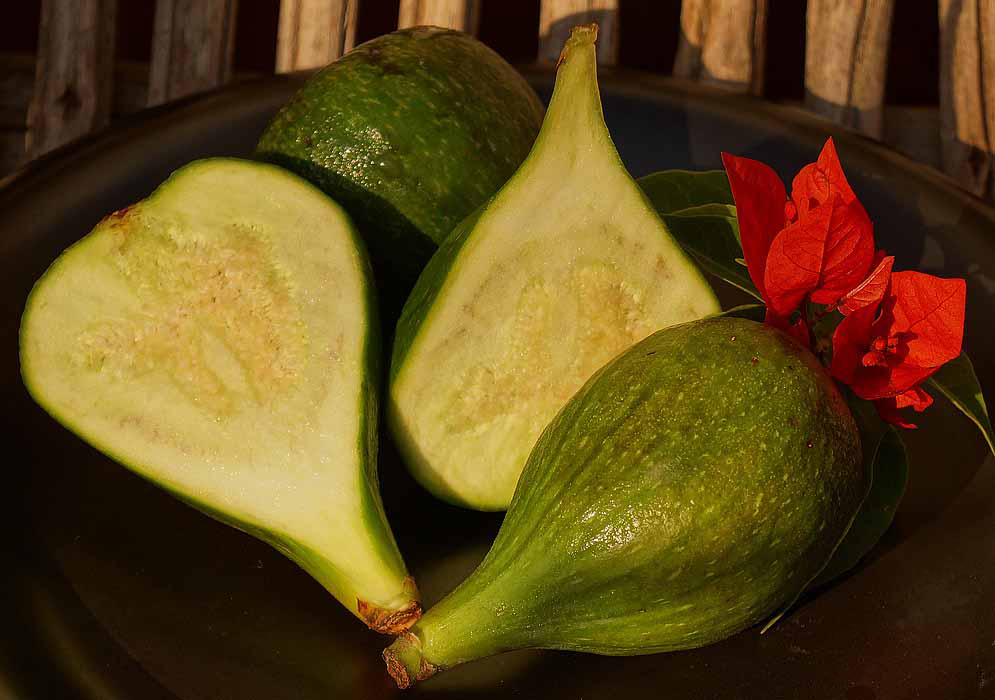
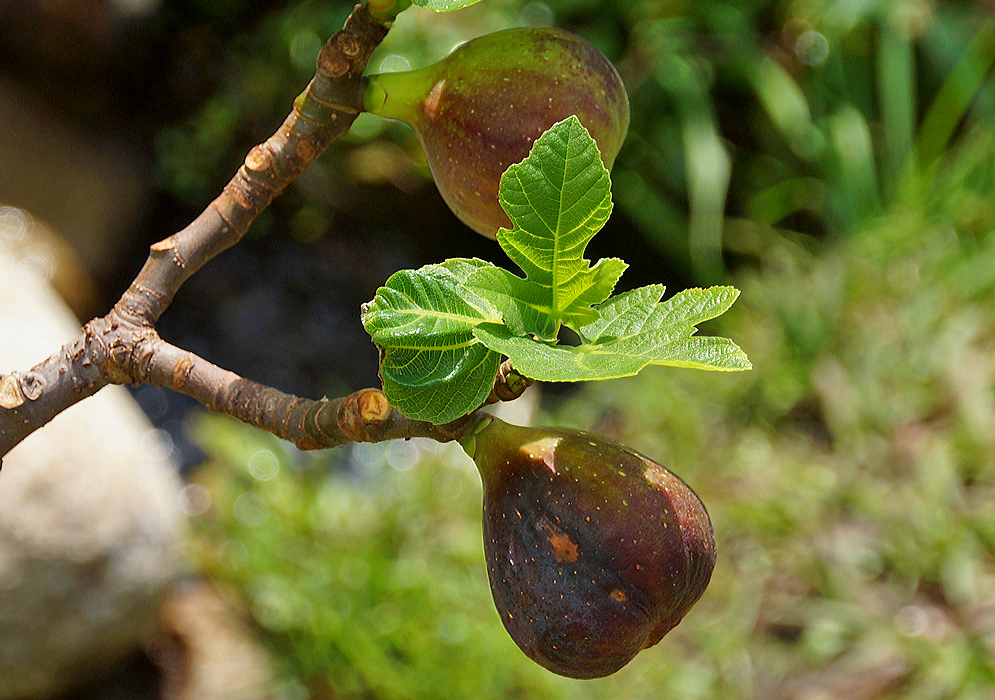
Native from the eastern Mediterranean to Central Asia and the western Himalaya, common fig is a small deciduous fruit tree with rough, lobed leaves. Its tiny flowers are enclosed inside a hollow structure that becomes the fleshy fig. Many cultivated common figs develop without pollination. Smyrna figs depend on the tiny wasp Blastophaga psenes, which carries pollen from caprifigs; the wasp reproduces inside the caprifig’s specialized flowers. This close reproductive partnership explains why some fig types need pollination while others produce edible figs without it.
Sweet figs are eaten fresh, dried or made into preserves and pastes. Fig paste has also been studied for functional constipation: a controlled trial in adults found faster intestinal transit and improvement in some symptoms compared with placebo. The evidence is limited to the tested fig-paste preparation and adults studied. The species has naturalized beyond its original range and is an environmental weed in parts of Western Australia and South Australia. Photographed in Colombia.