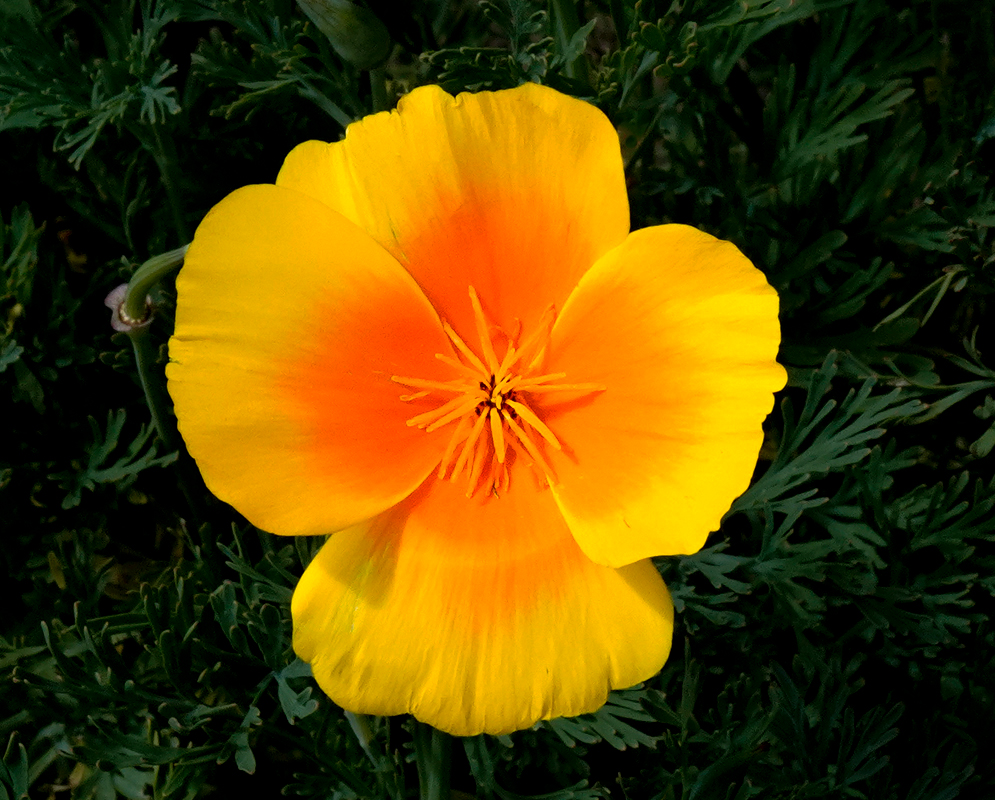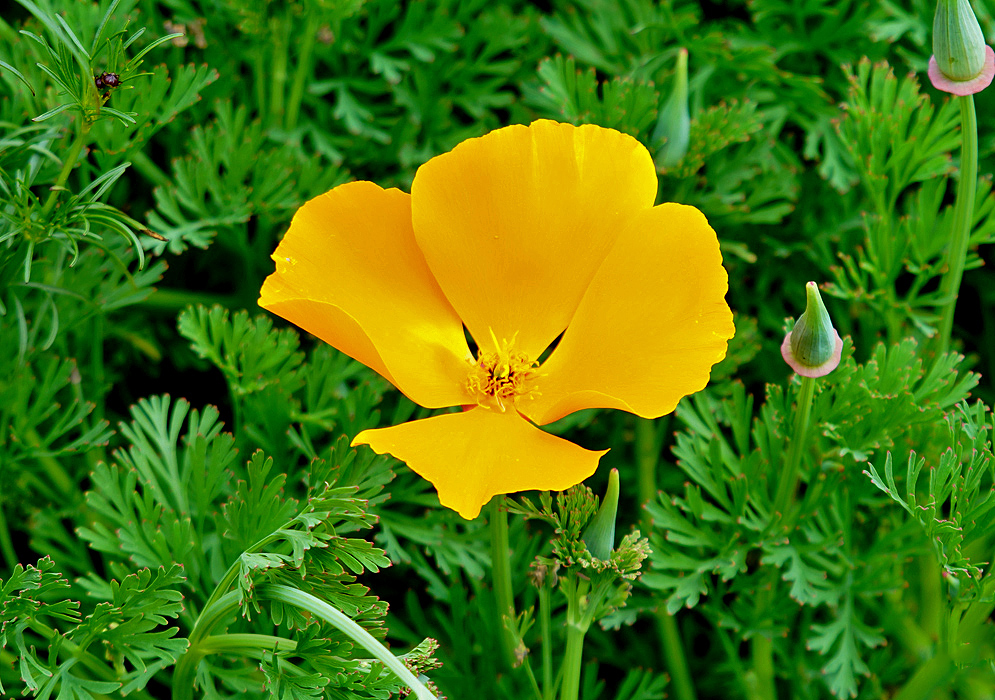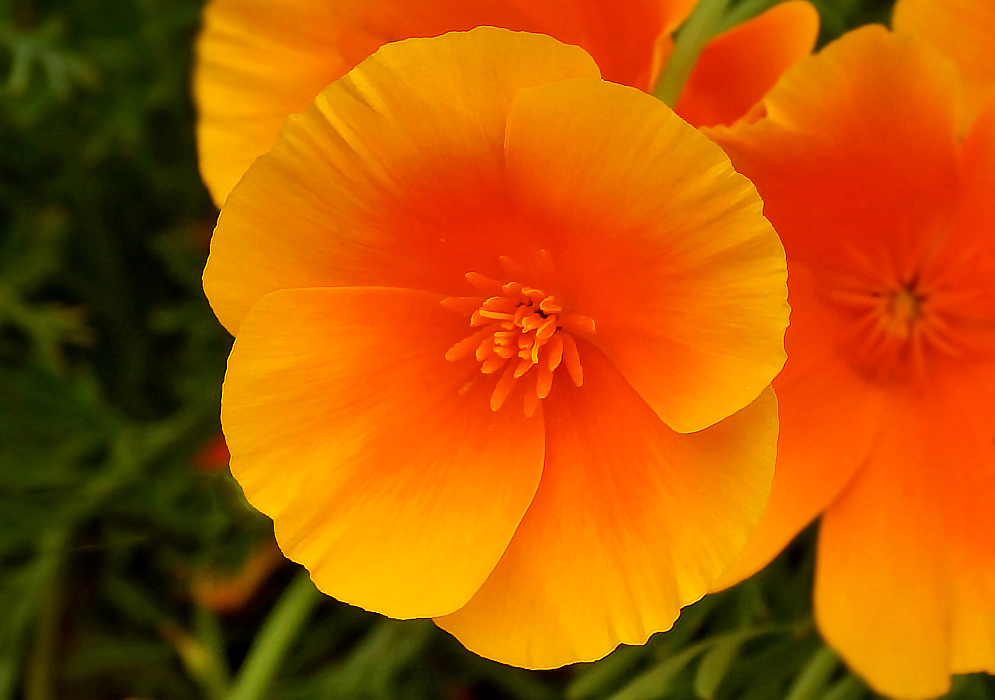


Eschscholzia californica (California Poppy)
Native to the western and south-central United States and northern Mexico, California poppy is an herb that grows as an annual or perennial. Its cup-shaped flowers usually have four silky orange or yellow petals that close at night and in cloudy weather. Slender capsules split open to scatter the seeds. It became California’s official state flower in 1903 and has been widely introduced as an ornamental, becoming invasive in central Chile. Garden selections include Apricot Chiffon, with semi-double yellow flowers flushed pink and orange, and Rose Chiffon; both have received the Royal Horticultural Society’s Award of Garden Merit.
The flowering above-ground parts have traditionally been used to ease mild mental stress and aid sleep. California Native peoples have also used the leaves for toothache. Extracts have produced sedative and anxiety-reducing effects in laboratory mice. Human studies have included small, uncontrolled trials and a controlled trial of a combination with hawthorn and magnesium; the latter cannot establish the effects of California poppy alone. Photographed in Bogotá, Colombia, and Cusco, Peru.