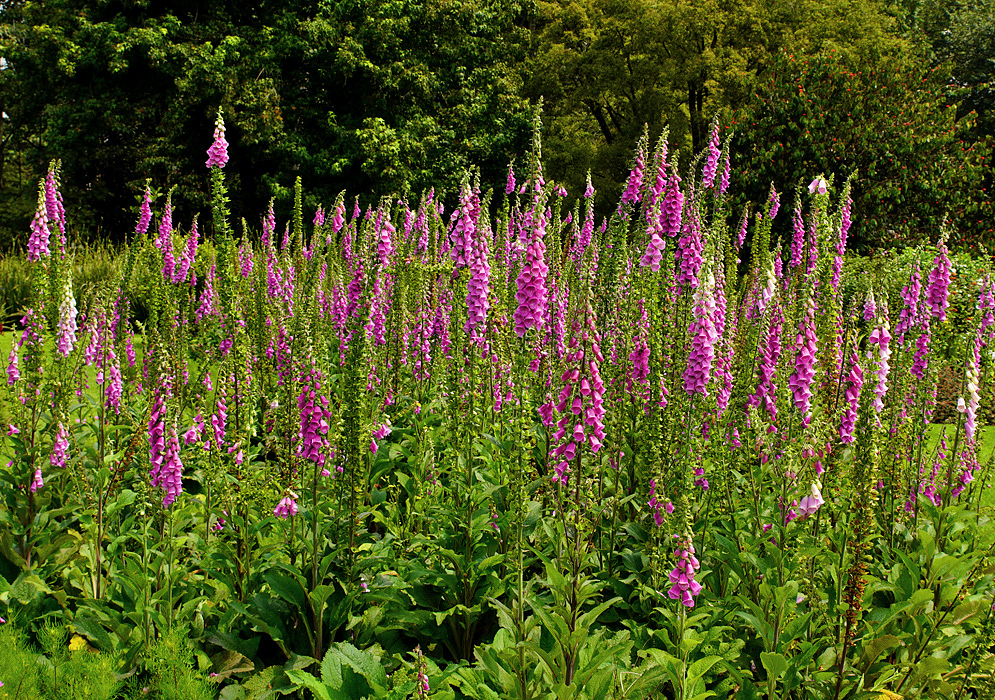


Digitalis purpurea (Foxglove)
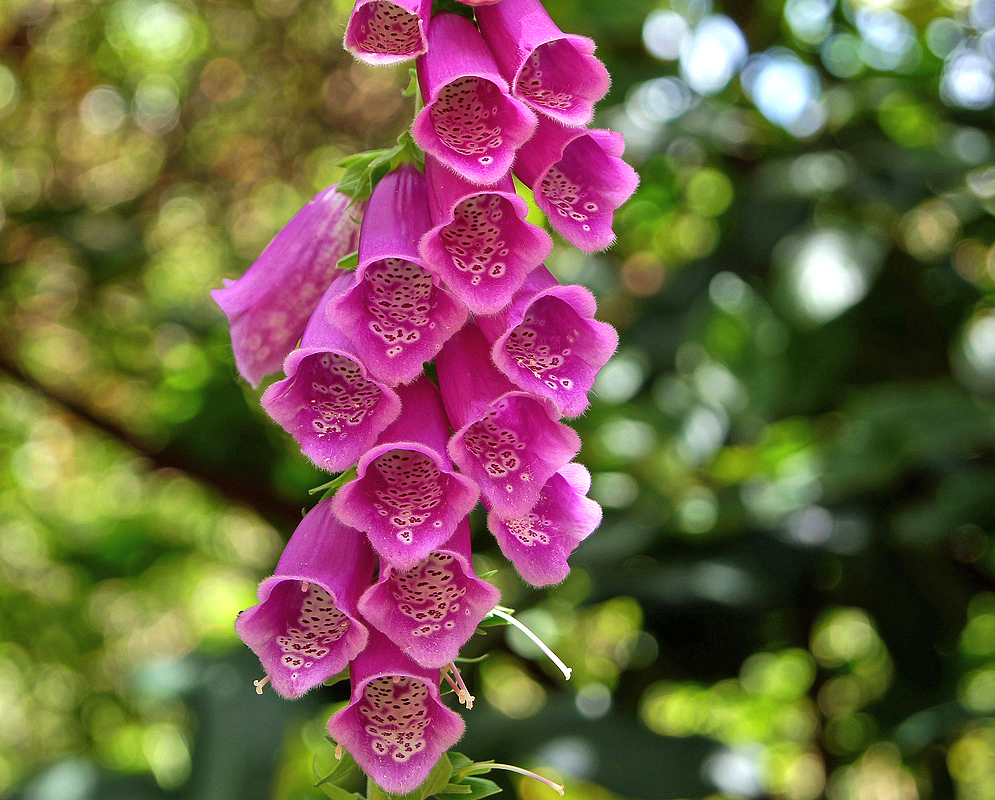
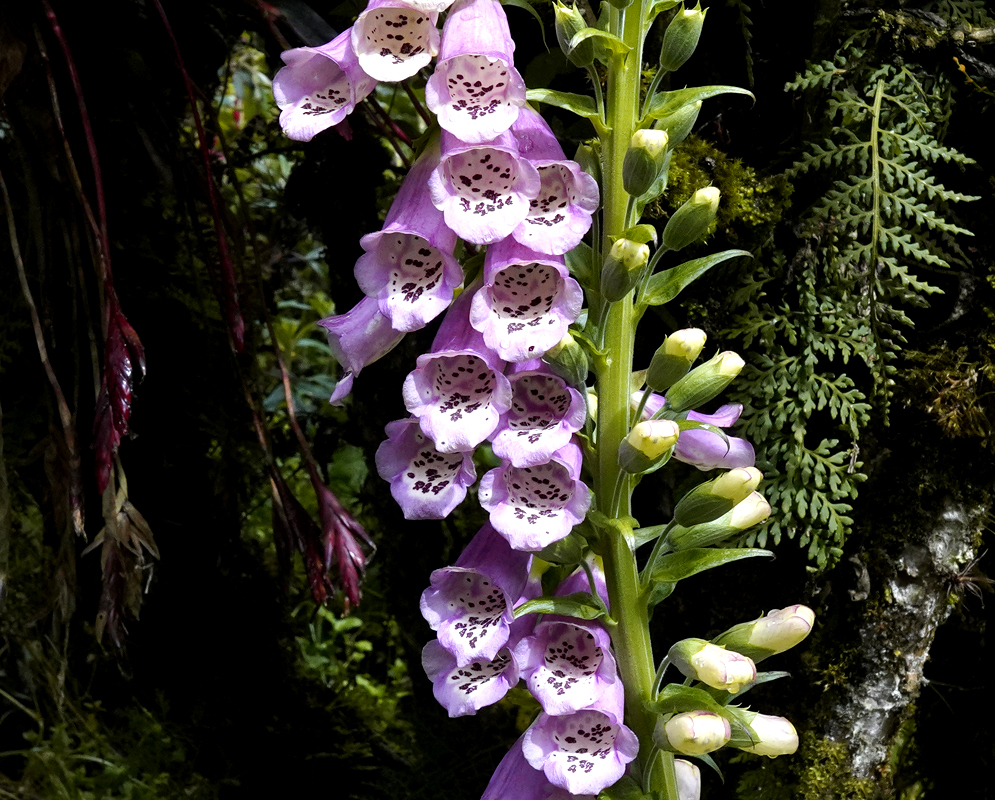
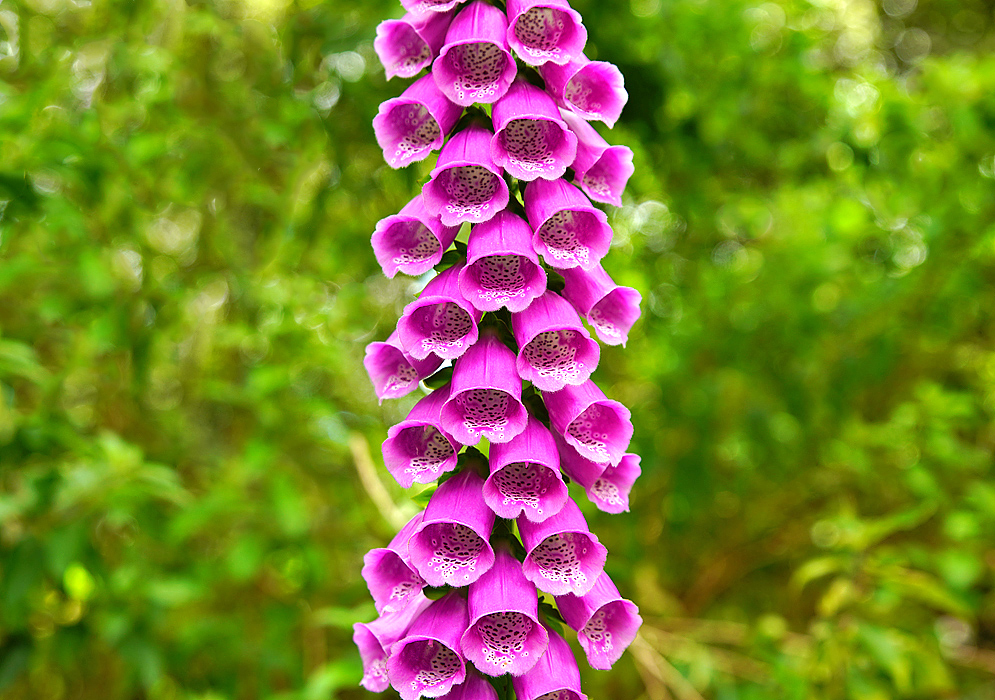
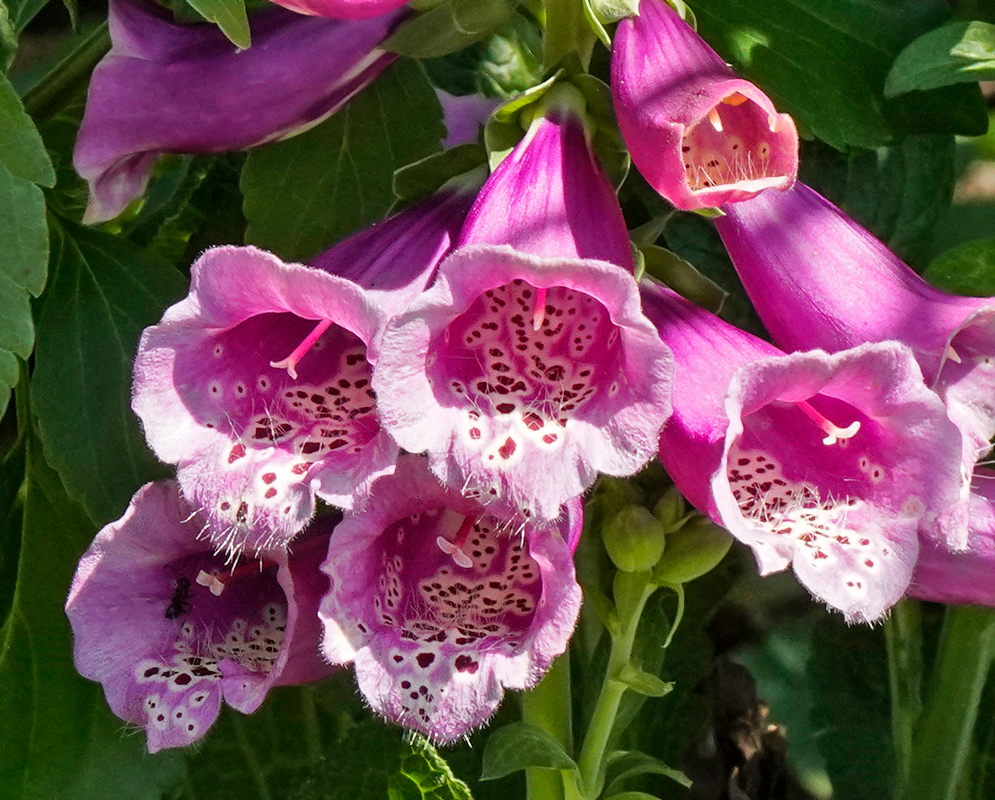
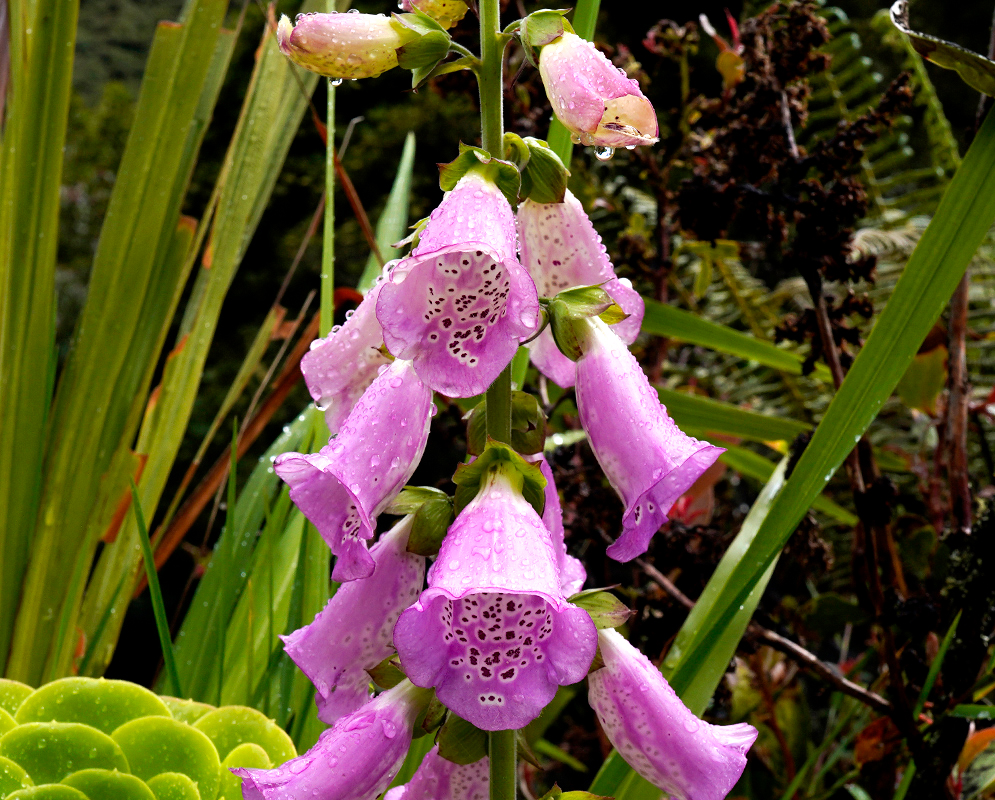
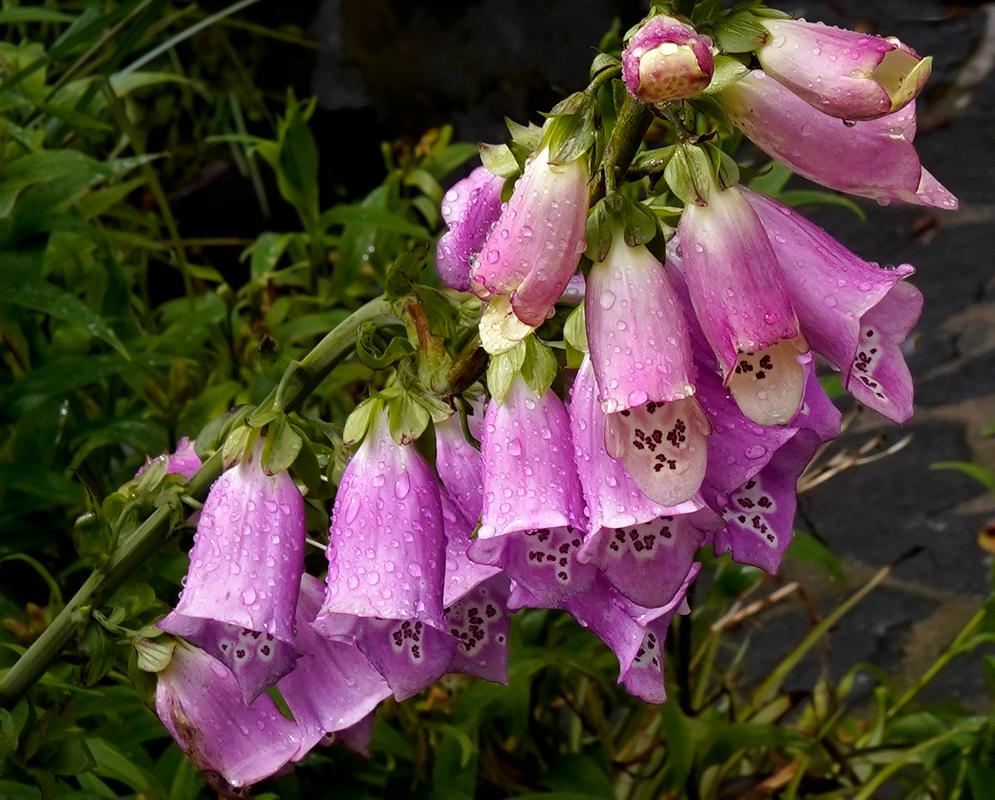
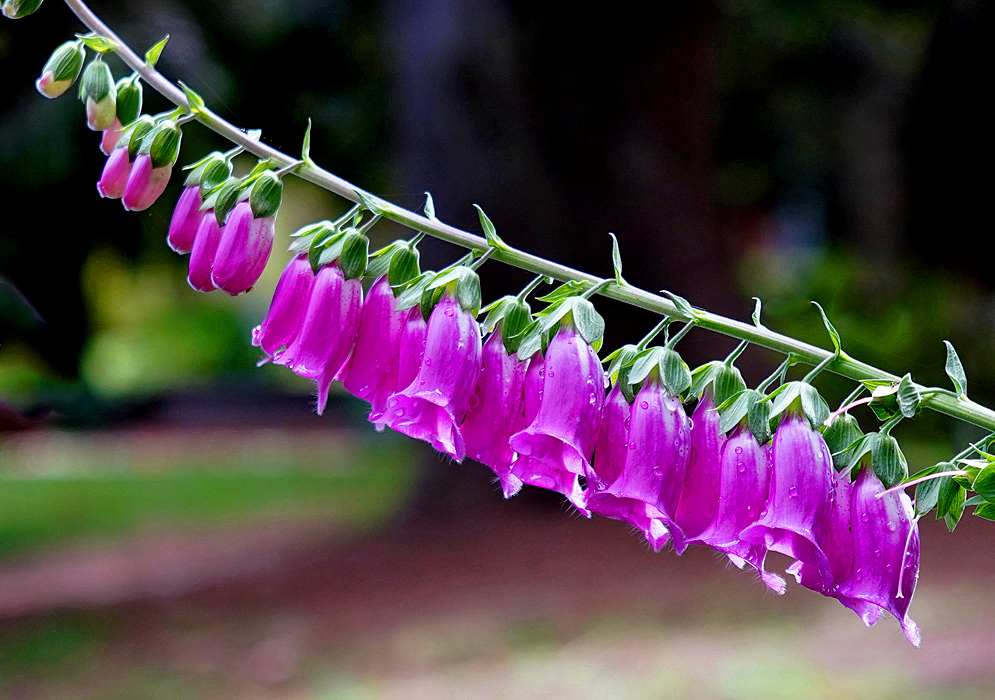
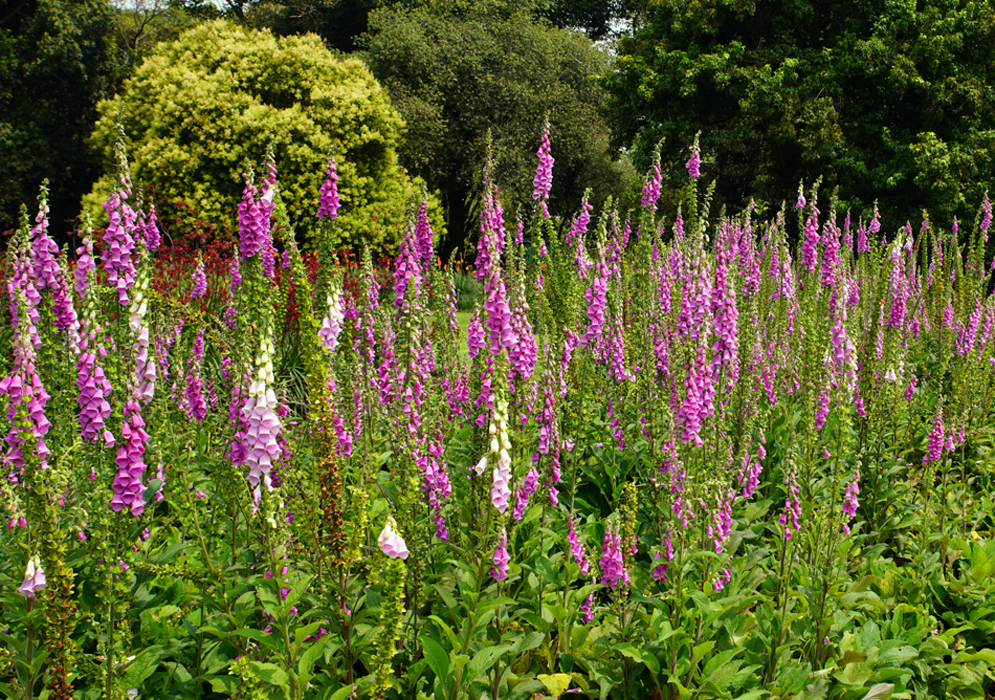
Native to western and southwestern Europe and northern Morocco, foxglove is a biennial or short-lived perennial herb. A basal rosette of softly hairy, toothed leaves produces a tall flowering stem with hanging, tubular bells arranged mainly along one side. Flowers are usually rosy purple with dark spots inside pale throats; white and other cultivated forms also occur. Capsules release numerous tiny seeds, allowing the plant to spread into open woodland, clearings, and disturbed ground. It has become naturalized in Colombia.
The leaves contain digitoxin and related cardiac glycosides, compounds that led to important heart medicines. In the late eighteenth century, physician William Withering investigated foxglove as a treatment for dropsy, the accumulation of fluid associated with several illnesses, including heart disease. Its ability to affect the heartbeat made it medically valuable and also dangerous. Pharmaceutical use relies on purified, precisely controlled compounds; all parts of the plant are poisonous if eaten, and the leaves can be mistaken for comfrey. Photographed in the Eastern Andes of Colombia.