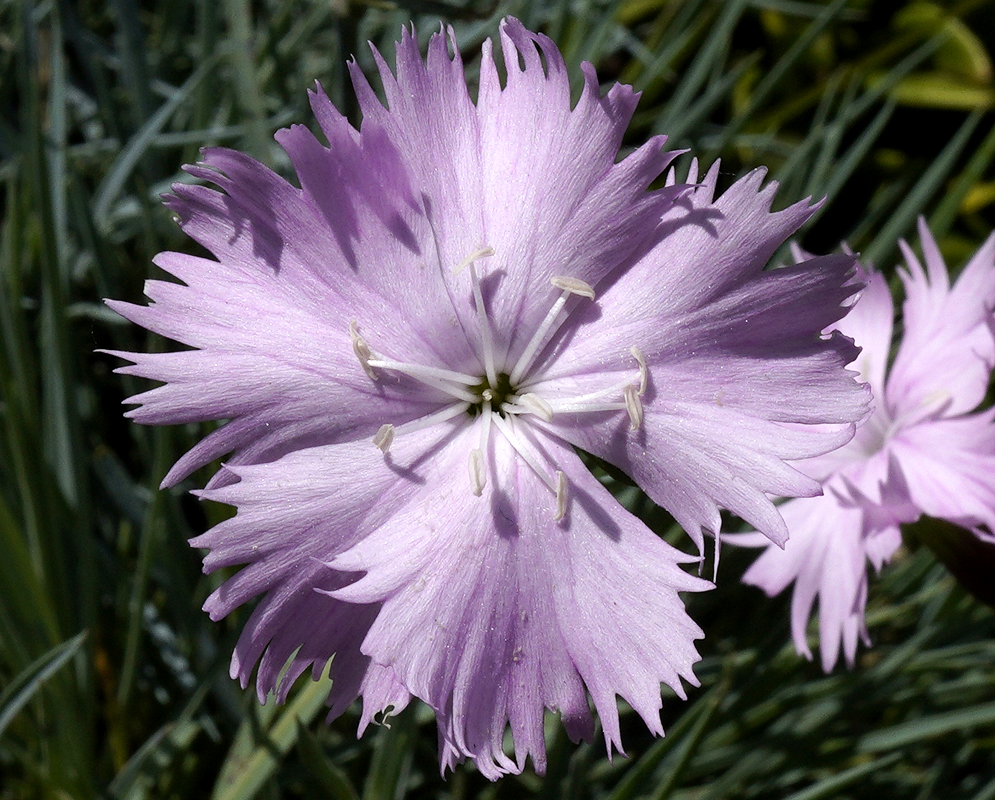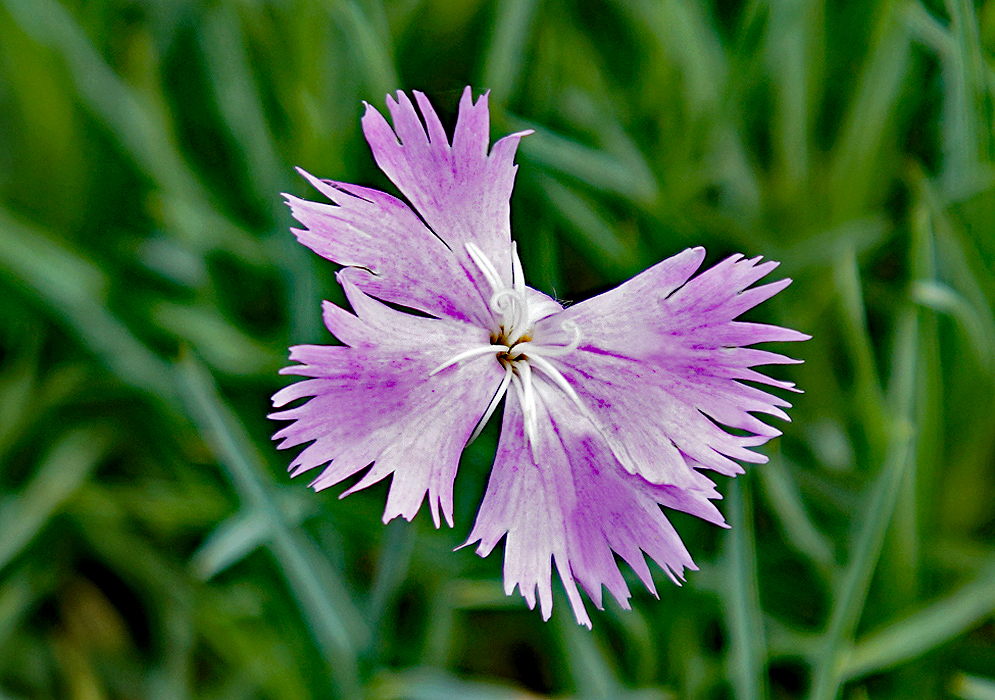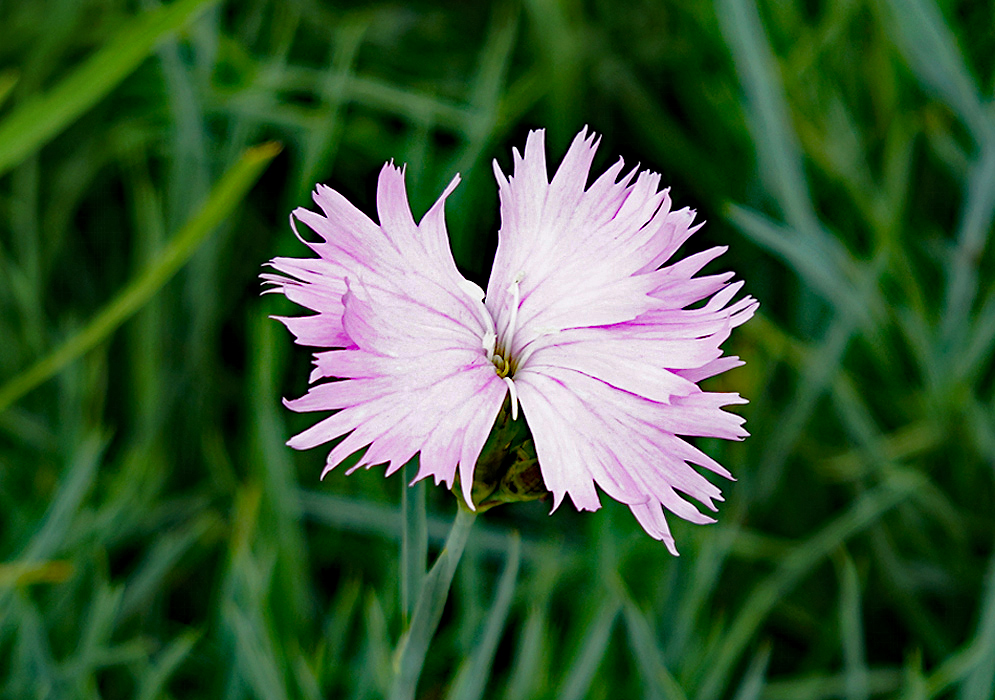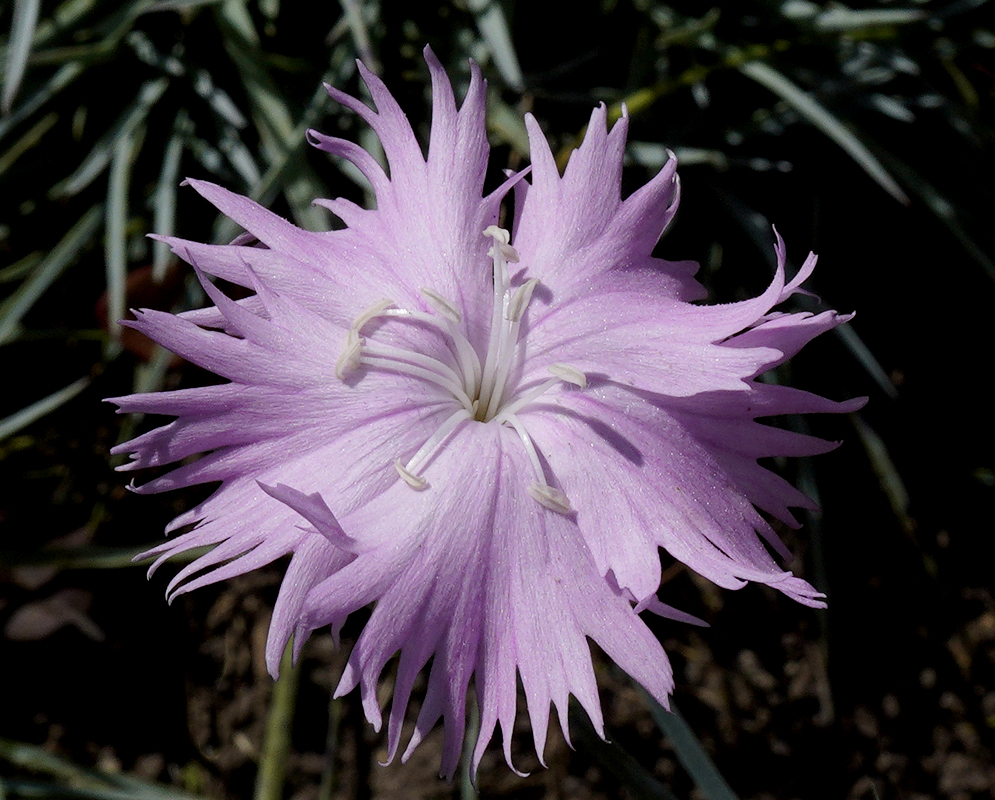


Dianthus plumarius
Native to the eastern Alps and northwestern Balkan Peninsula, this plant is an evergreen perennial that forms spreading mats of gray-green foliage. Its narrow, grasslike leaves grow in opposite pairs and have smooth margins. Upright flowering stems rise above the foliage, carrying small groups of fragrant blooms with a clove-like scent. The petals have deeply cut, fringed edges. Garden forms range from white through pink to deep red, including flowers with contrasting markings. The fruits are dry capsules that split open when ripe to release their seeds. Widely cultivated in rock gardens, along paths and as edging, it can be propagated from seed, cuttings or division. The leaves are mildly toxic if eaten and may cause vomiting; contact can cause minor skin irritation. Photographed in Bogotá, Colombia.