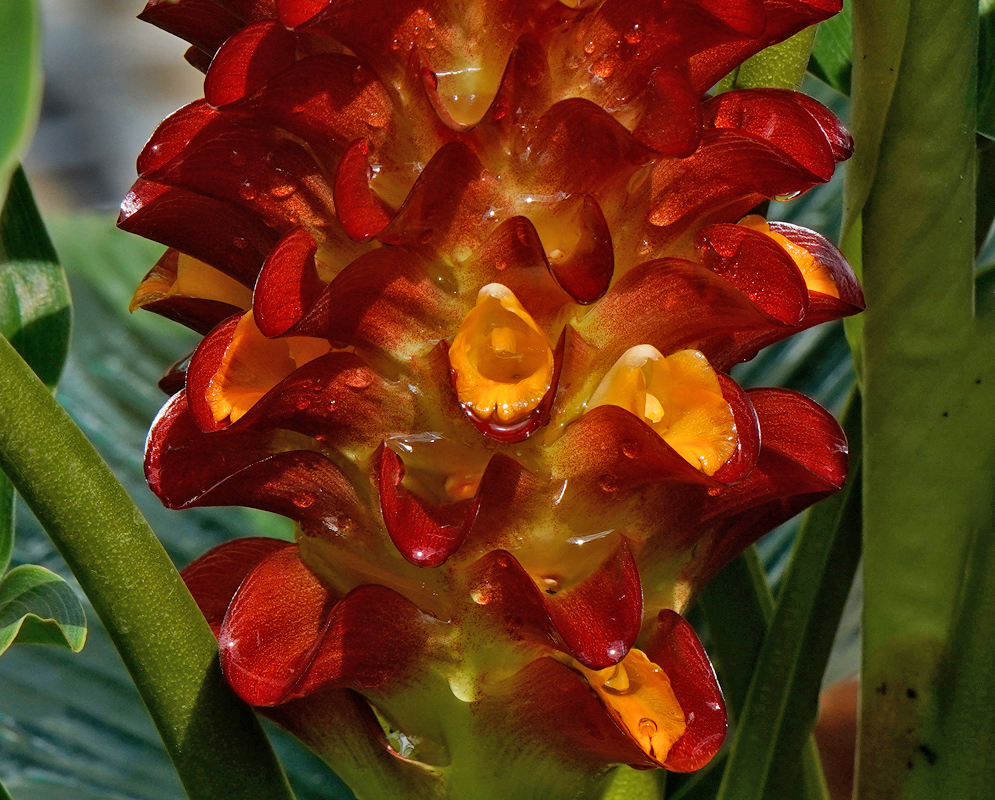


Curcuma longa (Turmeric)
Originating as a cultivated crop in South and Southeast Asia, turmeric is a perennial herb that grows from thick, branching underground stems called rhizomes. Broad leaves rise above these stored food reserves, and pale flowers emerge between overlapping bracts. The yellow-orange rhizomes provide the culinary spice and a dye used in foods, cloth, and cosmetics. Leaves are also used to wrap and flavor foods. The crop has become naturalized in teak forests in eastern Java, Indonesia.
The rhizome has a long place in Indian, Chinese, Thai, and other Asian medical traditions, particularly for indigestion, abdominal discomfort, skin complaints, and inflammatory conditions. Curcumin is one of the pigments responsible for turmeric’s color and a major subject of research on its biological activity. Concentrated turmeric or curcumin preparations have shown promising results for some measures of knee pain and stiffness, although clinical evidence remains incomplete and formulations vary substantially. Some highly absorbable supplement formulations have been associated with liver injury. Photographed in Florida.