
Couroupita guianensis (Cannonball Tree)
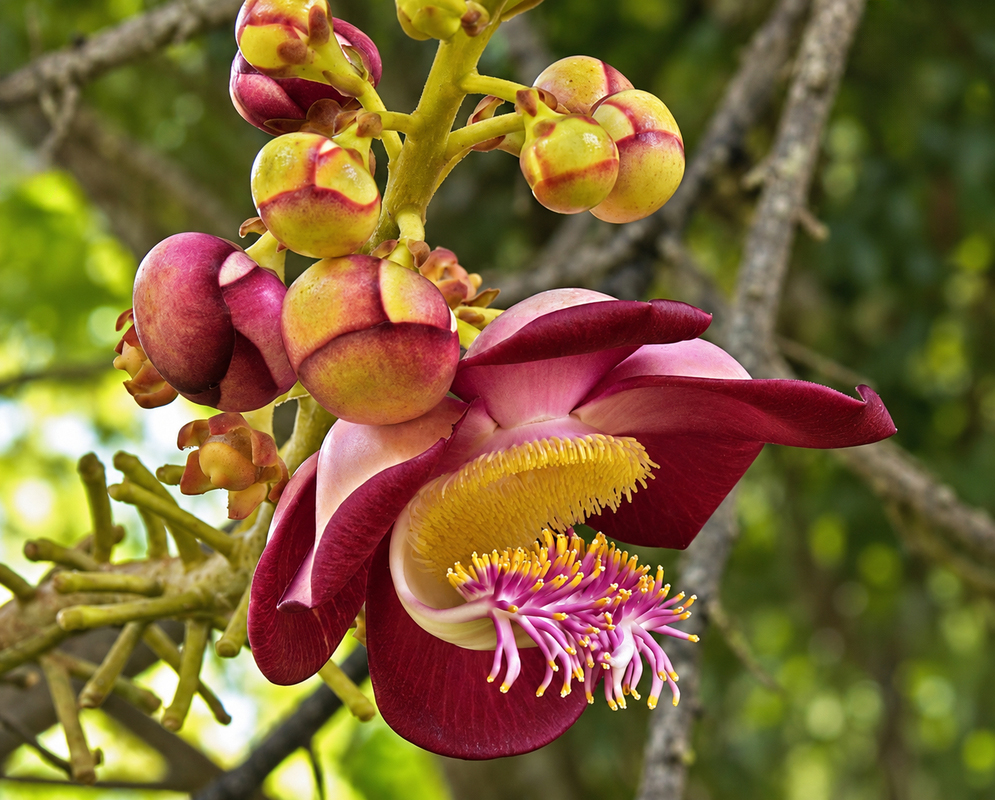
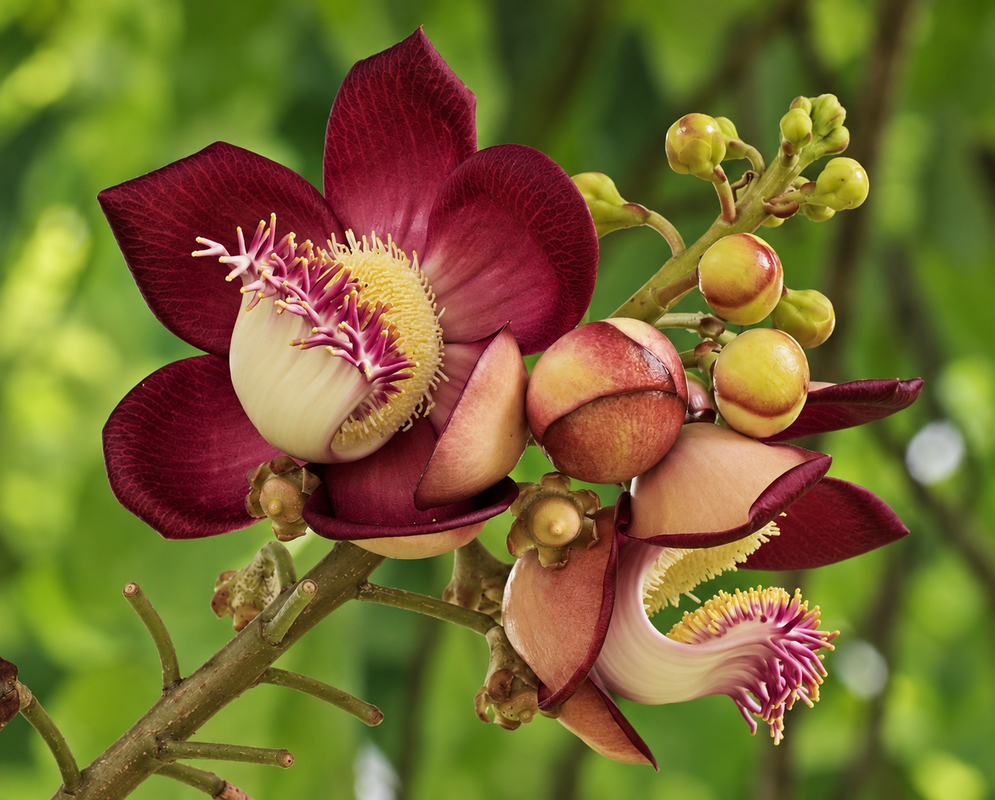
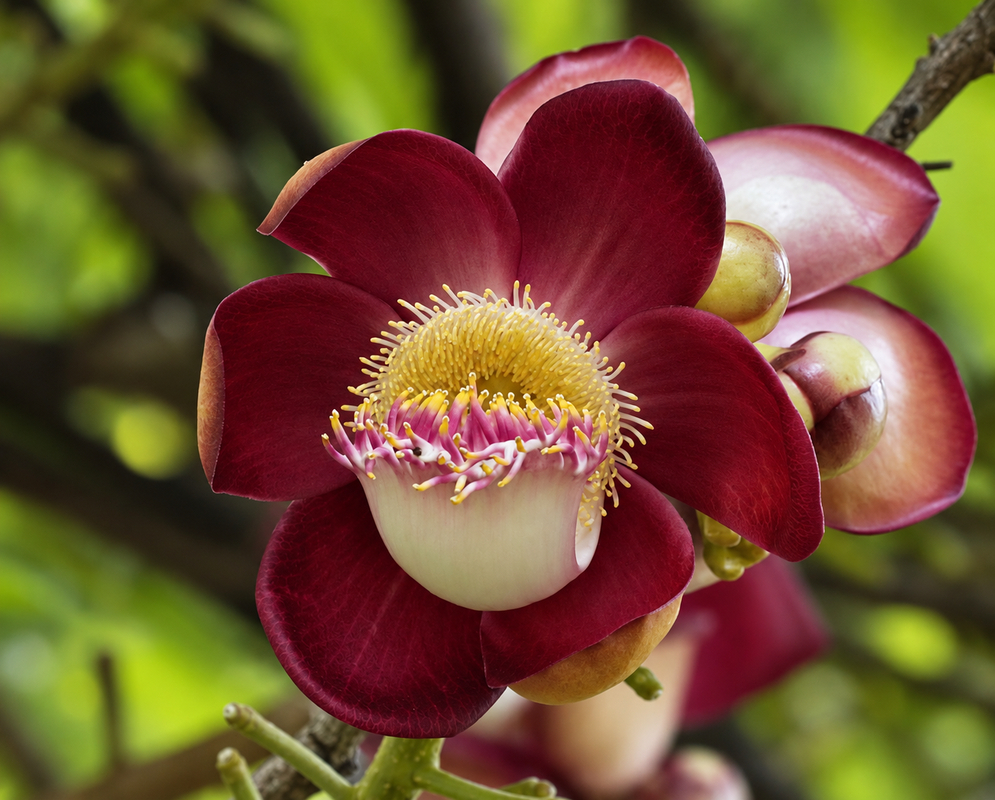
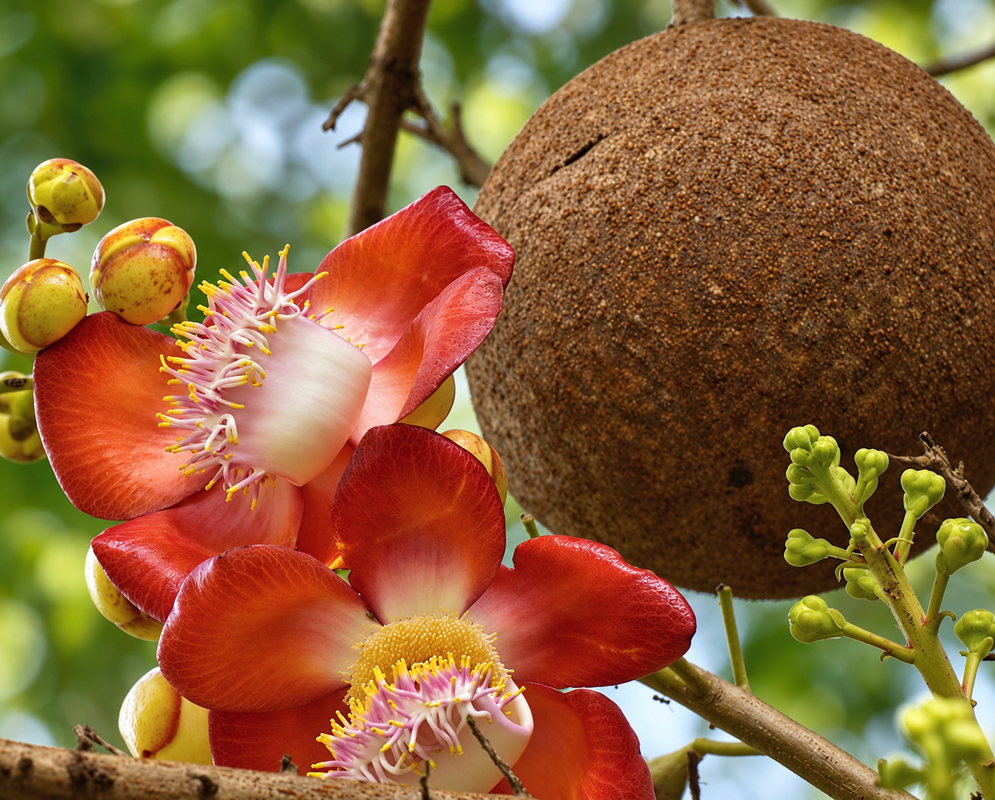
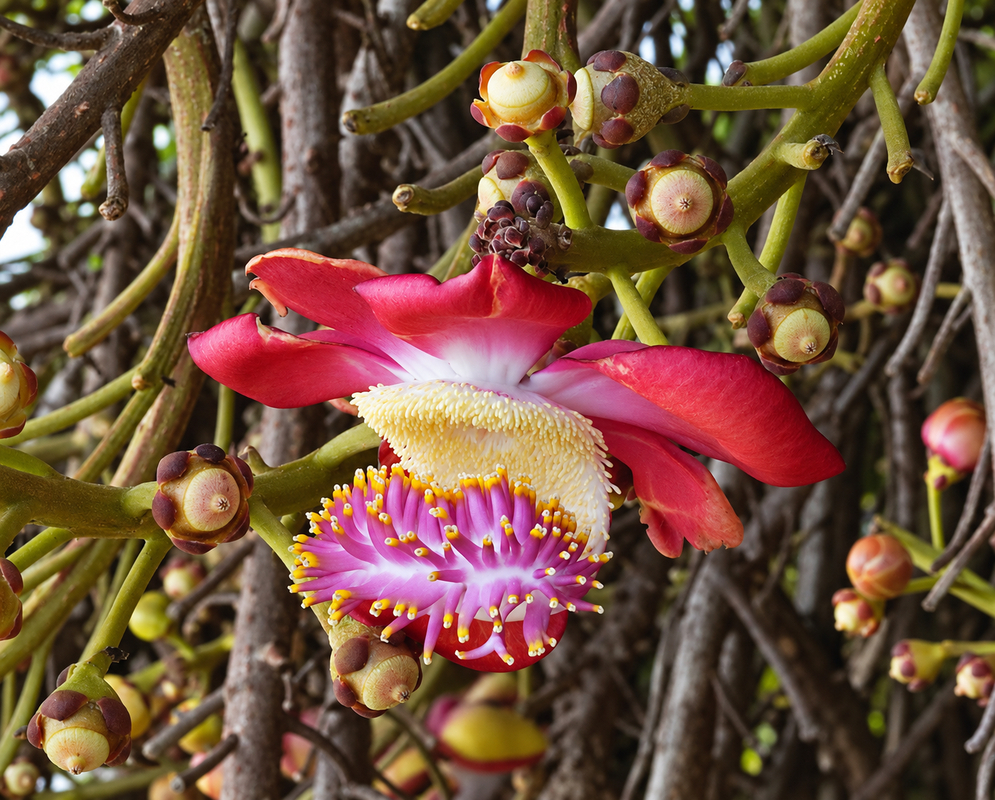
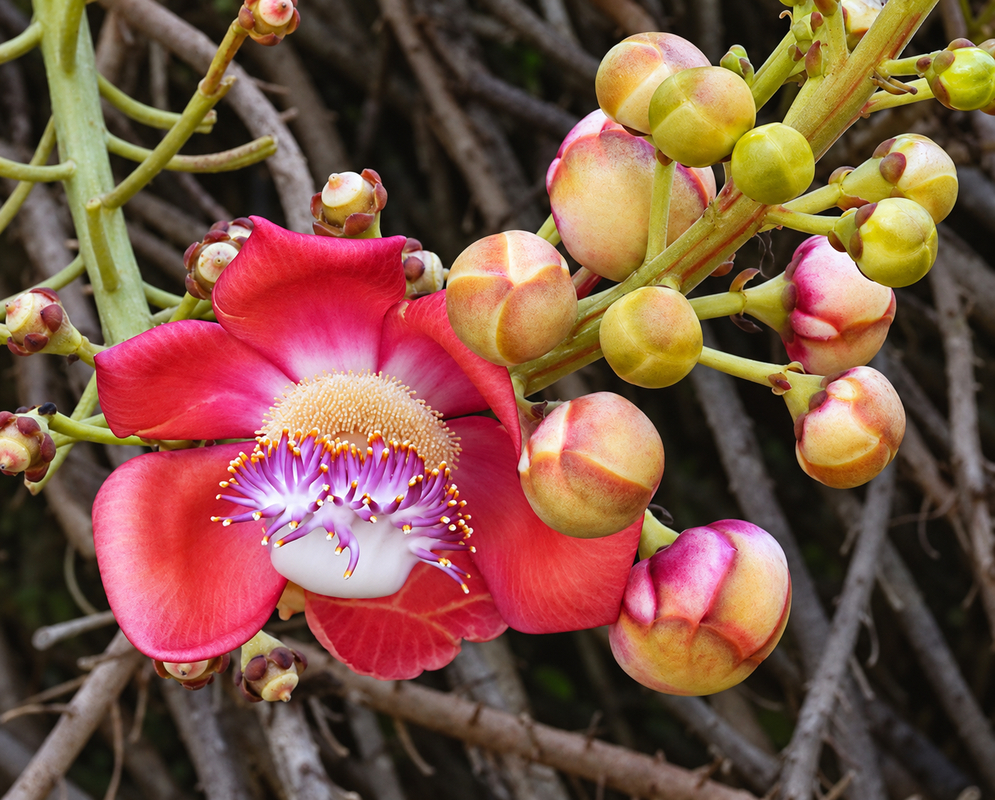
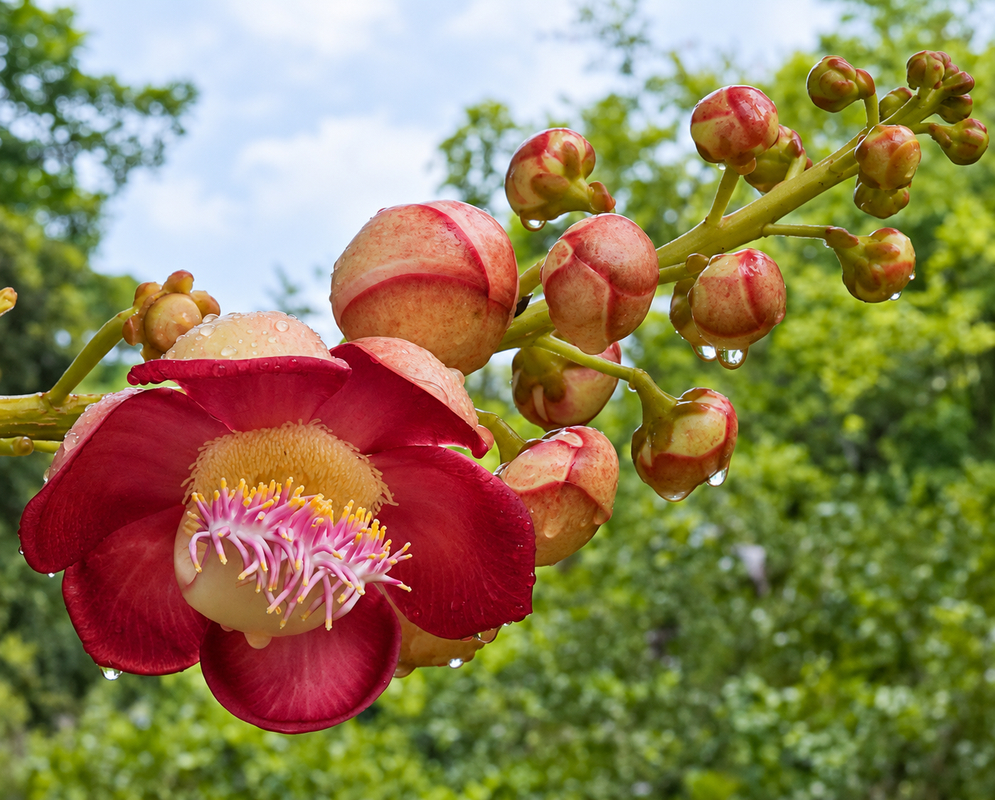
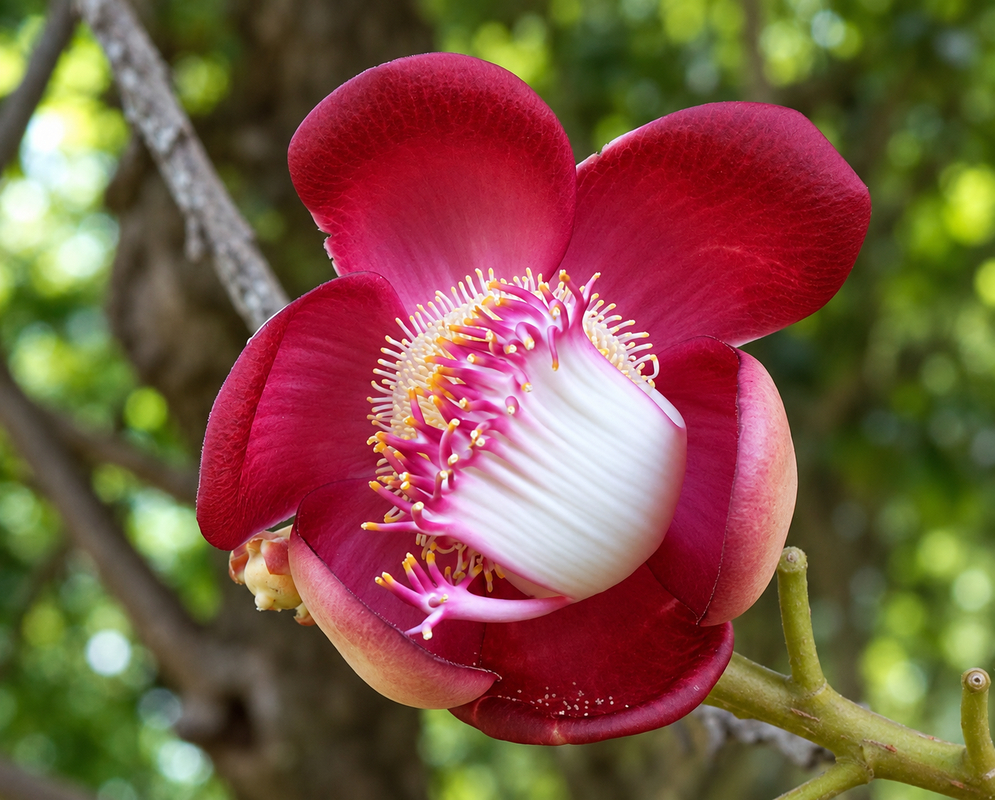
Native from Panama into tropical South America, cannonball tree is a rainforest tree with long, woody flowering stalks arising directly from its trunk and larger branches. The strongly fragrant flowers have six fleshy petals, pink to red or orange inside and yellowish outside, and last for one day. Their stamens form two distinct pollen-producing structures: a ring supplies fertile pollen, while a curved hood supplies non-germinating pollen that bees collect as food. The rounded fruits have hard, woody shells resembling cannonballs and can split when they fall. Their seed-filled pulp turns bluish-green on exposure to air and develops an unpleasant fermented smell.
The tree is planted ornamentally for its flowers and unusual fruits. In India it is associated with Hindu worship because the flower hood resembles the cobra linked with Shiva; the flowers are also used in Buddhist offerings in Sri Lanka. In Ecuadorian Kichwa communities, crushed seeds have traditionally been applied to fungal skin infections, and bark preparations have been used for headaches. Photographed in the eastern Andes mountain range of Colombia.