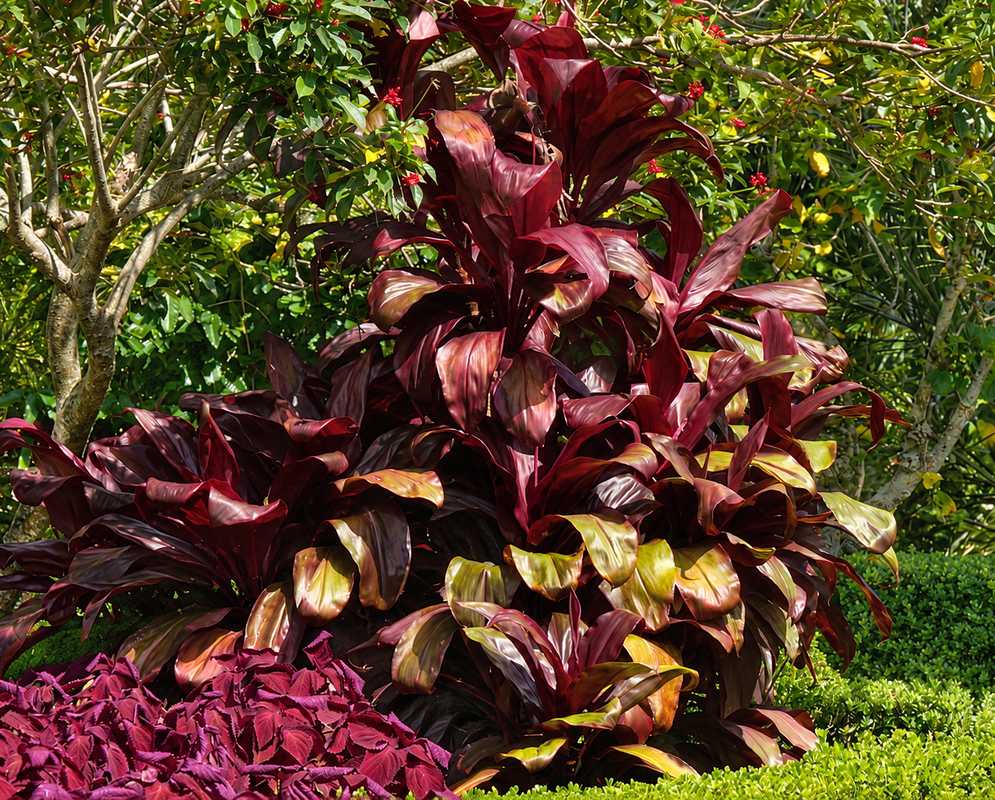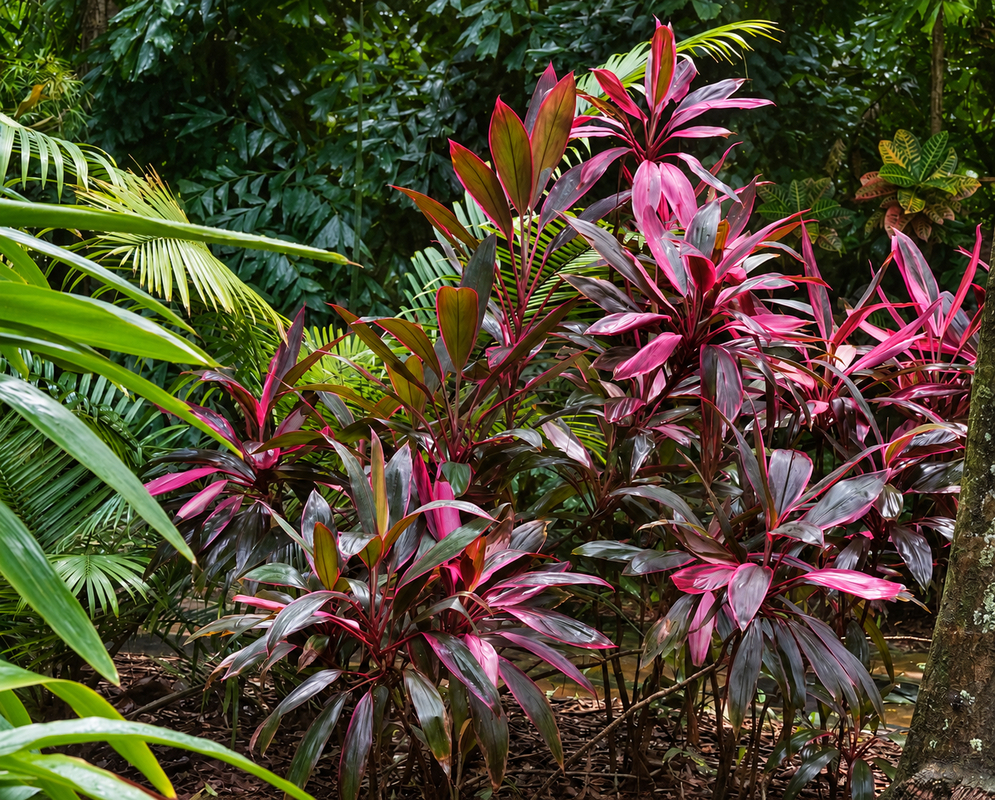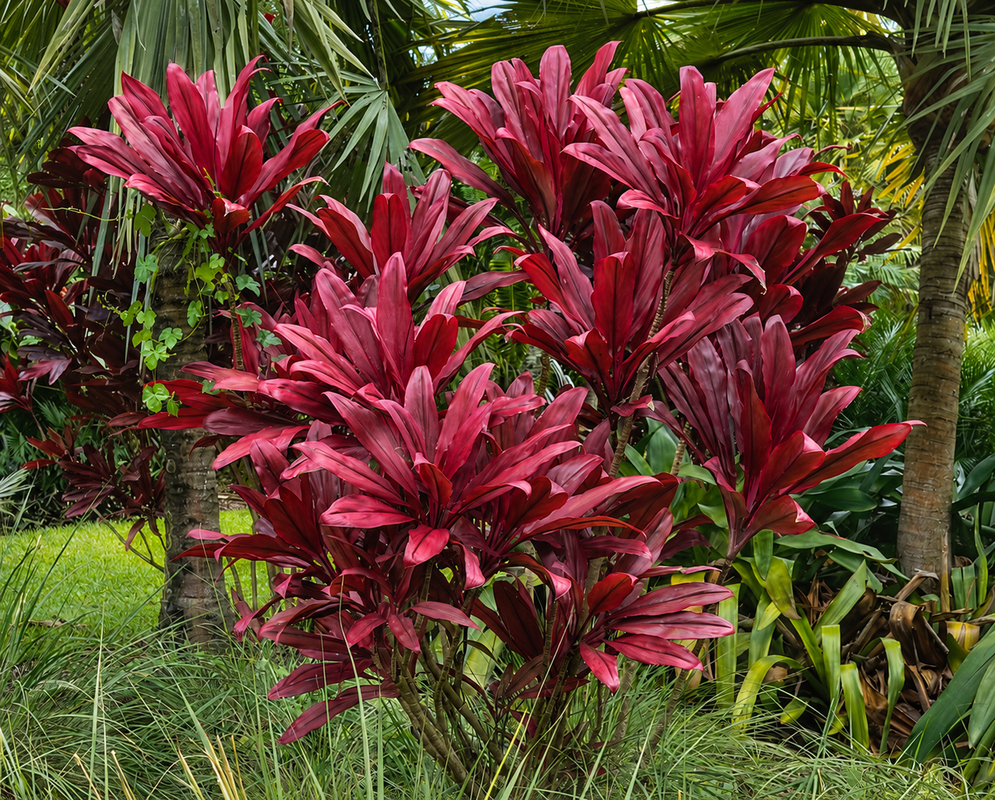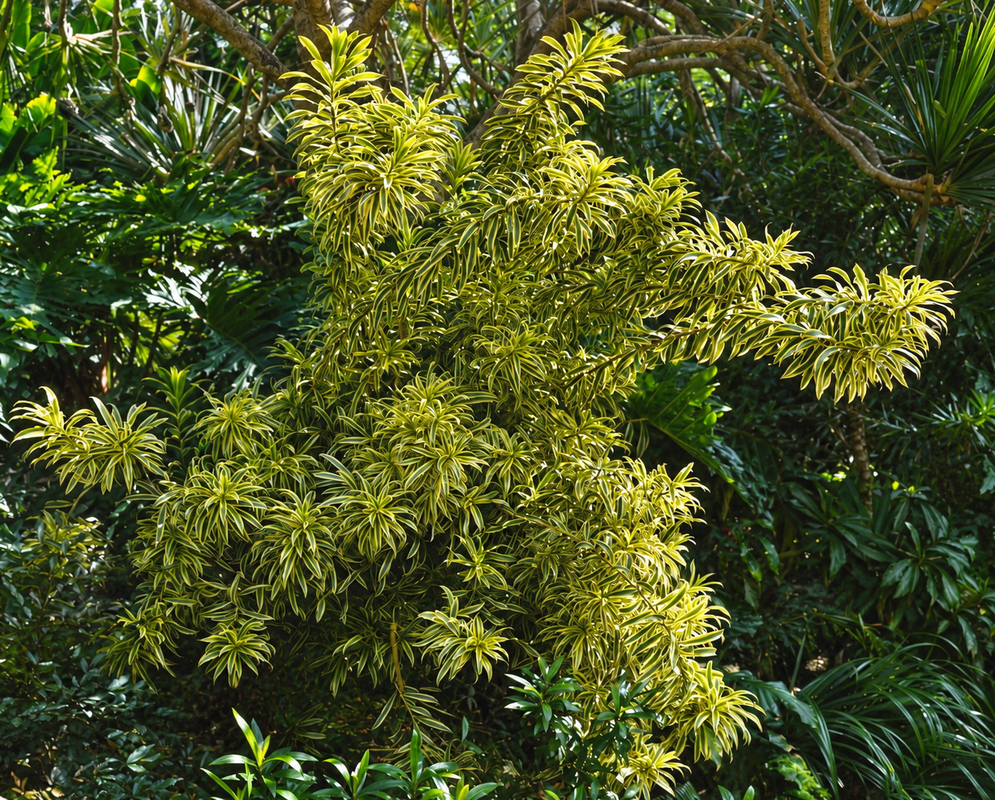

Cordyline fruticosa (Ti plant)
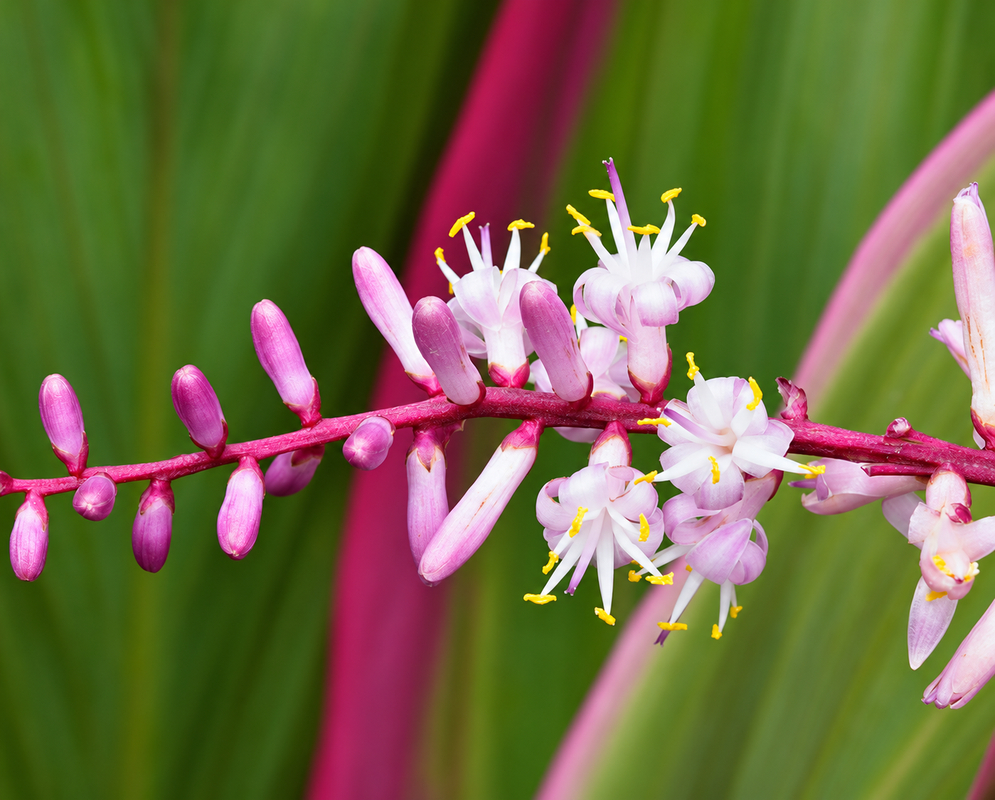
Native to New Guinea, Queensland and islands of the western Pacific, ti plant is an evergreen shrub that Polynesian voyagers carried to Hawaii. Its ornamental forms have pink, red, purple or cream stripes and margins, sometimes combining several colors on one plant. Branched, drooping flower clusters bear small, fragrant, white to pinkish-purple flowers with six tepals joined into a tube at the base. Berries develop after flowering.
In Hawaii, its leaves wrap foods such as laulau and are woven into lei, hula skirts and rain capes. They also supply the commercial floral-arrangement trade. The sugar-rich roots have traditionally been baked as a sweet food with a flavor resembling molasses candy, and fermented roots have been used to make the distilled drink okolehao. In traditional Hawaiian medicine, leaves have been applied as cool compresses for headaches and fever, or wrapped around warm stones for sore muscles. In Papua New Guinea, leaf petioles have traditionally been used for diarrhea, dysentery and stomachache, and leaves have been applied to wounds. Photographed in Colombia, Ecuador and Florida.