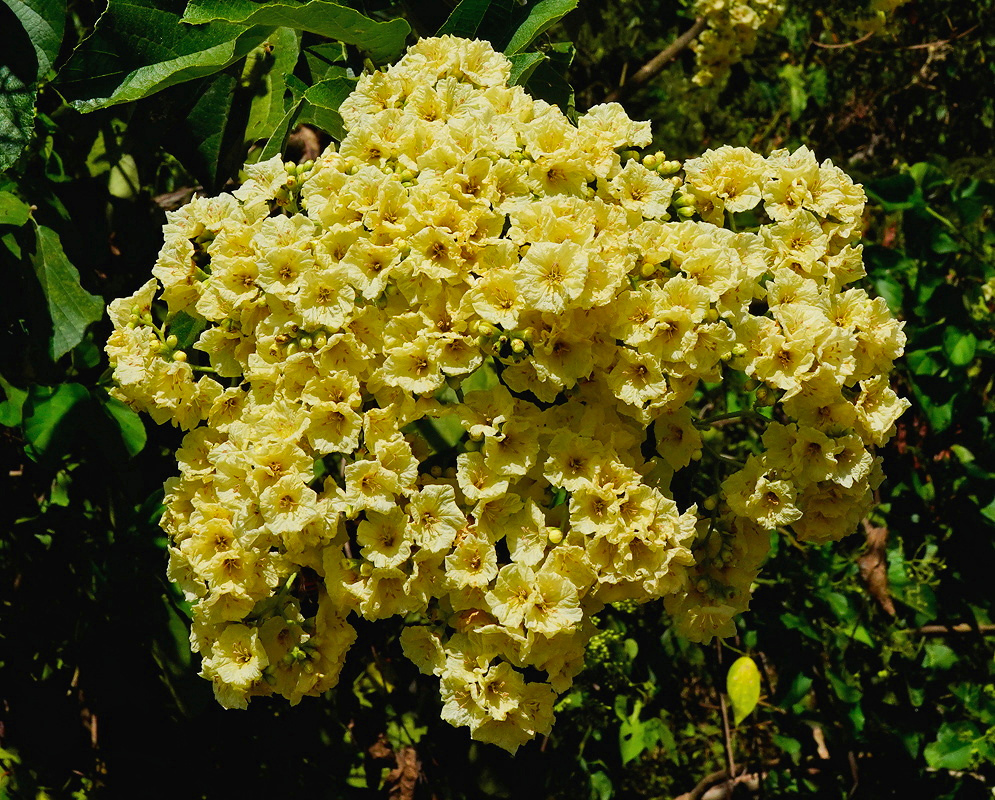


Cordia dentata
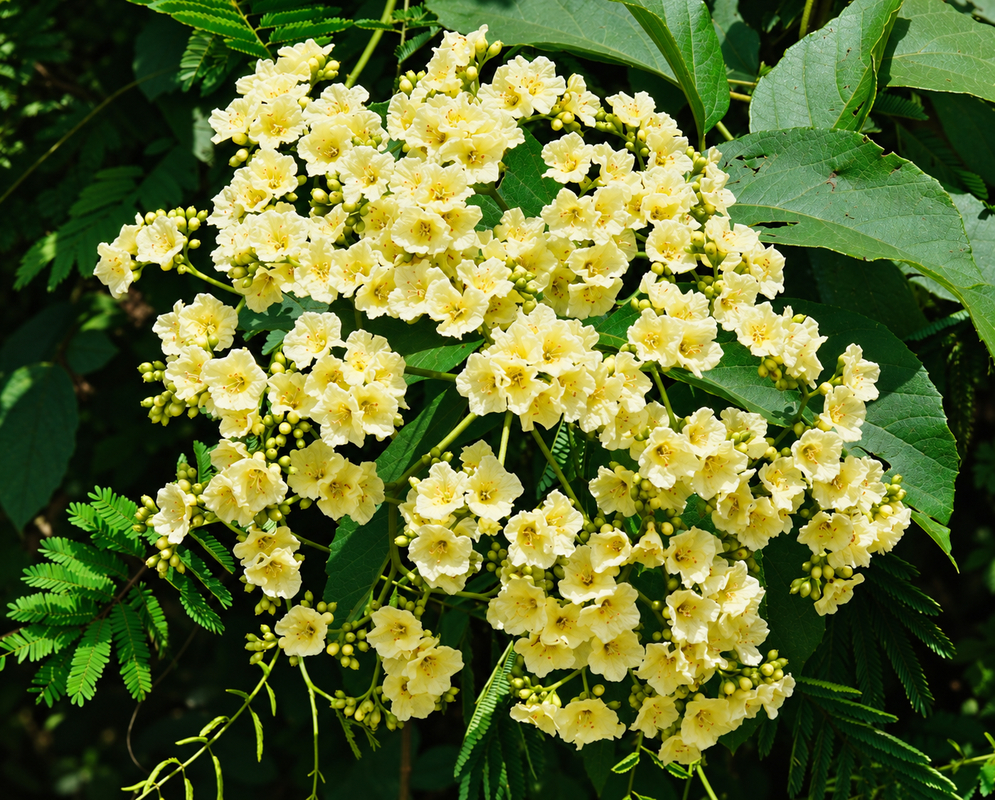
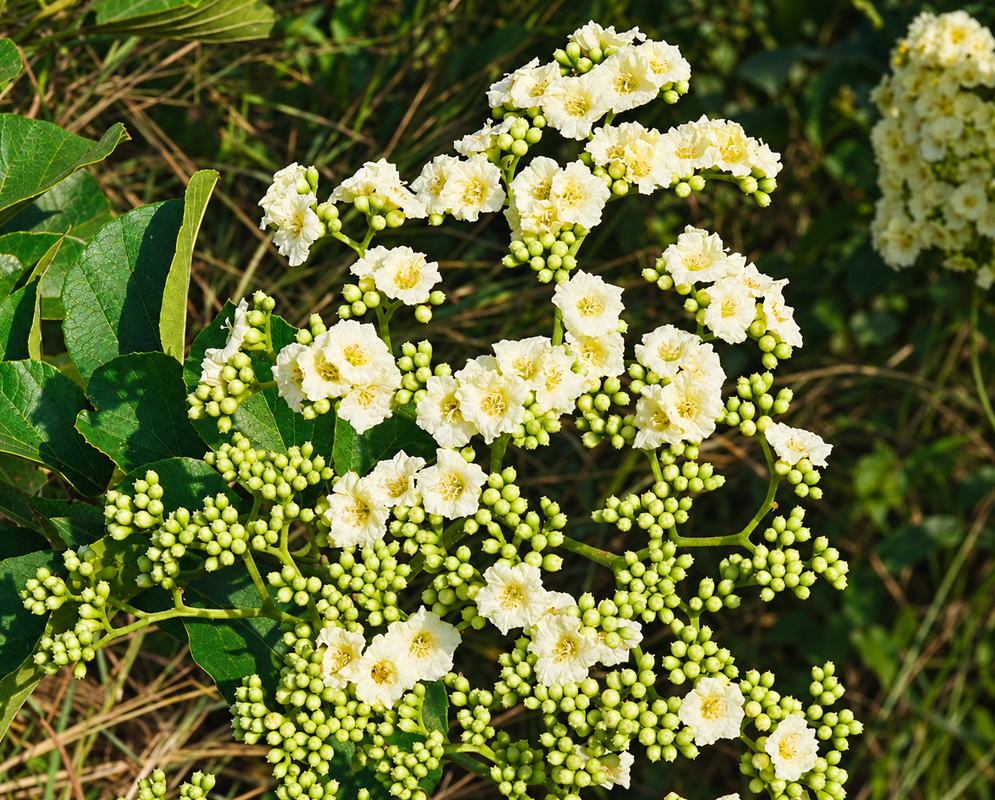
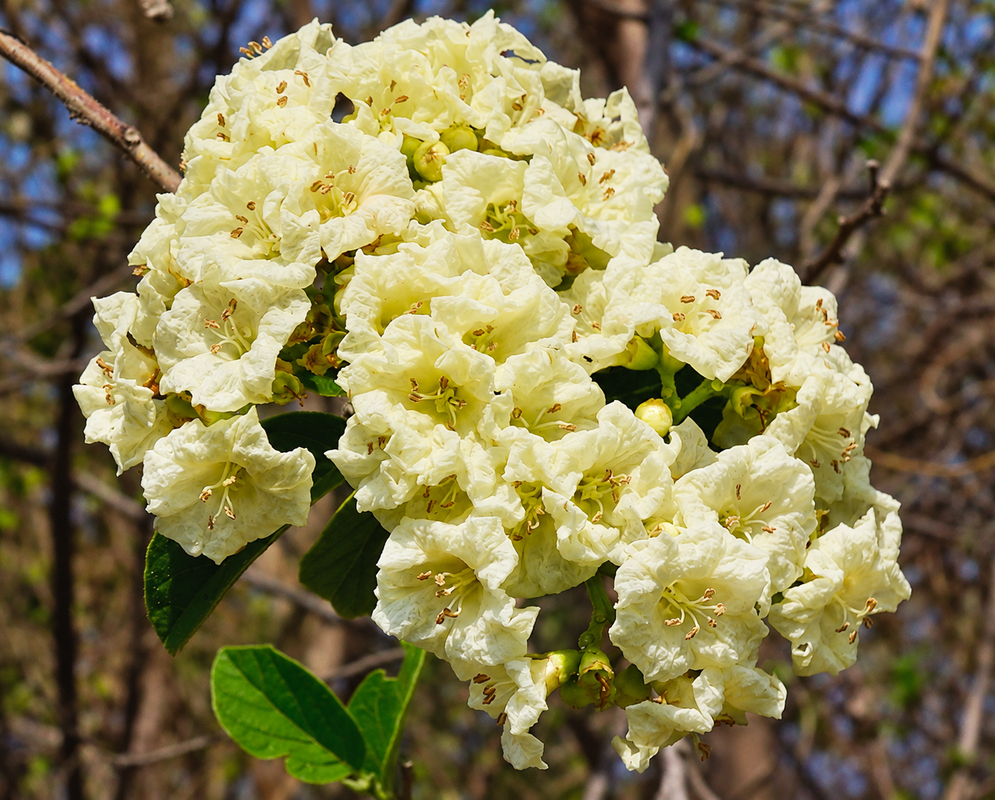
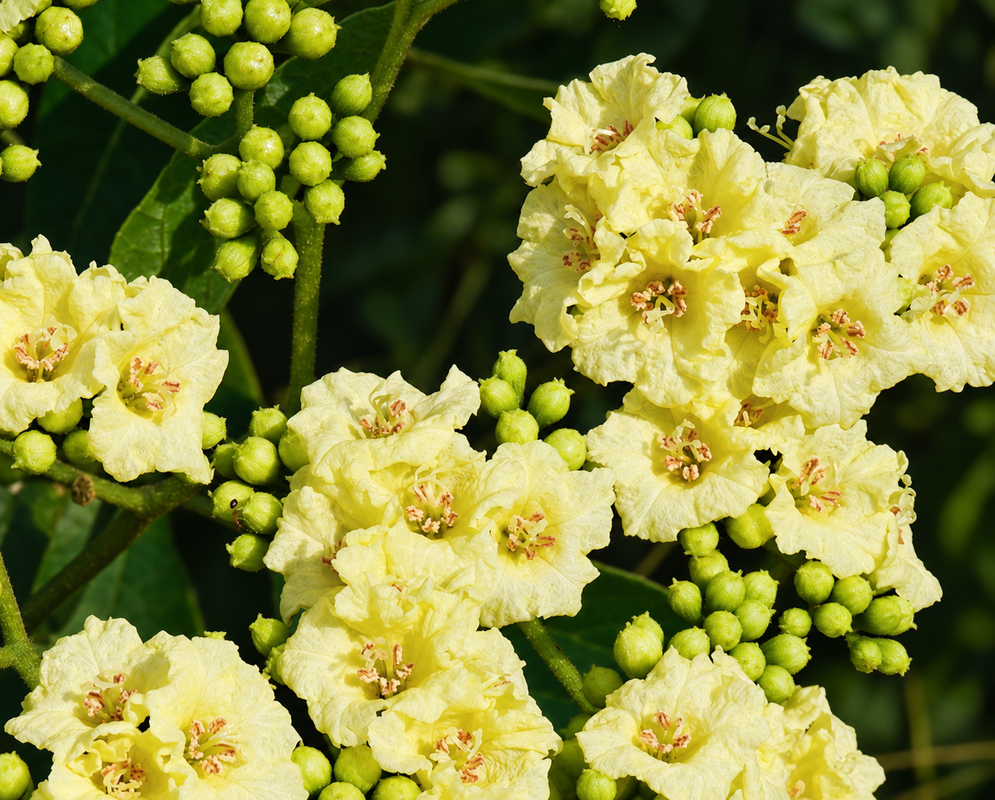
Native from Mexico through Central America, the Caribbean, and parts of South America, white manjack is a tree of seasonally dry tropical forests. It also grows along roadsides and in living fences. Branched flower clusters form at the stem tips, with smaller branches often curling at their ends. The funnel-shaped flowers are pale yellow, cream, or white, with five spreading lobes. The ripe fruits become nearly translucent and have sweet, sticky pulp surrounding a hard inner stone.
The fruits are eaten locally, and their mucilage has also served as a natural glue. In Panama’s Azuero region, it was used to fasten paper when making kites. The wood supplies fuel and fence posts, while the tree is planted for its flowering display. In Central American traditional medicine, flower preparations have been used for cough and chest complaints and to promote sweating. Photographed on the Caribbean coast of Colombia.