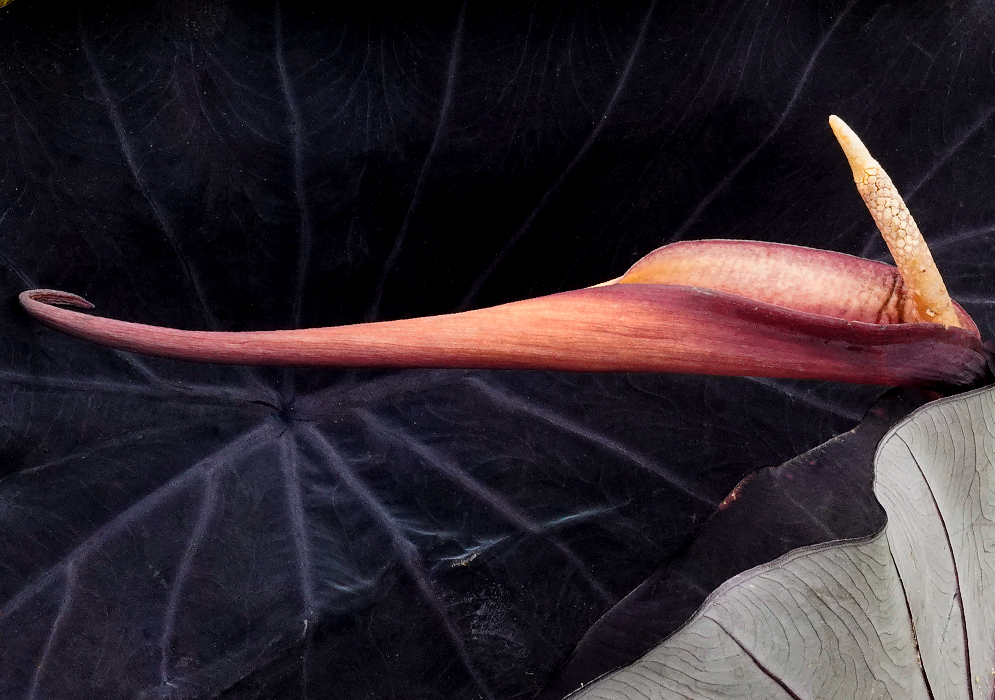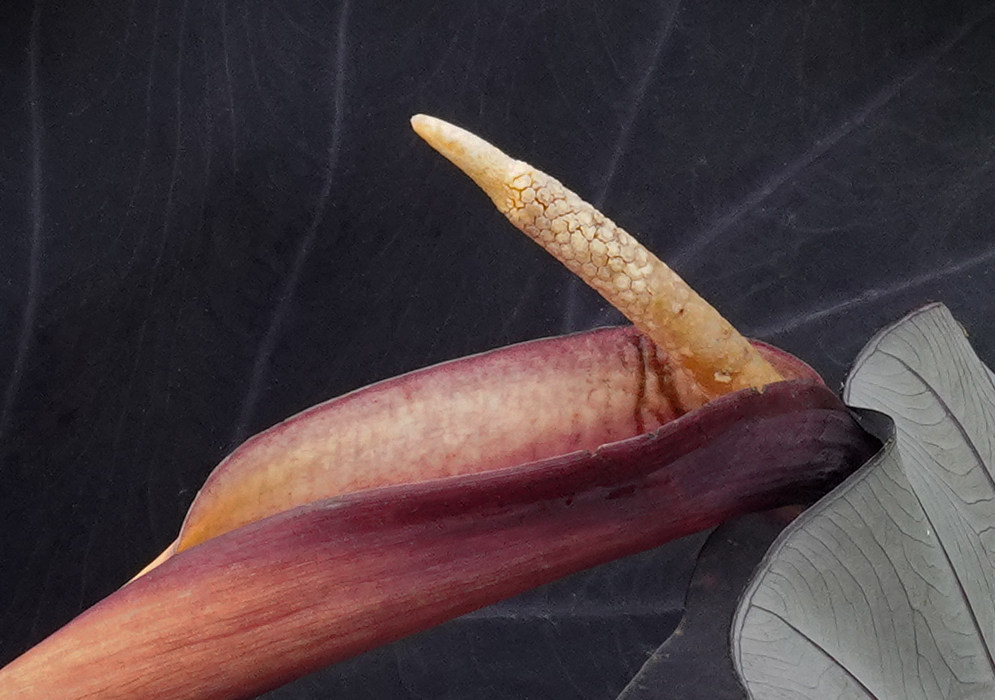


Colocasia esculenta (Black Elephant Ear)
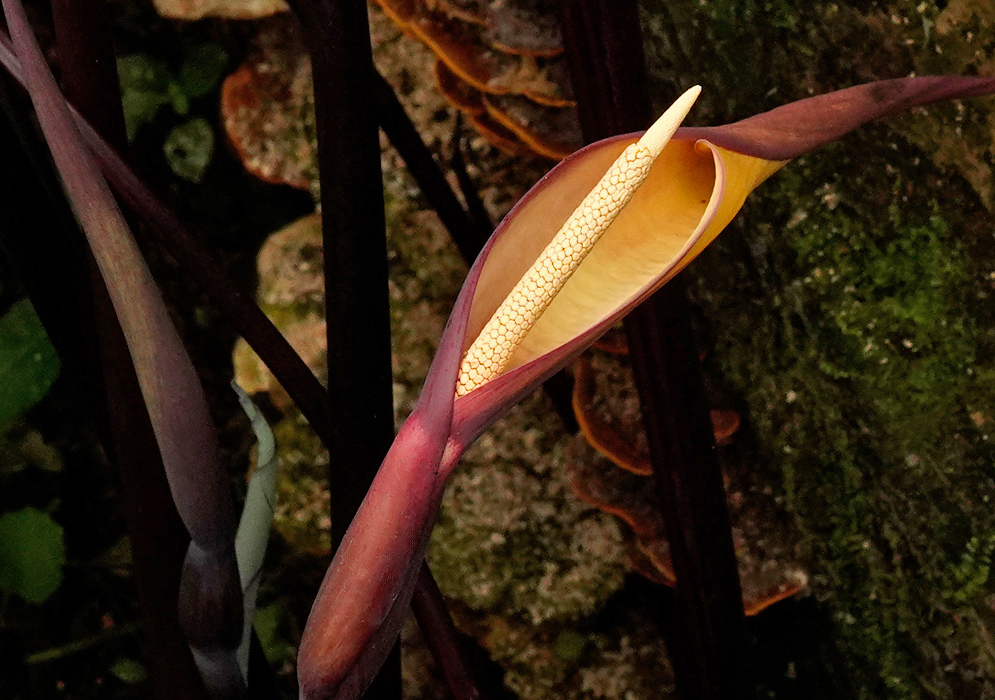
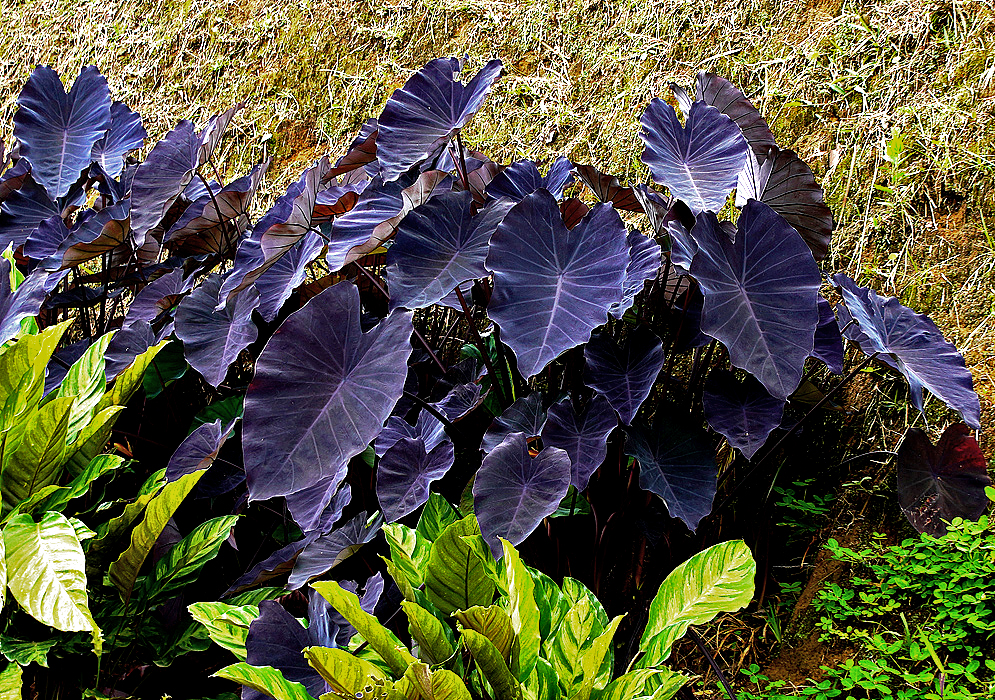
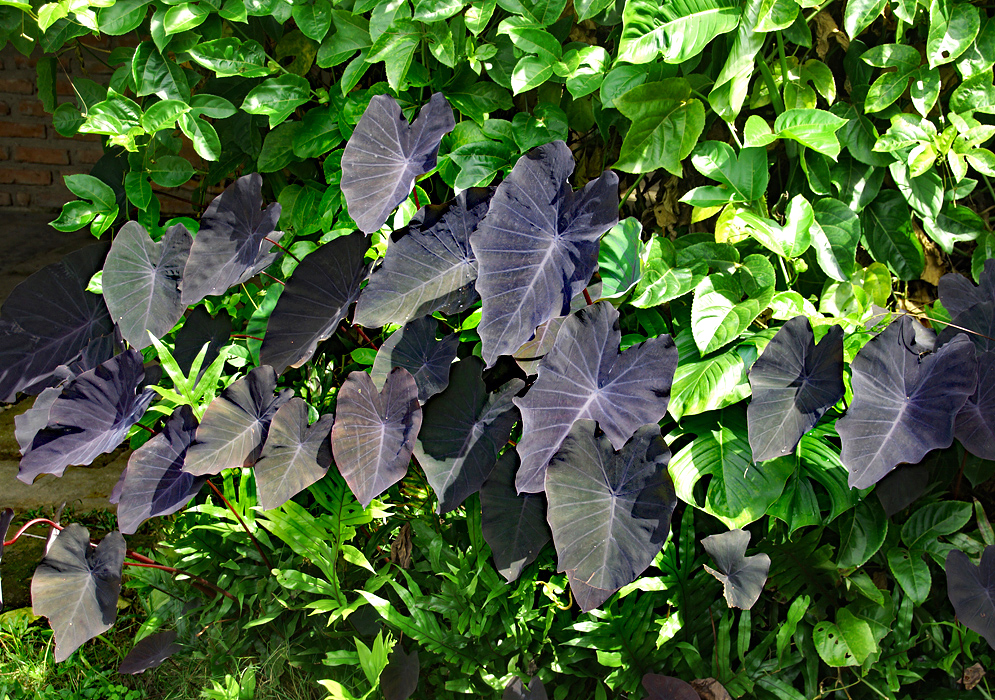
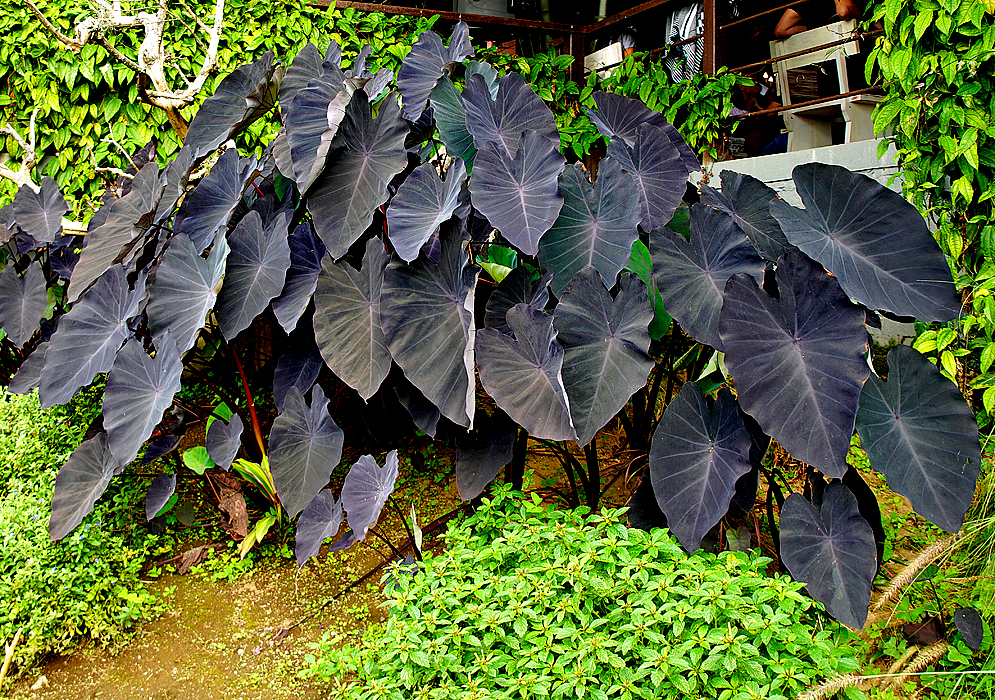
Native to tropical Asia and now cultivated throughout much of the tropics, taro is a perennial herb with an underground storage stem called a corm. It can spread by horizontal runners. The flowering structure consists of tiny flowers crowded onto a cylindrical spadix inside a hoodlike spathe. Ornamental selections include ‘Black Magic’, with deep purple to nearly black foliage. Food cultivars include dasheen types with a dominant central corm and eddoe types that produce numerous smaller side corms.
Cooked taro has a starchy, mildly sweet, nutty flavor, sometimes compared with chestnut. Its corms are boiled, baked, fried, milled into flour, or pounded to make Hawaiian poi; selected cultivars also supply edible leaves and leaf stalks. Raw or inadequately prepared taro can irritate the mouth and throat because of calcium oxalate crystals and other acrid constituents. In 2024, the largest producing countries included Nigeria, Cameroon, China, Ethiopia, and Ghana. Traditional uses in parts of Asia and New Guinea include corm preparations for stomach complaints and applications to sores and swellings. Outside cultivation, it has become invasive in Florida, where it forms stands in wet habitats. Photographed in Colombia.